
Why was lithium added to 7UP soda?
Categories: Food and Drinks | History | North America
By Pictolic https://pictolic.com/article/why-was-lithium-added-to-7up-soda.htmlEveryone knows the carbonated drink 7-Up. But no one can say why it was called that way. Surely its creator, Charles Leiper Grieg, could answer this question. It was he who patented this product in 1929, describing it as “a remedy for seven types of hangovers.” Grieg also thought of adding the alkali metal lithium to the drink - the third element from D. I. Mendeleev’s Periodic Table of Chemical Elements.
Initially, the soda was released with the difficult-to-remember name “Bib-Label Lithiated Lemon-Lime Soda.” Then it was renamed “7Up Lithiated Lemon Soda”, and even later simply “7-Up”. Is there a connection with the 7 types of hangovers? Anything is possible. Although the soda's slogan read: "Seven natural flavors blended into a zesty, flavorful drink." The prefix “Up” remains a mystery. Maybe it has something to do with lithium?
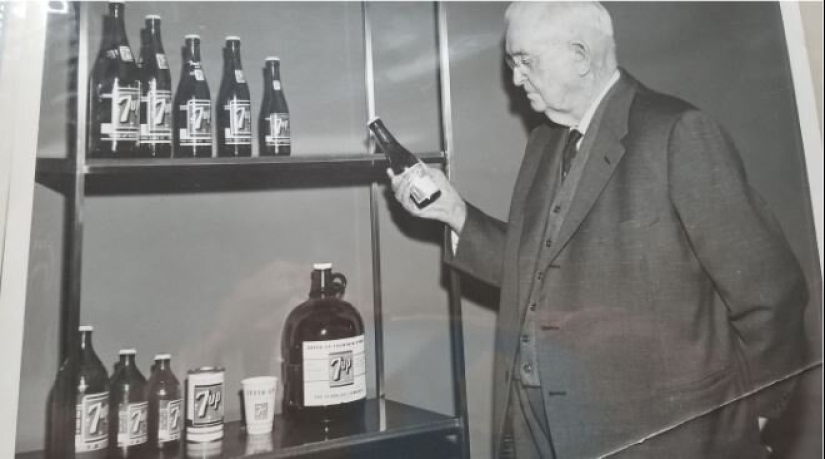
But seriously, Grieg did not add the metal itself to the soda, but its salt - lithium citrate. This is a lithium salt of citric acid, which has a number of beneficial properties for the body. This drug is still used today - it is part of medications for manic-depressive psychosis. In the 1930s, 7-Up was often called lithium-lemon soda and was even sold in pharmacies.
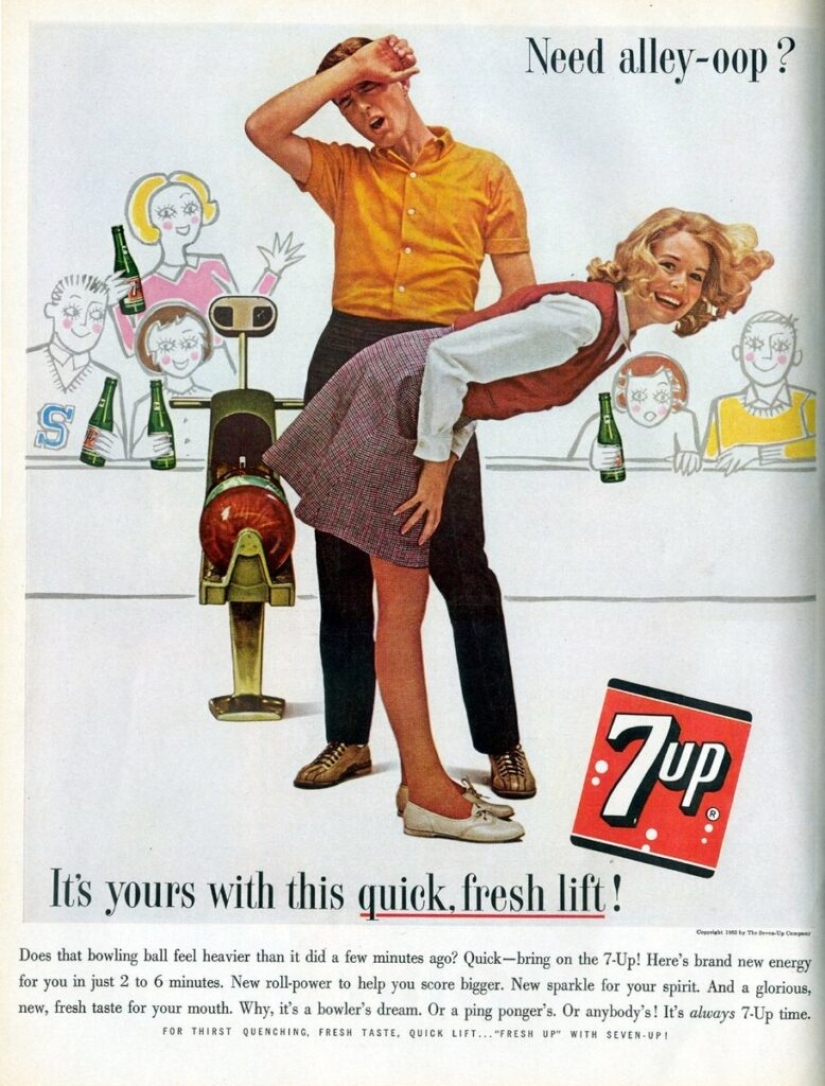
In addition to relieving hangovers and improving mood, lithium citrate was credited with another property. It was believed that it dissolves urates, uric acid salts that cause kidney stones. Charles Grieg's invention led to many imitations in the 30s and 40s. But the era of health drinks ended in 1948, when the US government banned the use of lithium in food products.
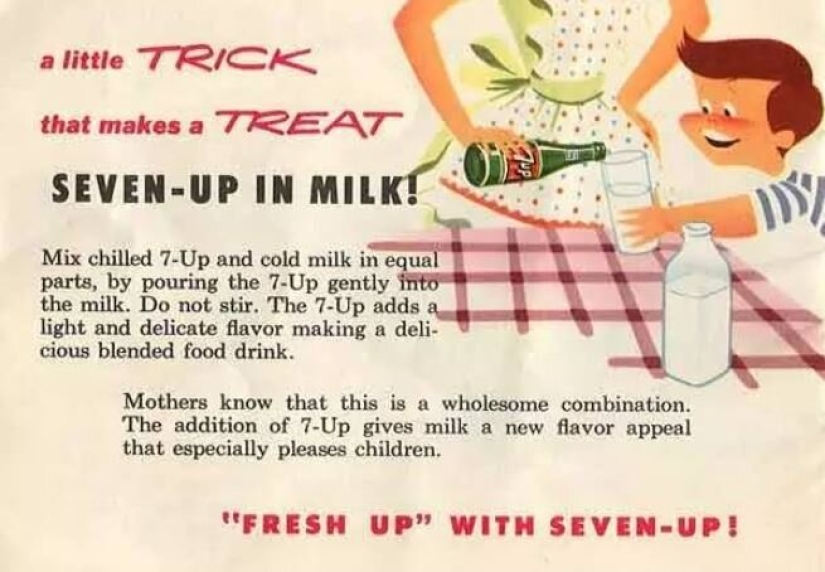
As it turned out, the metal, which was considered almost a panacea for all diseases, was dangerous in large quantities. Uncontrolled use of it caused kidney damage, muscle spasms, tremors, confusion, anxiety and drowsiness. People started talking about these troubles only in the late 40s, when the popularity of “7-Up” was enormous and more and more people turned to doctors with an incomprehensible illness.
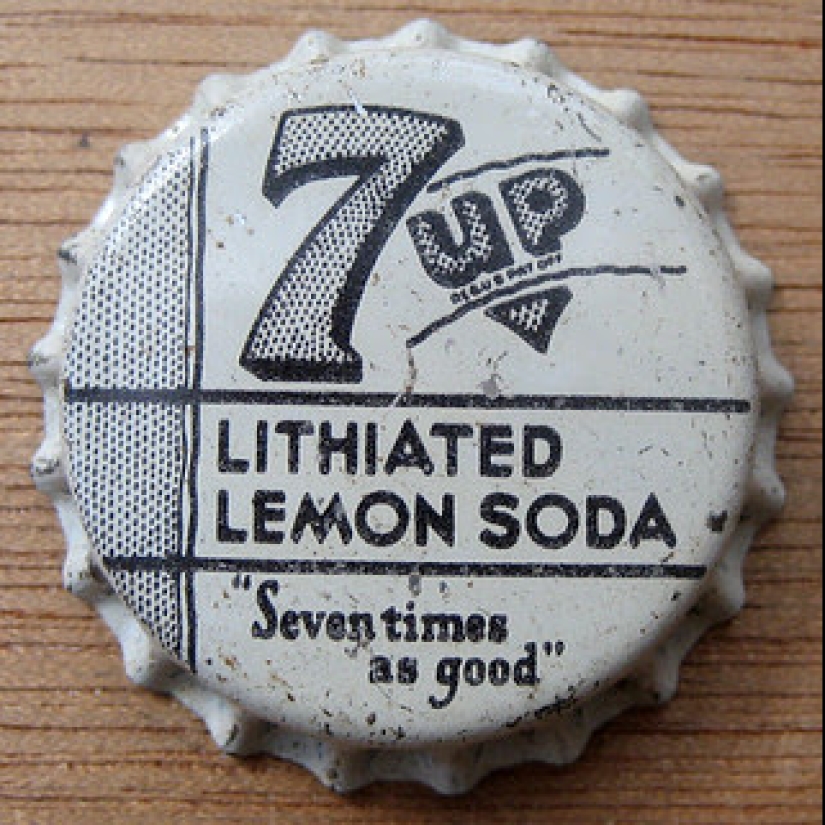
When lithium citrate was removed from the recipe, nothing changed. No one even noticed the absence of the most important component of the drink. It managed to earn a reputation for being useful, and people continued to actively buy it. By the end of the 20th century, 7-Up became the third most popular soda in the world, behind only Coca-Cola and Pepsi.
It is worth saying that lithium is not the worst thing that has been added to drinks. Much sadder is the story of radium water, which led to painful death.
Recent articles

It's high time to admit that this whole hipster idea has gone too far. The concept has become so popular that even restaurants have ...

There is a perception that people only use 10% of their brain potential. But the heroes of our review, apparently, found a way to ...
New Year's is a time to surprise and delight loved ones not only with gifts but also with a unique presentation of the holiday ...