
The country of poor billionaires: how inflation got Germans into strip clubs
After the First World War, Germany found itself in an economic hole. For the maintenance of the army, the government recruited international loans, and they planned to give them at the expense of rich industrial territories that the country would receive in case of victory. But the victory did not happen. And in addition to the existing debts, Germany was also obliged to pay 132 million marks (31.4 million US dollars) to the allied countries for the damage caused.
The authorities have chosen the worst possible way out of the crisis. They printed a mountain of stamps, bought dollars and began to pay reparations out of this money. Naturally, the issuance of a huge amount of unsecured money led to terrifying inflation.
The exchange rate of the mark collapsed as if knocked down: before the war, one US dollar was worth 4.2 marks, after the signing of the peace treaty - 48 marks. However, this was only the beginning. In the first half of 1922, the exchange rate fell to 320 marks per dollar, by the end of the year - to 7,400 marks, and the record mark was 4.2 trillion (!) marks per dollar.
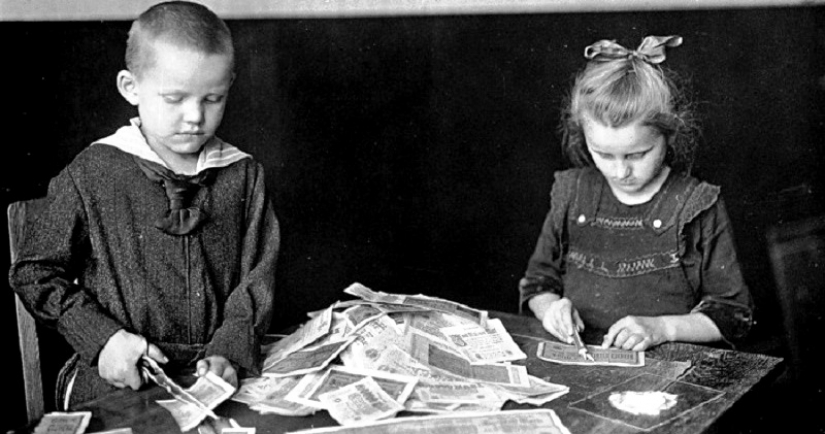
On the days when wages were paid, workers came with suitcases and backpacks and immediately ran headlong to the shops to stock up on at least some products before the rate increased even more.
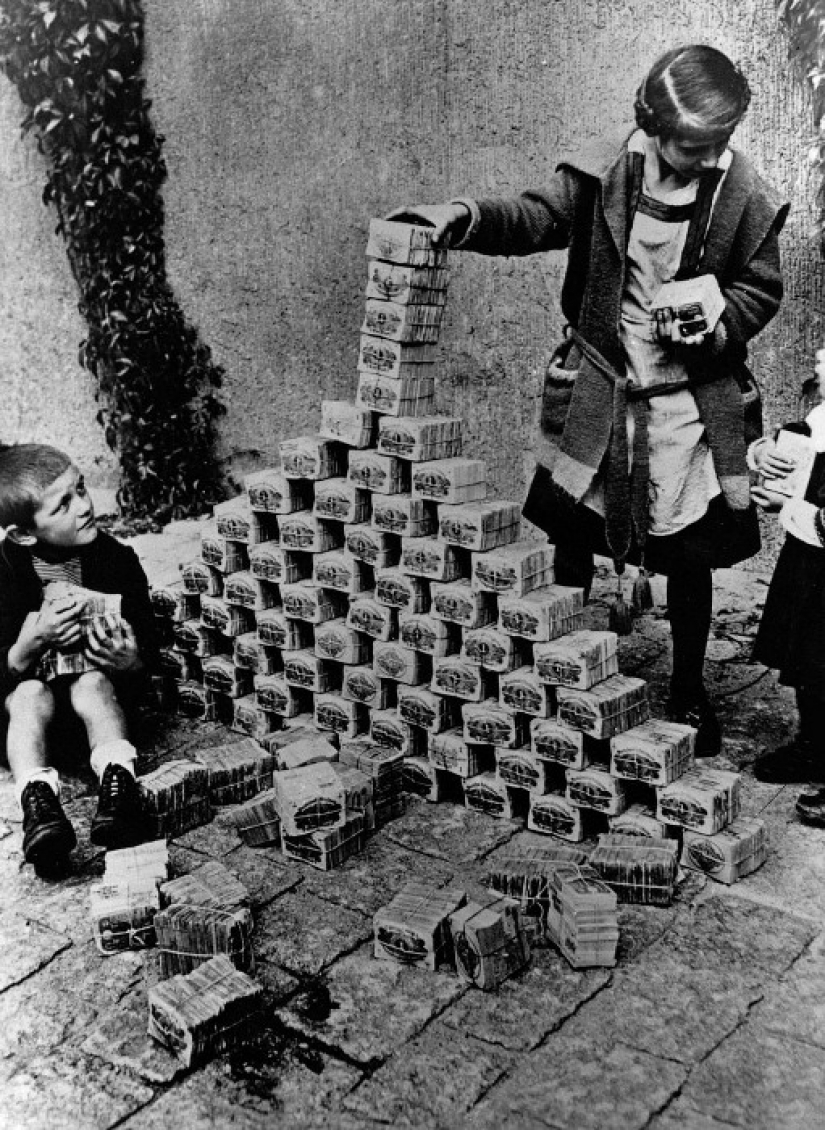
The banker counts bundles of money
There have been cases when the first cup of coffee in a cafe could be drunk for 5 thousand marks, and the second - twice as expensive. Or, for example, a person took a bus ticket to Berlin to buy a pair of shoes, and when he arrived, he found that there was barely enough money for the return trip. Restaurants even stopped serving food from time to time, because while the dish was being prepared, its price increased significantly.
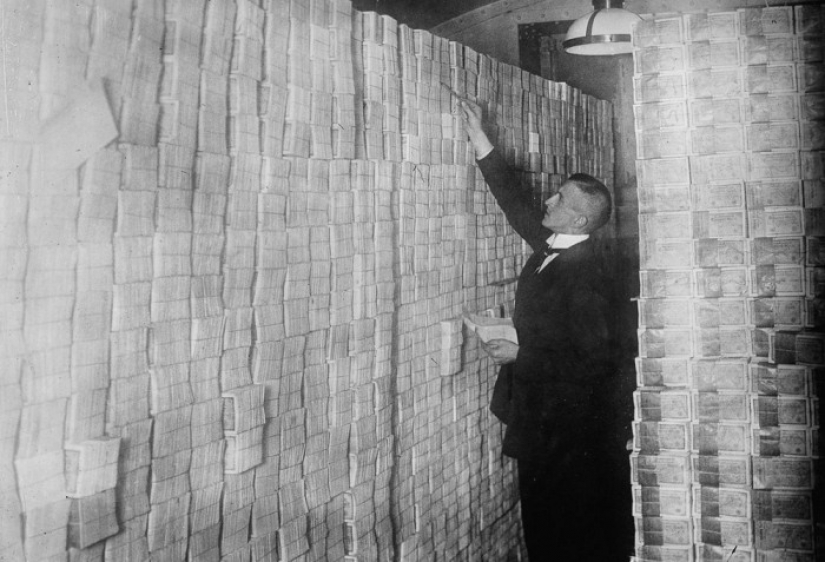
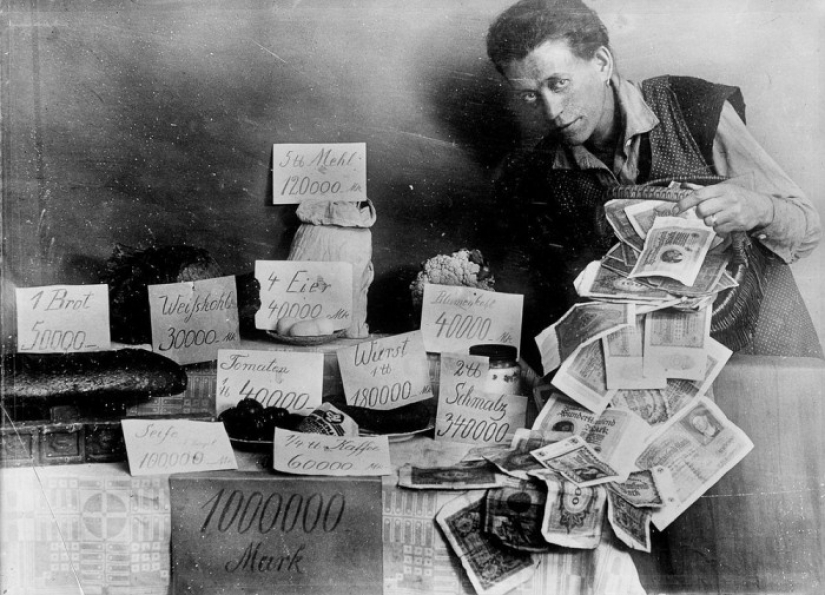
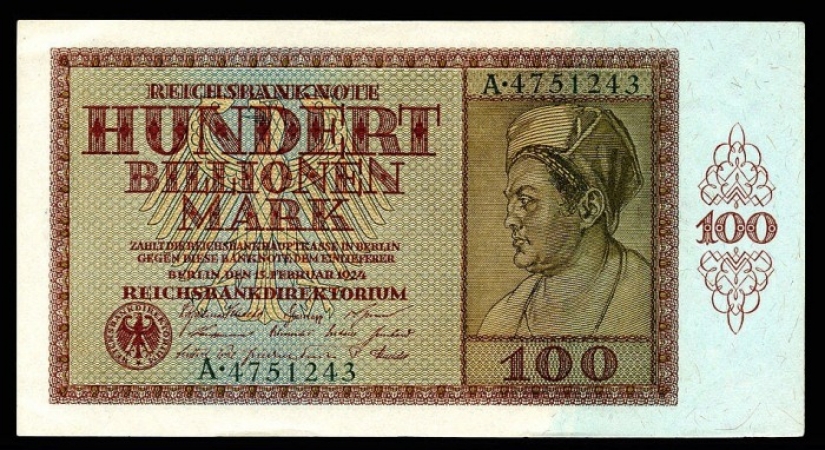
Banknotes of increasing denominations were issued every week. In October 1923, hyperinflation reached its peak — a 100 trillion mark banknote was printed. From now on, the exchange rate no longer made sense.
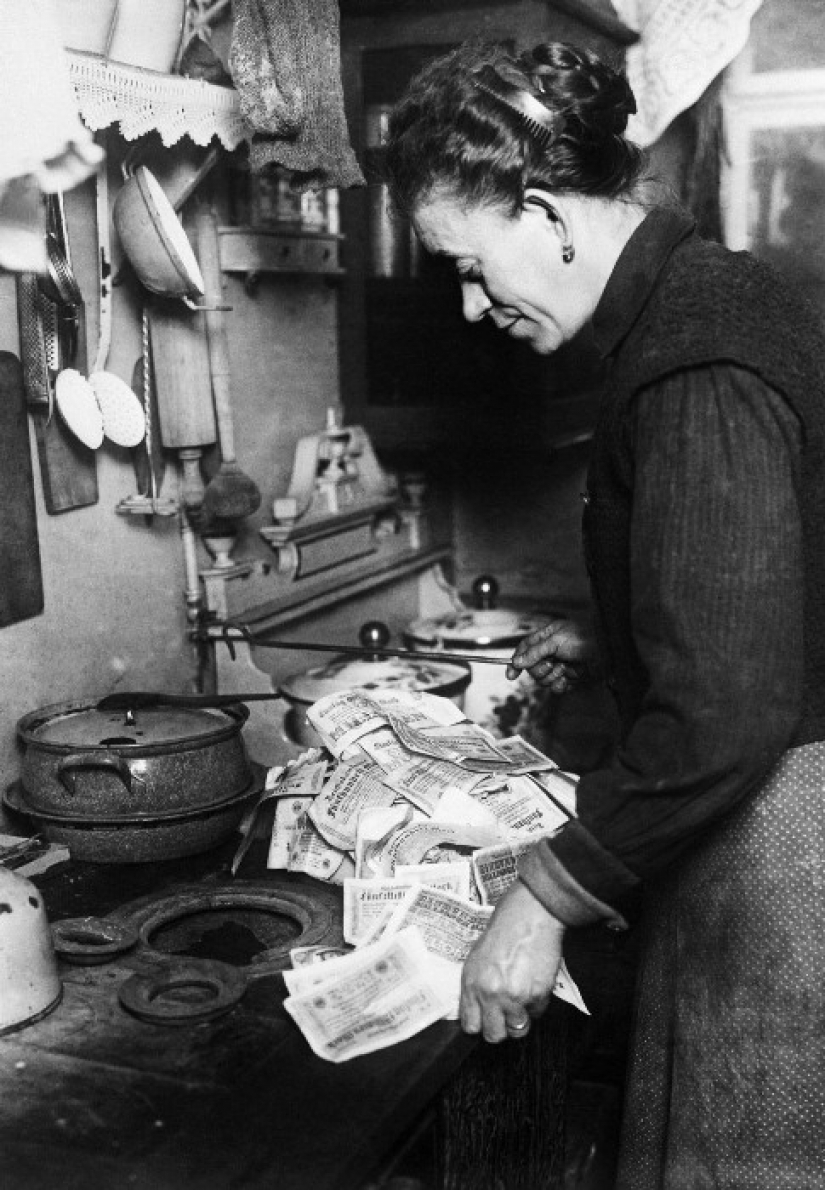
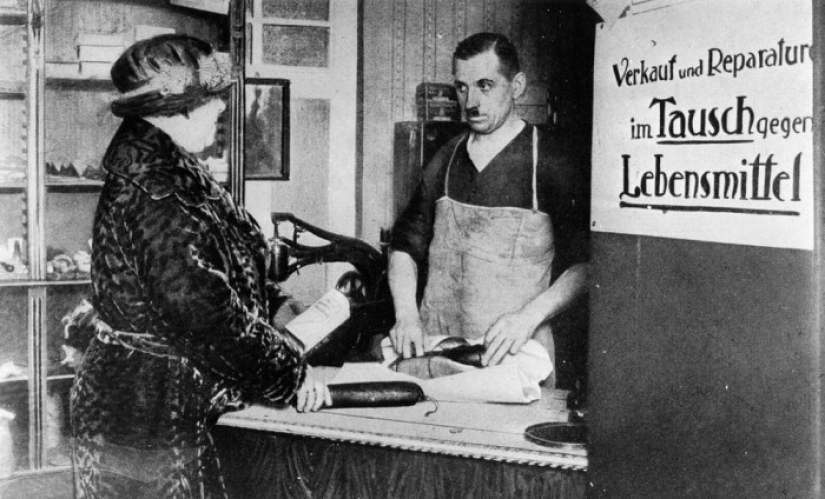
People began to refuse money, the exchange of goods and services began. On the street, you could exchange shoes for sausage, dishes for coffee. The country was covered by a wave of petty thefts. They stole almost everything, from gasoline to soap. Of course, panic moods raged. Many Germans began to live as if there would be no tomorrow. The demand for drugs increased many times, nightclubs and strip bars were crowded every evening.
Barter in the store
At the end of 1923, a new currency was put into circulation — the rental mark, the rate of which was fixed at the usual mark of 4.2 rental marks per dollar. The situation gradually returned to normal, but the lost savings were never returned to the Germans.
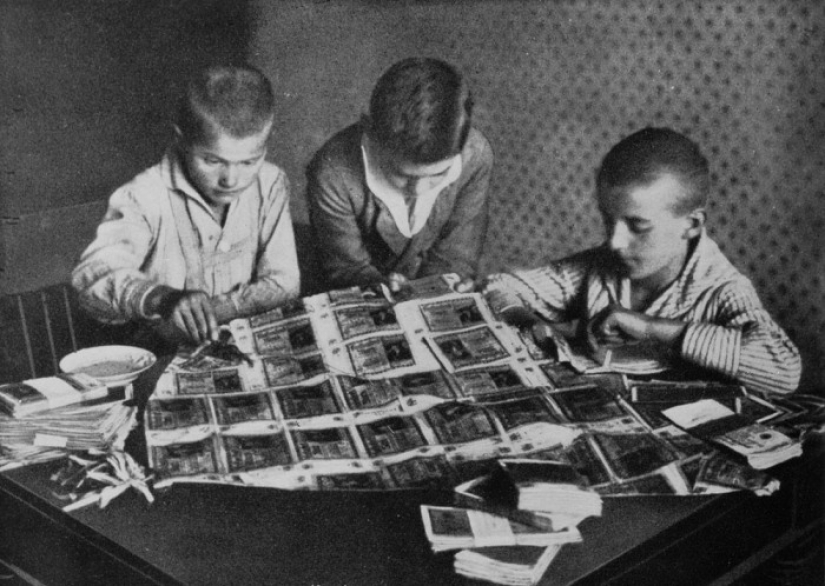
Children glue money on a kite
Keywords: XX century | Germany | Money | Inflation
Post News ArticleRecent articles

It's high time to admit that this whole hipster idea has gone too far. The concept has become so popular that even restaurants have ...

There is a perception that people only use 10% of their brain potential. But the heroes of our review, apparently, found a way to ...
Related articles

Now we can keep our savings in a bank or, if we don't trust financial institutions, put them in a safe and keep them at home. And ...

Millions of people around the world buy lottery tickets in the hope of winning a happy life. They dream of luxury cars, luxury ...

About each nation there are stereotypes. For example, the Germans say that they love the "Ordnung", discipline and purity. This ...
New Year's is a time to surprise and delight loved ones not only with gifts but also with a unique presentation of the holiday ...