
5 ways to earn money for children in the USSR
Categories: Children | Economy | History | People | Society | World
By Vika https://pictolic.com/article/5-ways-to-earn-money-for-children-in-the-ussr.htmlBy law, children under 14 were not allowed to work in the USSR. But what would a teenager not go to in order to have their own pocket money?
5 PHOTOS
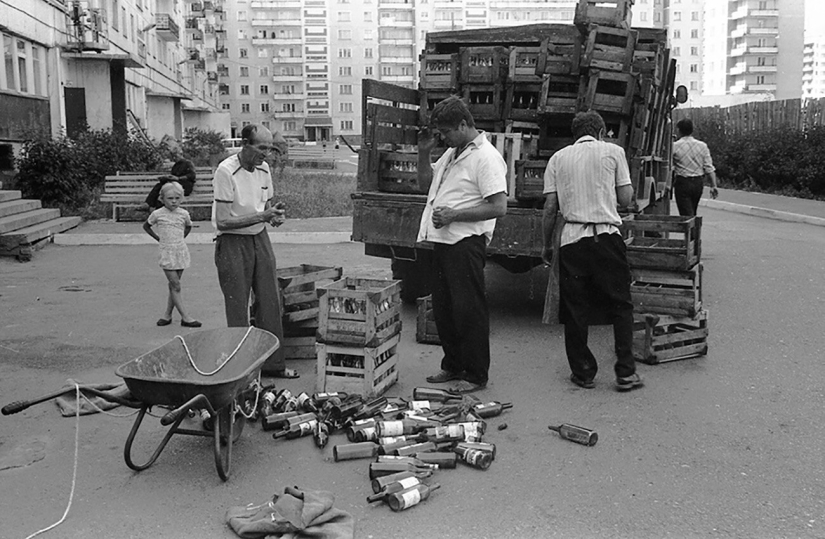
1. Recycling glass bottles was the first thing that came to mind for Soviet children. There were recycling points in every district of the city that paid 12 kopecks for standard 0.5-liter beer and lemonade bottles, 15 kopecks for milk bottles, and 17 kopecks for 0.7-liter wine bottles. A glass or cone of ice cream could cost from 7 to 28 kopecks, so collecting glass bottles could be a lucrative business. However, some glass collection points did not accept bottles from underage children. However, there were other ways for children to quickly earn a ruble, especially in the summer.
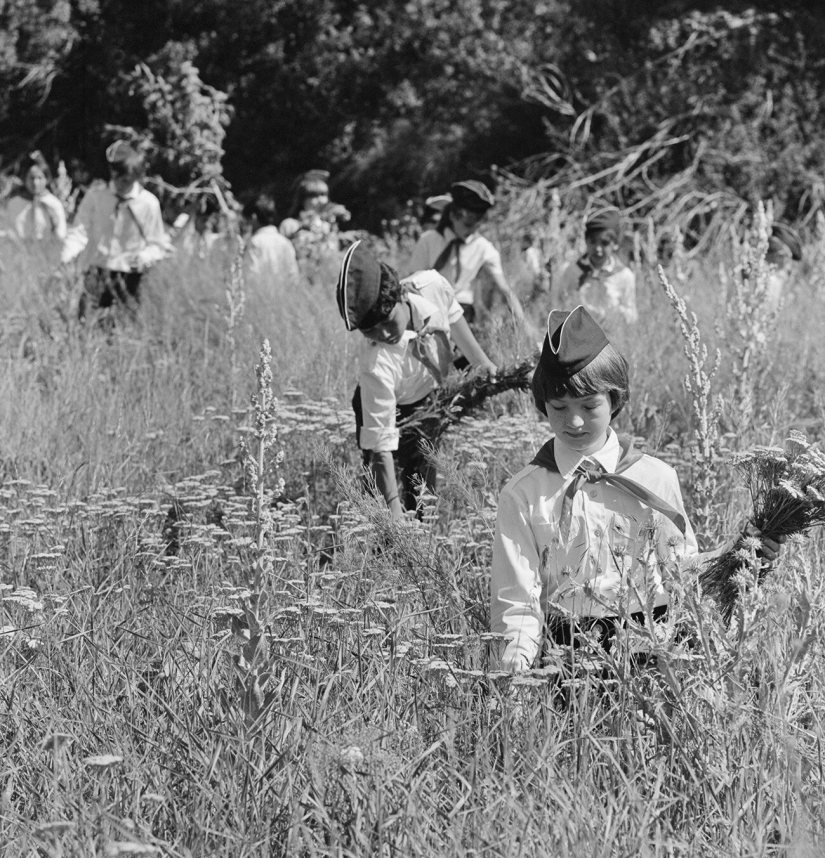
2. Soviet pharmacies were responsible for collecting a certain amount of medicinal herbs growing wild in Russia. Plantain, nettle, coltsfoot, chamomile, dandelions, hawthorn, as well as more complex St.
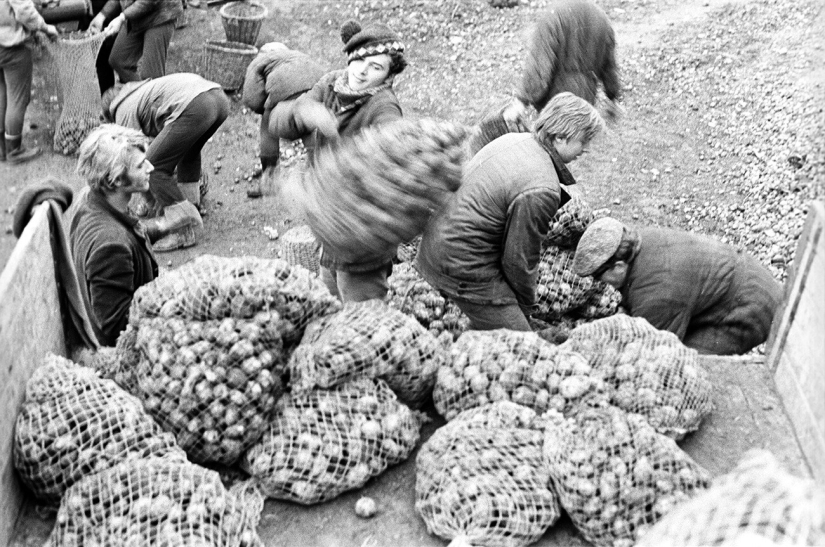
3. Unloading wagons and trucks with watermelons, apples, and potatoes. Clogging boxes or helping to carry tires and car wheels in a tire shop. Washing cars in the parking lot. In the countryside, loading and unloading hay, helping out as adult shepherds, or joining brigades that worked on state farms—even those who came to the village on vacation could do this. All this was technically illegal, but in the USSR there was often a shortage of workers, and children came to the rescue to get a few rubles in their pockets.
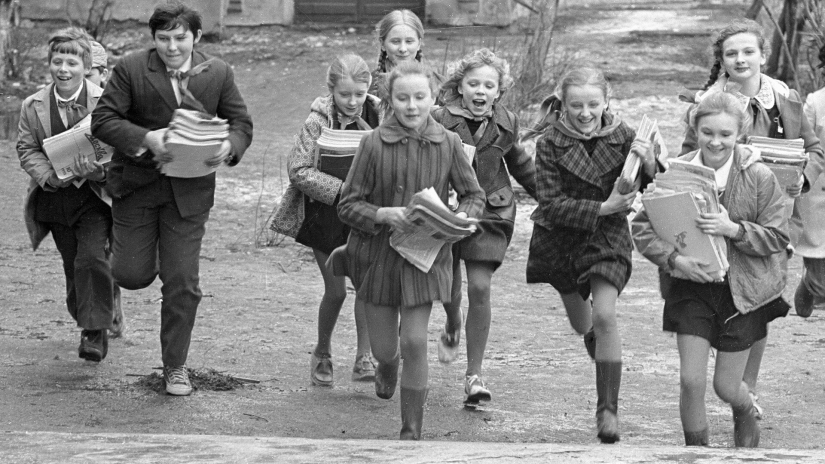
4. The collection of waste paper for recycling has been a constant campaign throughout the USSR since 1974 when paper shortages began to appear. Announcements about paper recycling were placed on the back pages of many Soviet books, urging people to collect waste paper and take it to collection points. Campaign slogan: "Recycle paper, save wood." But what about profit? Twenty kilograms of paper brought a coupon that could be exchanged for rare books - Arthur Conan Doyle, Alexandre Dumas, Jack London, Jules Verne, Maine Read. These books were not available in bookstores and were issued through special dispensaries. So the business scheme might be: collect a lot of paper for recycling, get coupons, exchange them for books, and then discreetly sell the books. Why is it imperceptible - after all, it was already an illegal trade. Of course, illegal activities were the most profitable, but also the most dangerous.
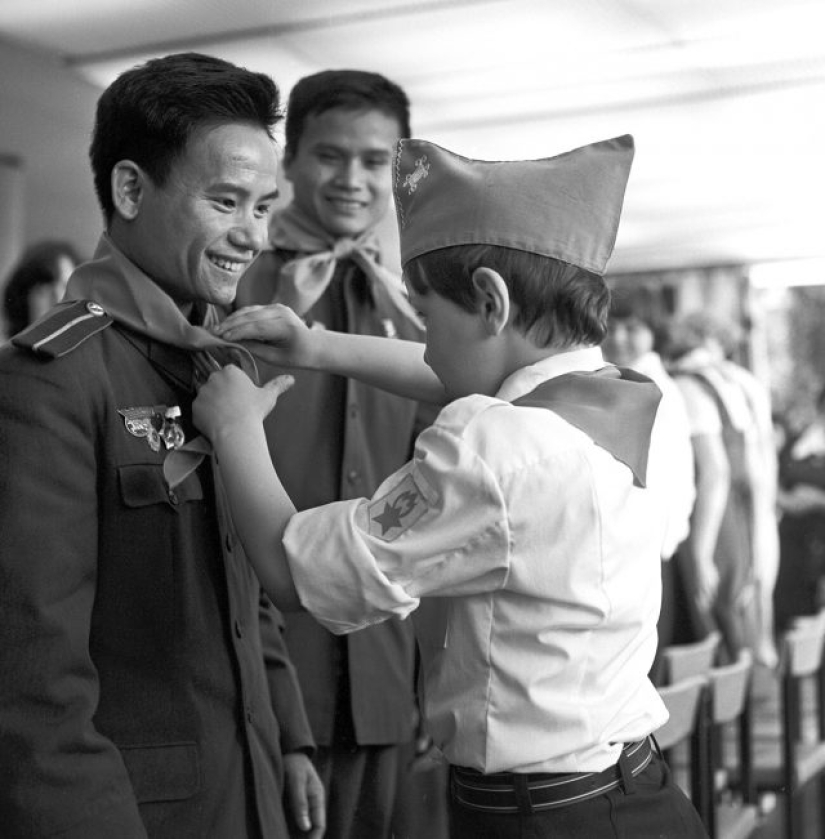
5. A neatly dressed boy or a modest girl is unlikely to be the first suspect for the Soviet police in the search for criminals. Using their innocent appearance, schoolchildren could trade with foreigners - in those rare places they could be found. One of them was the territory of VDNH (Exhibition of Achievements of the National Economy), a vast Moscow park northeast of the city center; and sports delegations from abroad will be received at Cosmos and other hotels. After packing dozens of cheap Soviet badges, the guys went to VDNKh and offered the badges to foreigners in exchange for foreign cigarettes, chewing gum, or something else that could then be sold.
Keywords: Children | USSR | Teenagers | Economy | History | Russia | Russian Federation
Post News ArticleRecent articles

It's high time to admit that this whole hipster idea has gone too far. The concept has become so popular that even restaurants have ...

There is a perception that people only use 10% of their brain potential. But the heroes of our review, apparently, found a way to ...
Related articles

In the days when about the Internet, no one even could not think, and foreign fashion magazines were terribly deficient, for Soviet ...

In the fall of 1972, Bill Yates traveled through the countryside in the vicinity of Tampa, Florida. At that time, he was studying ...

What do you associate the New year? Tangerines, chime, silver rain on the tree, gifts from Santa Claus and snow Maiden, and of ...
New Year's is a time to surprise and delight loved ones not only with gifts but also with a unique presentation of the holiday ...