
Beijing 1947 in Color: At the Crossroads of Epochs
One of the greatest cities in the world was captured on color film by American photographer Dmitry Kessel in 1947. For a city with a thousand-year history, it was a brief moment between the past and the future-2 years since the end of the Japanese occupation and only two 2 years left before the capture of the northern capital by the Red Army of Mao.
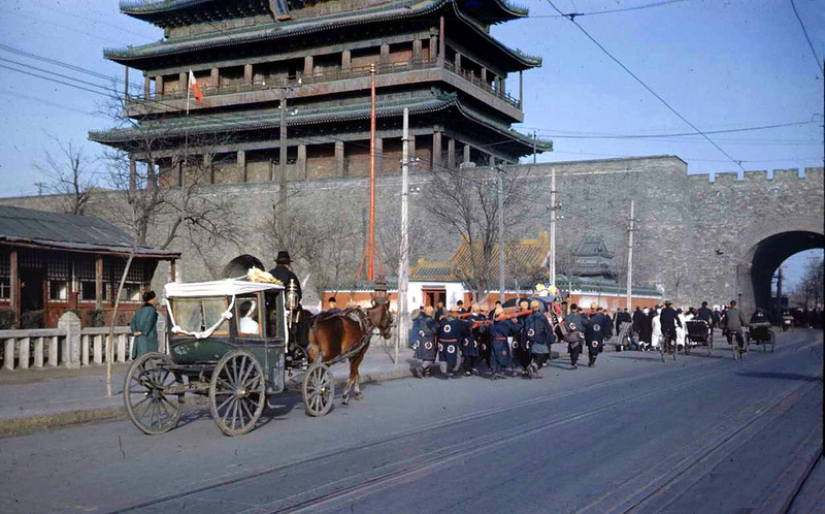
All these four years between the Japanese and the Maoists, Beijing was officially called " Beiping "("Northern Calm"), since the official capital at that time was in Nanjing. When Mao proclaimed the People's Republic of China with Beijing as its capital in October 1949, the city was given back the name "Beijing" ("Northern Capital"), which was used until 1929 and during the Japanese occupation (1937-1945).
In the pictures, we can actually see the feudal Beijing of the imperial era, from the signs of Westernization that began in 1911 – only tram tracks, telegraph poles and a few European-looking buildings.
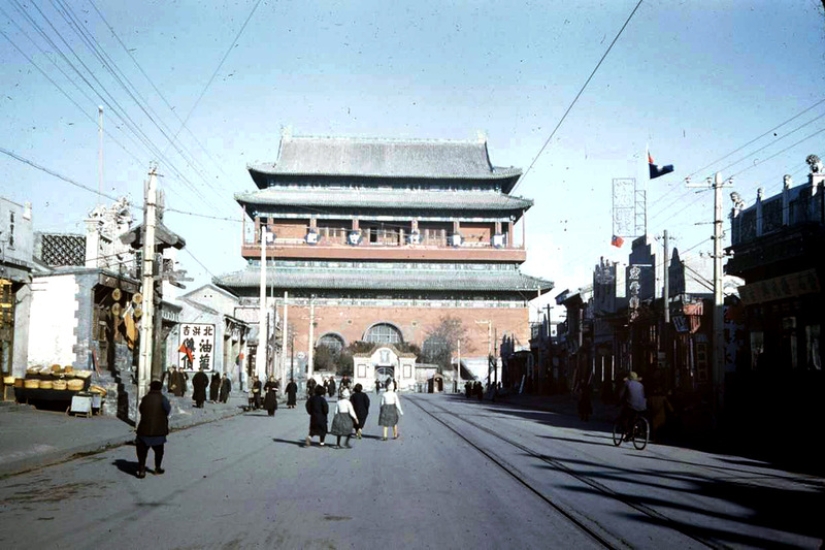
The central streets are deserted, there are almost no cars, and even cyclists are rare
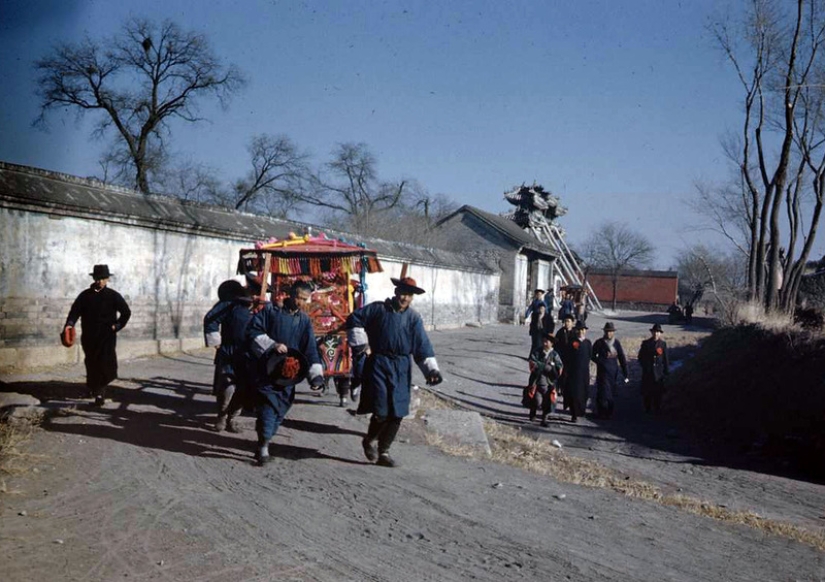
Where else can you see such a way of moving around the city on color film?
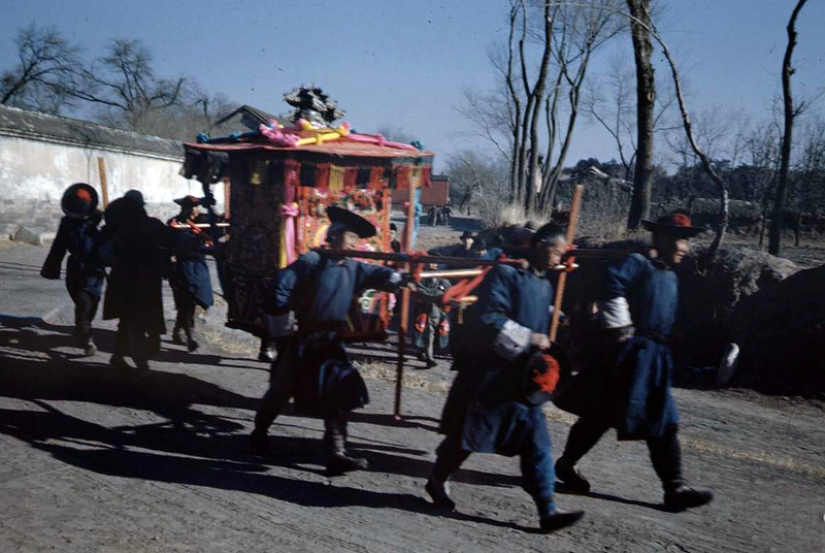
It was hard to remember what it was called – a palanquin
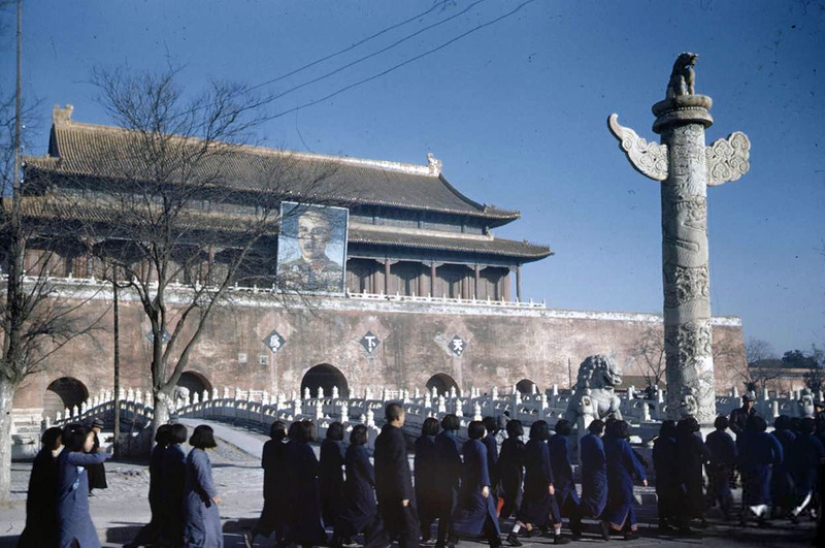
On the" Gate of Heavenly Peace", where the portrait of Mao is now forever registered, in 1947, the face of Generalissimo Chiang Kai-shek still flaunted
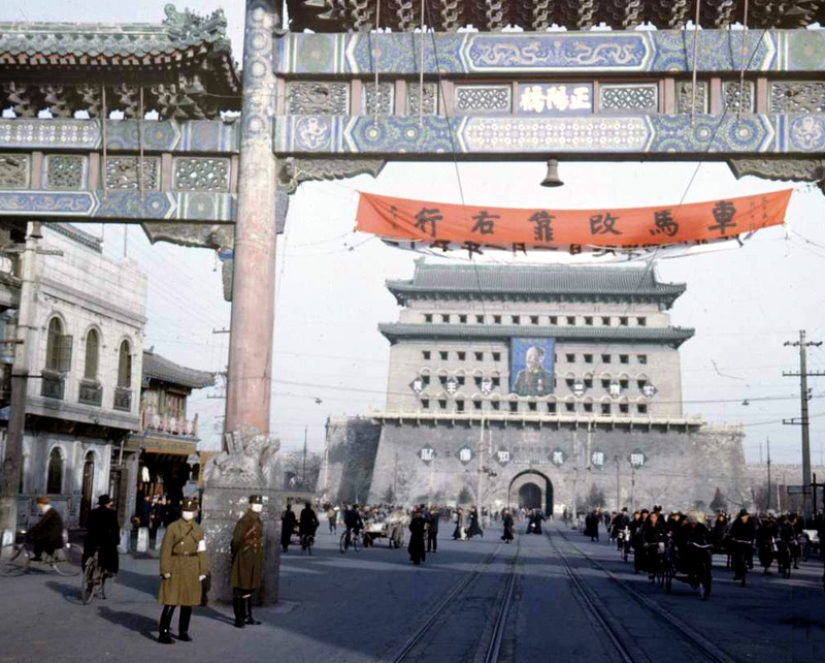
And it wasn't the only portrait
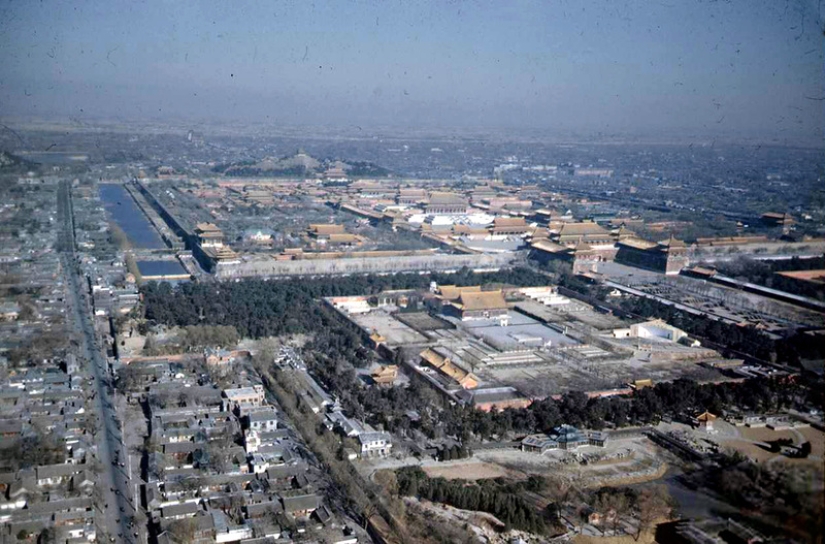
Beijing from the air. The core of the city's composition is the Forbidden City, a huge complex of the Imperial Palace, practically an analogue of the Moscow Kremlin in the past
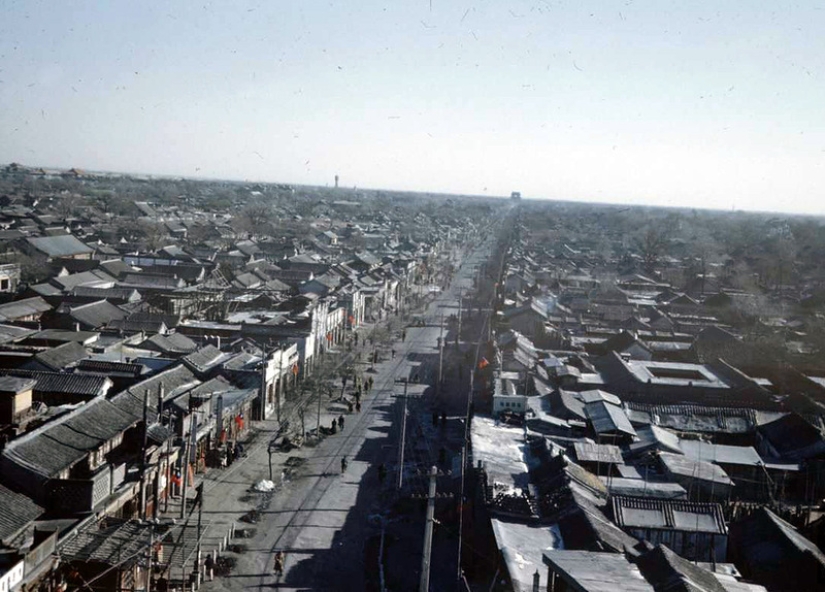
And Beijing in 1947, as well as 1977, is 99% a one-story city consisting of blocks- " hutons»
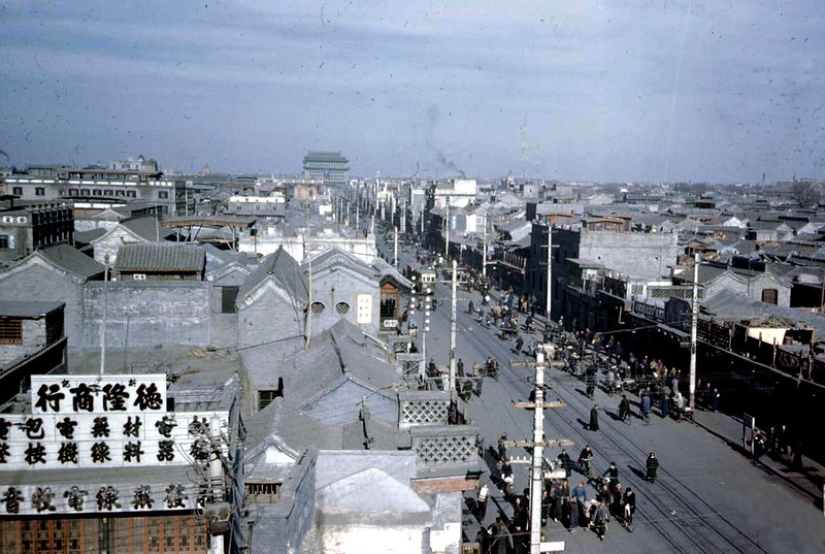
Now several "hutons" are preserved in the city center as historical monuments of urban culture. There are no streets, just a maze of narrow passages between houses, pigs in the back yards, all the belongings in the yard. A completely unfamiliar world. One of the central shopping streets
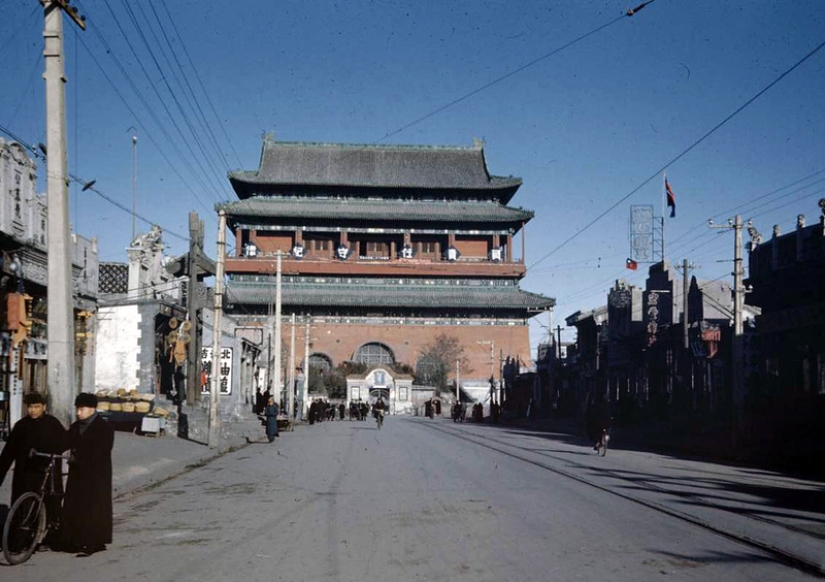
Fortunately, this ancient gate in the city center has survived to this day
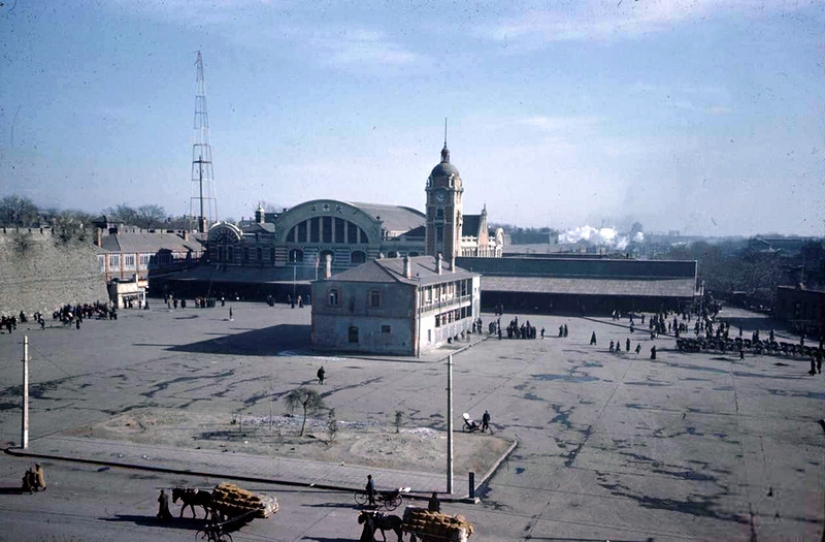
Against this background, the building of the railway station in the European style plus the radio tower look already unexpected
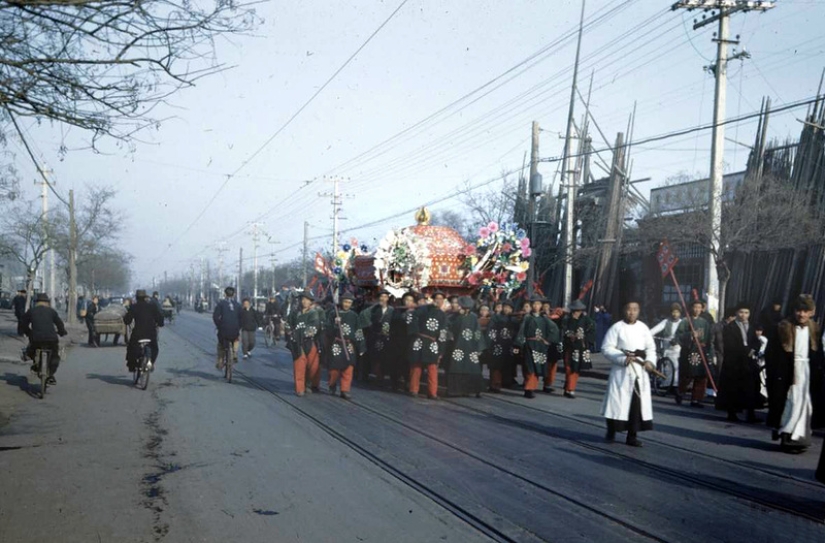
Some kind of procession on a city street
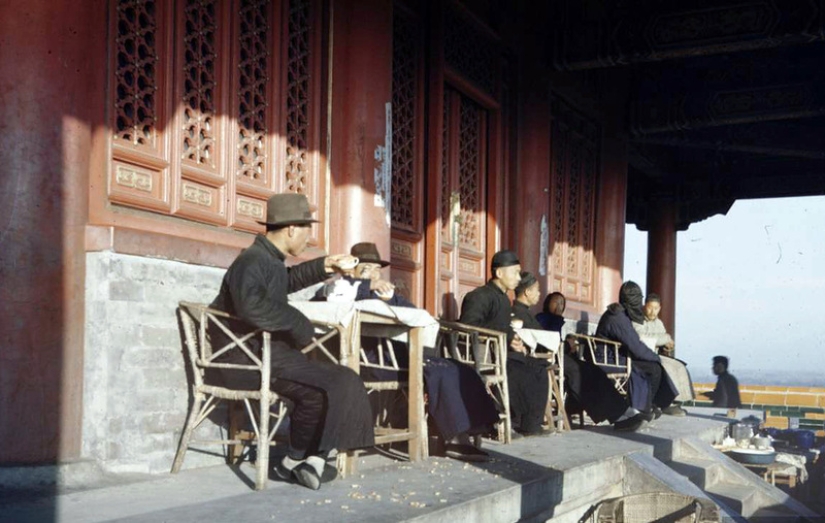
Cafe at the pagoda on the verschina of one of the hills in the city
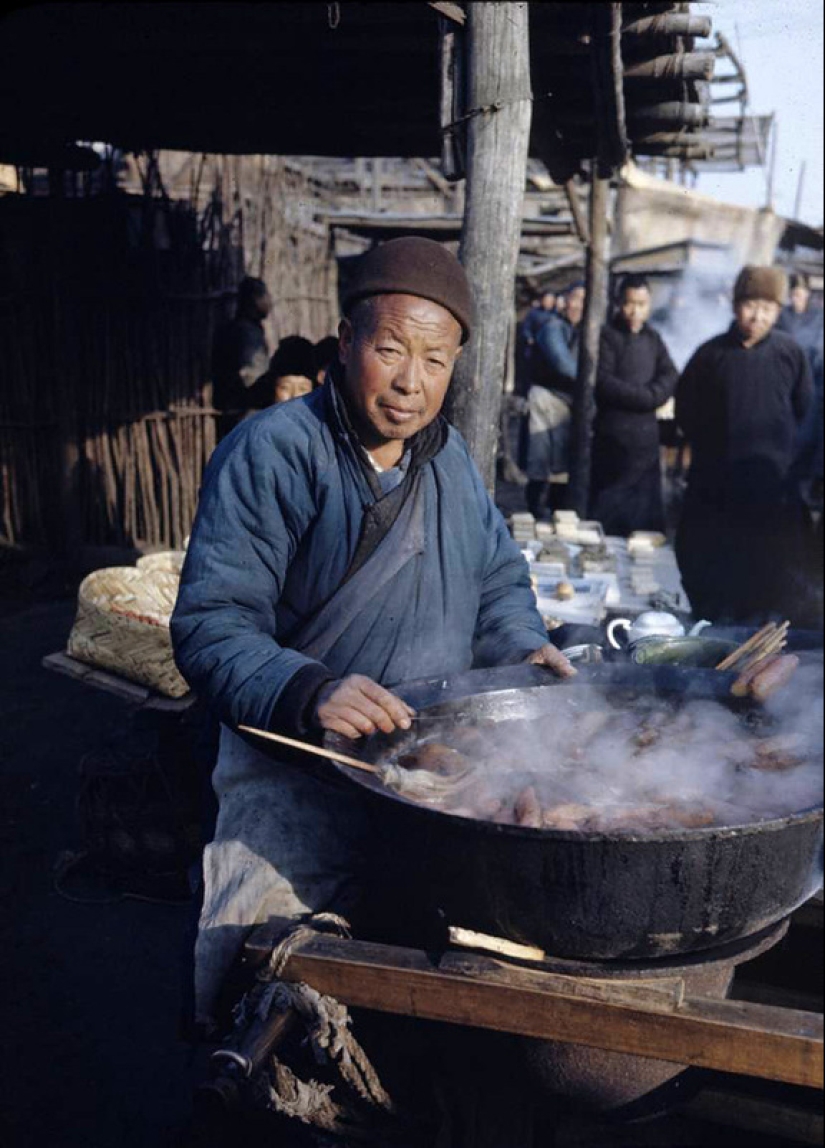
City catering. In general, this can still be seen quite often in China, and in London today, such characters are standing in the Camden market.
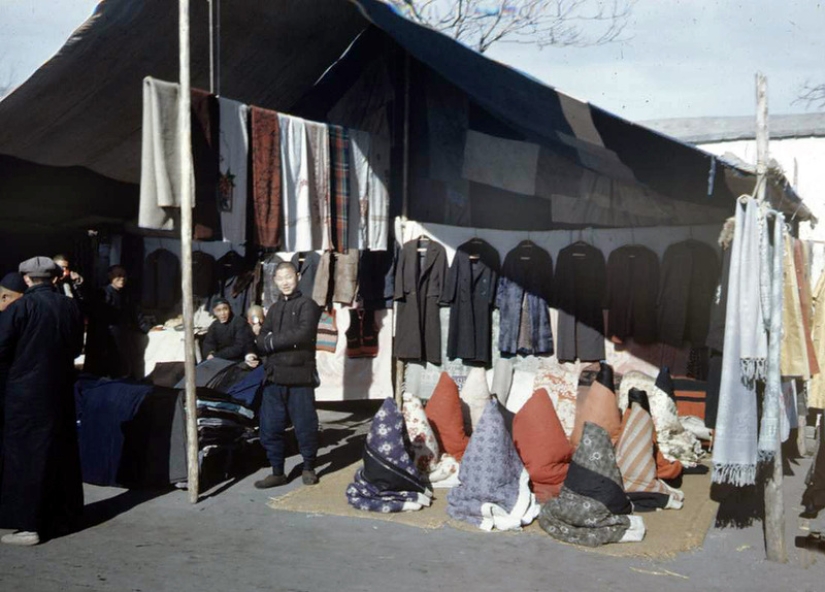
Chinese clothing market forever
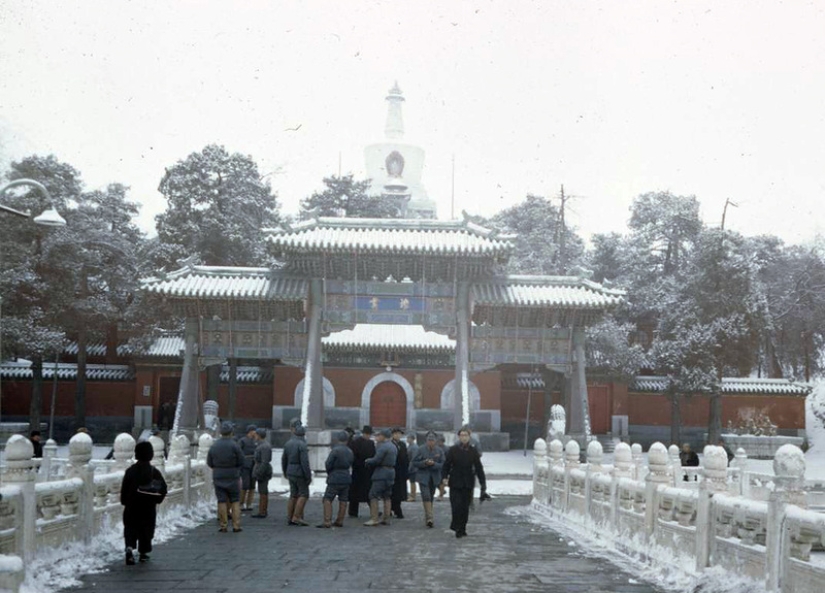
Winter has come to Beijing
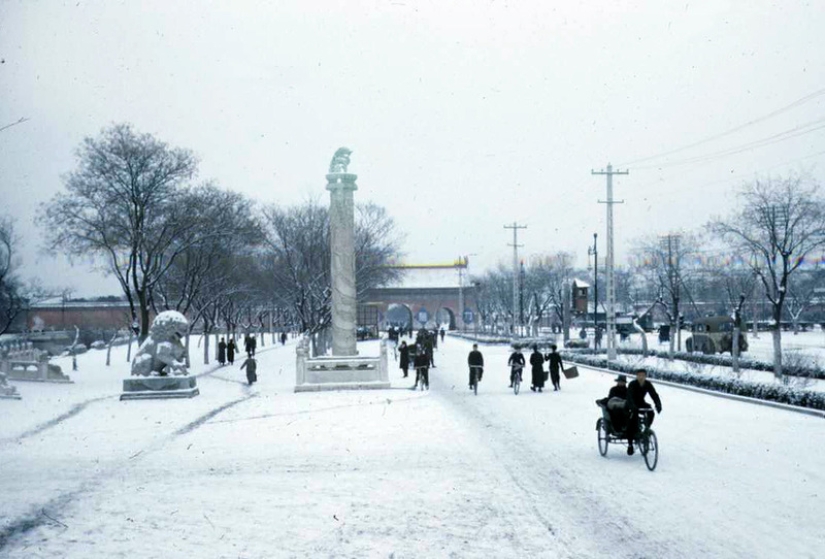
Bike rickshaw updates the path
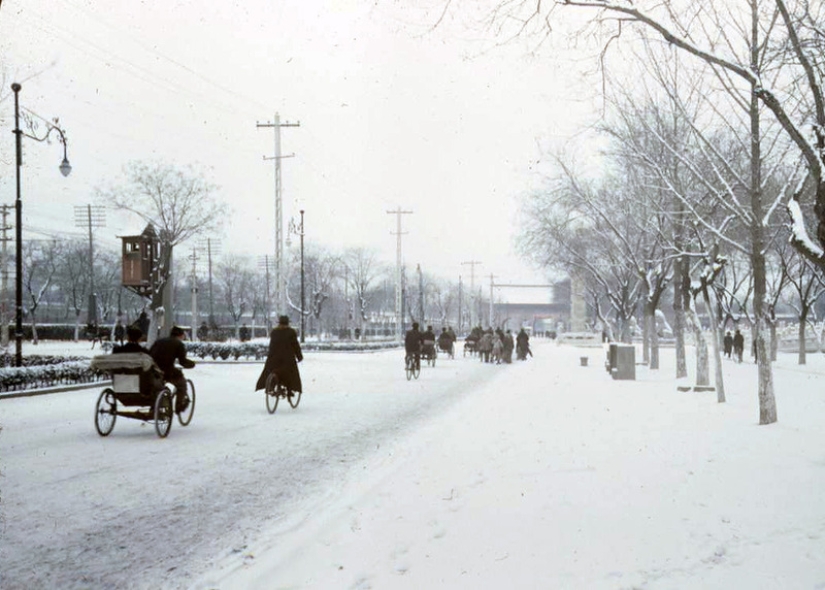
And the lanterns - in the Art Nouveau style!
After all, a bicycle is an all-weather means of transport, no matter what the opponents of creating a separate bike lane on Moscow streets say.
Keywords: China | Asia | History | Beijing | Color photography | 20th century | 40s
Post News ArticleRecent articles

It's high time to admit that this whole hipster idea has gone too far. The concept has become so popular that even restaurants have ...

There is a perception that people only use 10% of their brain potential. But the heroes of our review, apparently, found a way to ...
Related articles

In the fall of 1972, Bill Yates traveled through the countryside in the vicinity of Tampa, Florida. At that time, he was studying ...

When a person is in a life-threatening situation is awful, but even worse when it happens to a child. 11-year-old American Terry ...

Remember how broke the "unbreakable" scoop? The photo preserved in the photo album of almost every family! A selection of vintage ...
New Year's is a time to surprise and delight loved ones not only with gifts but also with a unique presentation of the holiday ...