
6 Inventions That Killed Their Creators
Categories: Celebrities | History | Technology
By Pictolic https://pictolic.com/article/6-inventions-that-killed-their-creators.htmlInvention is a creative, exciting, yet sometimes dangerous process. When creating something new, a person isn't always able to foresee all the risks associated with their invention. Euphoria often plays a role: having achieved success, an inventor can lose their guard. In this article, we'll tell you about tragic stories of brilliant ideas that led to fatal consequences for their creators. Ready to learn more? Then read on!

Frenchman Jean-François Pilâtre de Rozier was one of the first aeronauts and the first victim of a flying machine crash. He invented a uniquely designed hot air balloon, which he named the "Rozier" in his honor. The balloon's envelope was divided into two sections: one containing hot air and the other containing hydrogen. This design allowed for fuel savings and better control of lift.
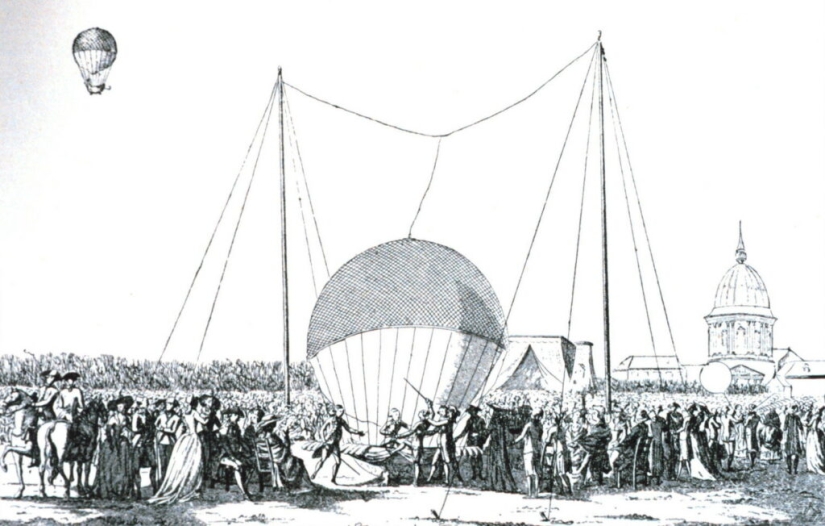
On November 21, 1783, Jean de Rozier and his friend, the Marquis d'Arlandes, made the first untethered hot air balloon flight in history. The flight was successful, inspiring the inventor to set a new record. On June 15, 1785, he decided to cross the English Channel with his friend Pierre Romain. The aeronauts ascended to an altitude of 450 meters, but the balloon suddenly burst into flames and crashed. Both men died.
The 19th-century British engineer and entrepreneur William Bullock invented the rotary printing press, which revolutionized printing. His invention made printing books, magazines, and newspapers easier and cheaper. The design used rollers onto which paper was wound, driven by a belt drive.
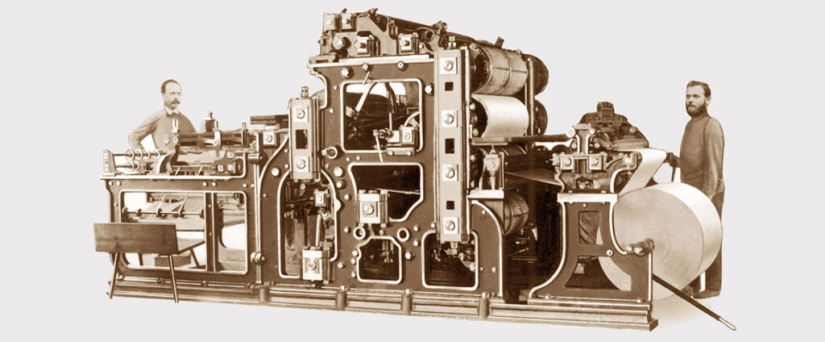
On April 3, 1867, William Bullock was experimenting with his brainchild, trying to perfect it. He started the mechanism, but the shafts remained motionless due to a problem with the belt drive. The engineer decided to kick the pulley to get it moving.
The machine started working, but Bullock's leg became caught between the pulley and the belt. The limb was broken in several places. Gangrene developed, and doctors recommended amputation. Bullock agreed, but he died on the operating table on April 12, 1867.
The Titanic's chief designer was Irish engineer and businessman Thomas Andrews. He was aboard the ship when it set out on its maiden and final voyage. On the night of April 14–15, 1912, the Titanic struck an iceberg and began to sink. Andrews was one of the few who remained completely calm.
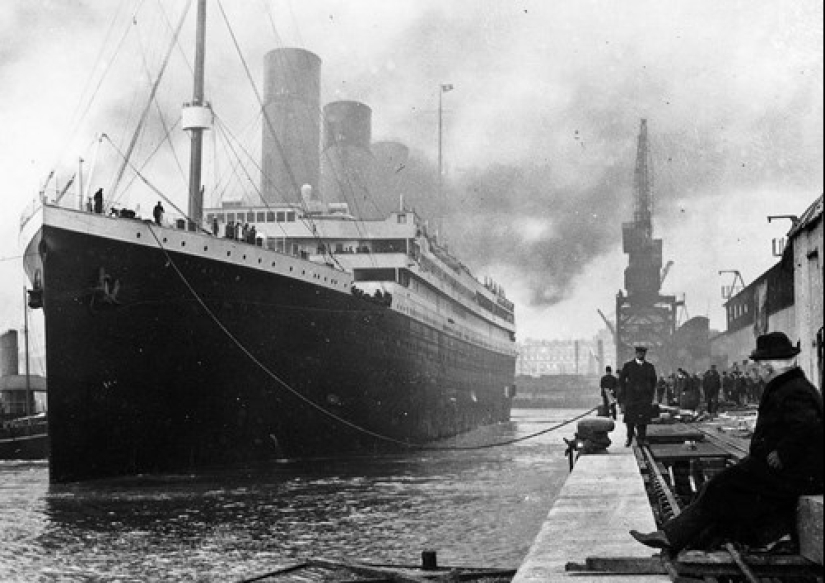
Andrews actively participated in the evacuation of passengers, and his coordinated efforts saved many lives. Thomas didn't think about his own survival, focusing entirely on helping others. He went down with the ship, and his body was never recovered.
At the beginning of the 20th century, aircraft development was booming, but they remained unreliable, and pilots often died in crashes. One of those who considered rescuing pilots was the Austrian tailor Franz Reichelt. He decided to create a parachute suit that could save a pilot in the event of an accident.
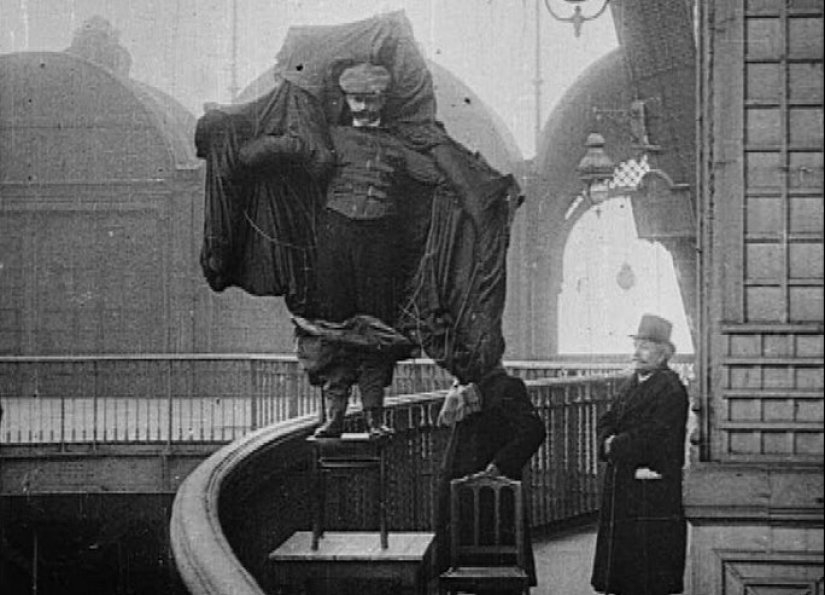
Reichelt tailored the suit based on his own calculations and was so confident in its reliability that he immediately decided to test it himself. For this, he chose Europe's tallest structure, the Eiffel Tower. Parisian authorities reluctantly agreed to the experiment, but only on the condition that a mannequin wearing the suit be dropped from the tower. But Reichelt decided to jump himself. In front of thousands of spectators, he fell to his death.
American Henry Smolinsky was a passionate car enthusiast and a lover of aircraft. His dream was to combine these two modes of transport. In 1971, he founded Advanced Vehicle Engineers (AVE). Smolinsky took a Ford Pinto and combined it with the wings and tail of a Cessna Skymaster.

Thus, the first prototype of a flying car, called the AVE Mizar, was born. By 1973, it was fully ready for testing. Professional test pilot Charles Janisse was the first to fly this technological marvel. However, during takeoff, the aircraft's nose gear broke off, forcing an emergency landing in a bean field.
After repairs, the aircraft's creator, Henry Smolinsky, took the controls. But the flight ended in tragedy. During the flight, the aircraft's wings broke off, and it crashed to the ground. Smolinsky and AVE Vice President Harold Blake, who was accompanying him, were killed.
Russian scientist Alexander Bogdanov was a multifaceted figure: he was involved in revolutionary activities, wrote science fiction, and practiced medicine. He was fascinated by the idea of immortality, which he hoped to achieve through blood transfusions.
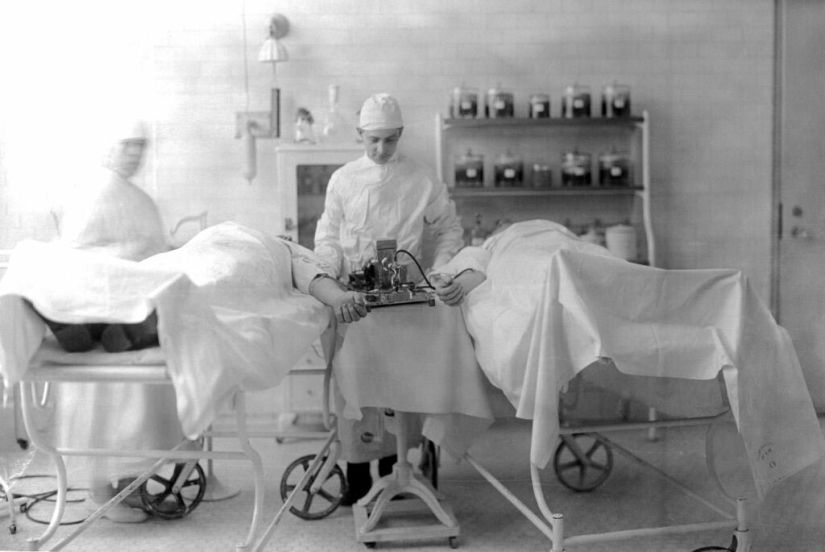
Bogdanov's exchange transfusion method attracted the attention of the party leadership. Many government officials received transfusions of young people's blood to rejuvenate themselves. Bogdanov himself regularly used his method. However, during one of these transfusions, the scientist became ill and died. The cause was Rh incompatibility, which was unknown at the time—it wasn't discovered until 1940, and it was 1928.
We actively use some inventions that killed their creators without even realizing it. A good example is the Kuznetsov applicator, an experiment with which cost its creator his life.
Recent articles

It's high time to admit that this whole hipster idea has gone too far. The concept has become so popular that even restaurants have ...

There is a perception that people only use 10% of their brain potential. But the heroes of our review, apparently, found a way to ...
New Year's is a time to surprise and delight loved ones not only with gifts but also with a unique presentation of the holiday ...