
The Story of Narcisse Pierre Pelletier, a White Aborigine of the Sandy Coast
Categories: History | Travel | World
By Pictolic https://pictolic.com/article/the-story-of-narcisse-pierre-pelletier-a-white-aborigine-of-the-sandy-coast.htmlSometimes a single incident can completely change a person's life, turning it into a legend whose reality is hard to believe. The story of the French sailor Narcisse Pierre Pelletier is one such example. Fate had been harsh on him since childhood, and then it delivered an unexpected surprise. Pelletier had to survive among the natives, and not only did he survive, but he successfully assimilated into the alien culture.
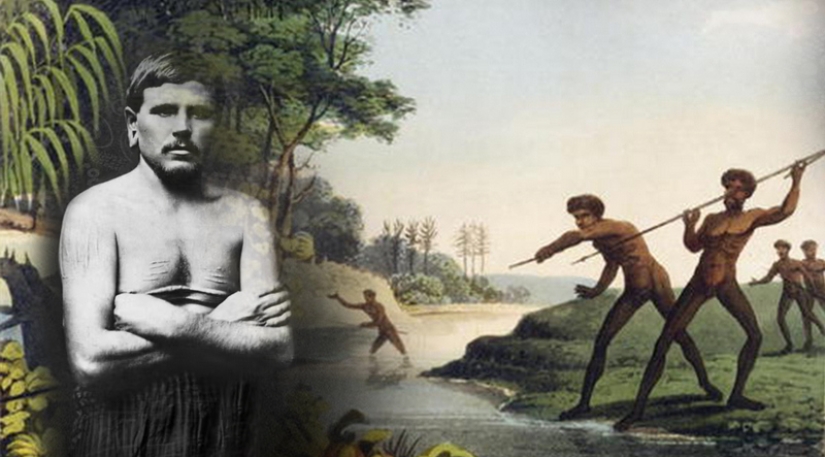
Alphonse Narcisse Pierre Pelletier was born on January 1, 1844, in the small fishing village of Saint-Gilles-Croix-de-Vie on the west coast of France. His father was a shoemaker and a heavy drinker, so the family lived in extreme poverty. Narcisse might have followed his father's example and spent his life shoe sole-punching and singing in the local tavern, but the boy wasn't happy with that prospect.
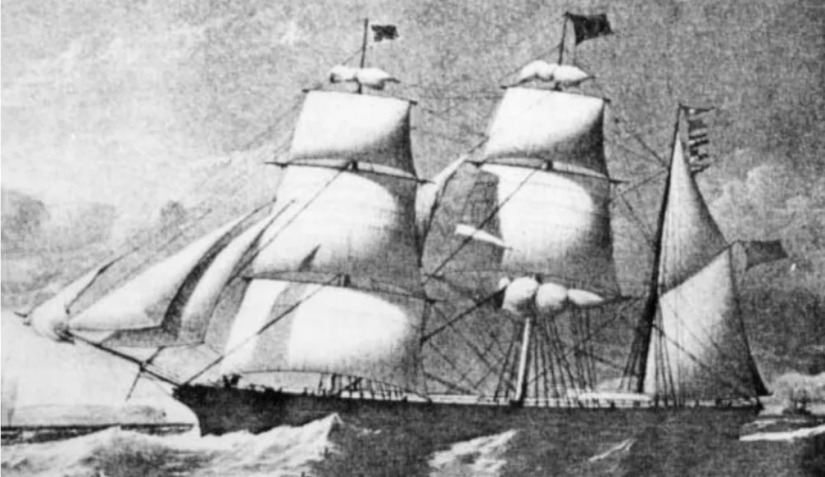
At the age of 12, young Pelletier left his father's home to pursue his dream of becoming a sailor. In August 1857, fate brought the boy to the port of Marseille. There, he found work as a cabin boy on the sailing ship Saint-Paul, bound for the Indian port of Bombay with a cargo of wine. There, the ship was to unload and, taking on Chinese workers, sail to Australia.
The first leg of the voyage passed without incident. The Saint Paul unloaded wine in Bombay and took on over 300 Chinese. The ship set course for Australia in September 1858. The captain, wanting to save time and supplies, made a risky decision. He altered the traditional route and shortened the journey.
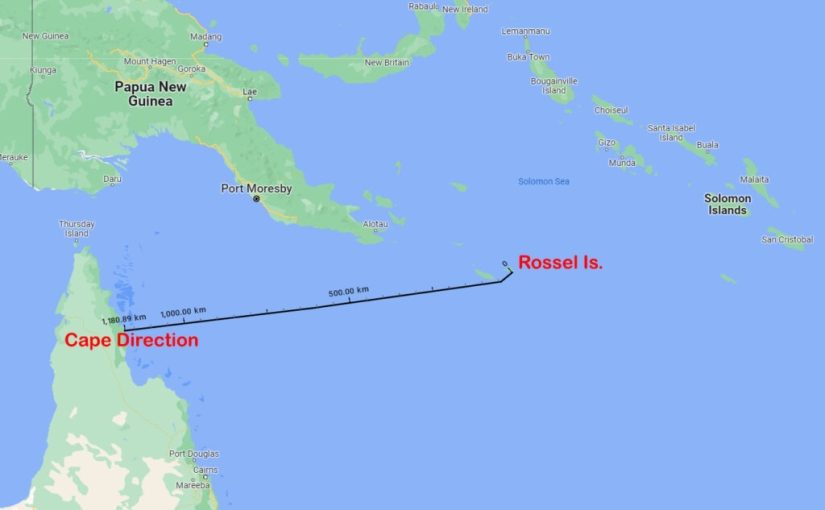
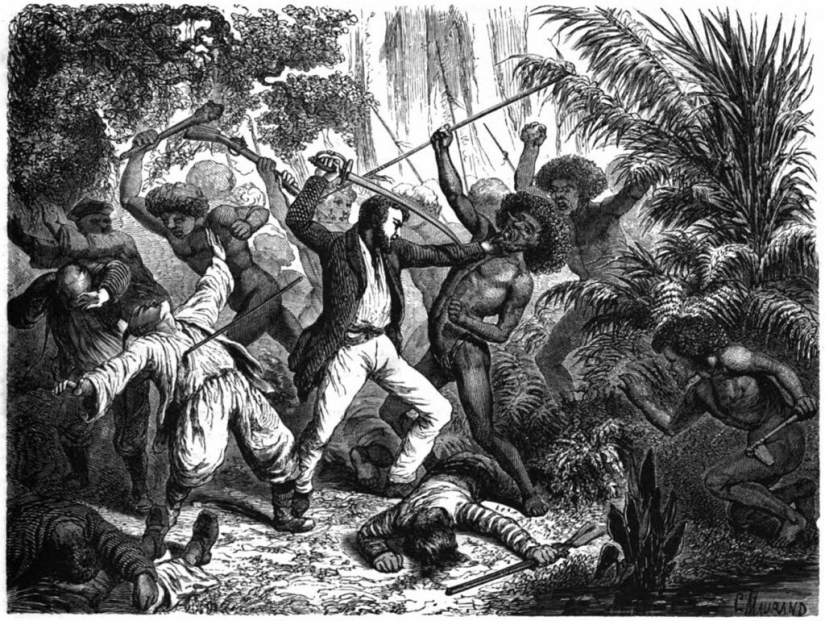
But things didn't go according to plan. The ship ran aground off the coast of Papua New Guinea. Rossel Island was nearby, and Captain Pinard sent part of the crew there in a longboat, hoping to replenish supplies. But the island's natives greeted the strangers with hostility. They attacked the intruders. A hail of arrows and stones rained down on the French, one of which wounded Pelletier in the head. Several sailors were killed.
When the sailors returned empty-handed, the captain realized things were taking a dire turn. The crew and passengers faced the not-so-illusory prospect of starving to death or becoming the locals' dinner. Then Pinard decided on a cowardly move. He disembarked 317 Chinese, telling them he would return for them.
Having made the Saint Paul significantly lighter, the sailors were able to free it from the sandbank and sail away. Three hundred helpless Chinese remained on the shore, and of course, no one intended to return for them. Their subsequent fate is unknown. But given the reputation of the local natives, it can be assumed that they were killed and eaten.
The Saint Paul successfully reached Australia's Cape York Peninsula two weeks later. There, the sailors replenished their fresh water supplies but found no food. So the ship continued along the coast of the Green Continent. However, on a deserted shore, virtually unexplored by Europeans, they abandoned the cabin boy, Narcisse Pelletier.
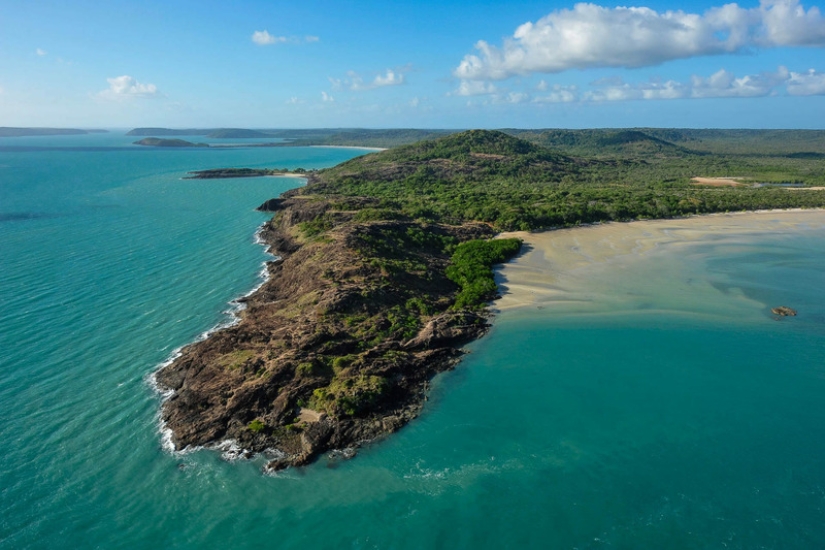
Why Captain Pinard treated the cabin boy, barely more than a child, this way remains unclear. Perhaps Pelletier's wound seemed too severe, and he became a burden? Whatever the case, the cabin boy, wounded and helpless, was left alone on Australia's wildest coast. Certain death awaited him, but fate had other plans for the teenager.
Some time after the Saint Paul's departure, Pelletier was found by three Aboriginal women. They belonged to a local tribe calling themselves the Sandy Shore People. The tribe welcomed the stranger, and the chief took him under his wing. Time passed, and Narcissus recovered. He underwent an initiation rite and became a full member of the Uutalnganu clan.

Pelletier was given a new name—Amglo—and taught the tribe's customs and language. The young man became one of the natives. He participated in hunts, battles with other tribes, and religious rites. Narcisse wore a loincloth and painted his body like his new friends. In short, the only thing that distinguished the young Frenchman from the natives was his skin color.
Pelletier lived with the Sandy Beach people for 17 long years. He was completely content with his new life, earned a certain status within the tribe, and started a family. But it all ended on April 11, 1875. On that day, the ship John Bell approached Cape York Peninsula.
A boat with a crew of sailors was sent ashore to replenish supplies. To their surprise, they spotted a European on the shore of Night Island Bay. A young, fair-skinned man stood among a crowd of natives, watching the approaching Englishmen. The sailors tried to speak to him, but to no avail—the white native didn't speak English.
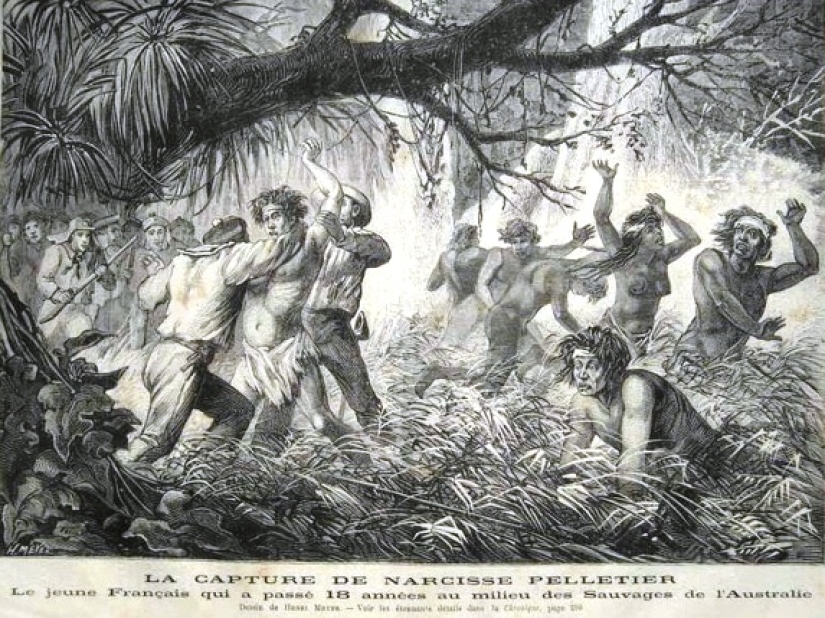
They motioned for him to follow them aboard, but the stranger was adamantly opposed. Apparently, he was perfectly content with the situation. Deciding that good deeds should be met with force, the sailors subdued their new acquaintance and brought him aboard the John Bell to the captain. He decided to rescue Pelletier, who didn't need any help at all.
Captain Joseph Fraser, noticing the natives' negative reaction to Pelletier's abduction, entered into negotiations. He managed to reach an agreement with the chief, and 31-year-old Narcisse-Amglo was purchased from the natives for a few lengths of cloth and a couple of kilograms of nails. It is known that the man was reluctant to leave his new homeland and attempted to escape twice.
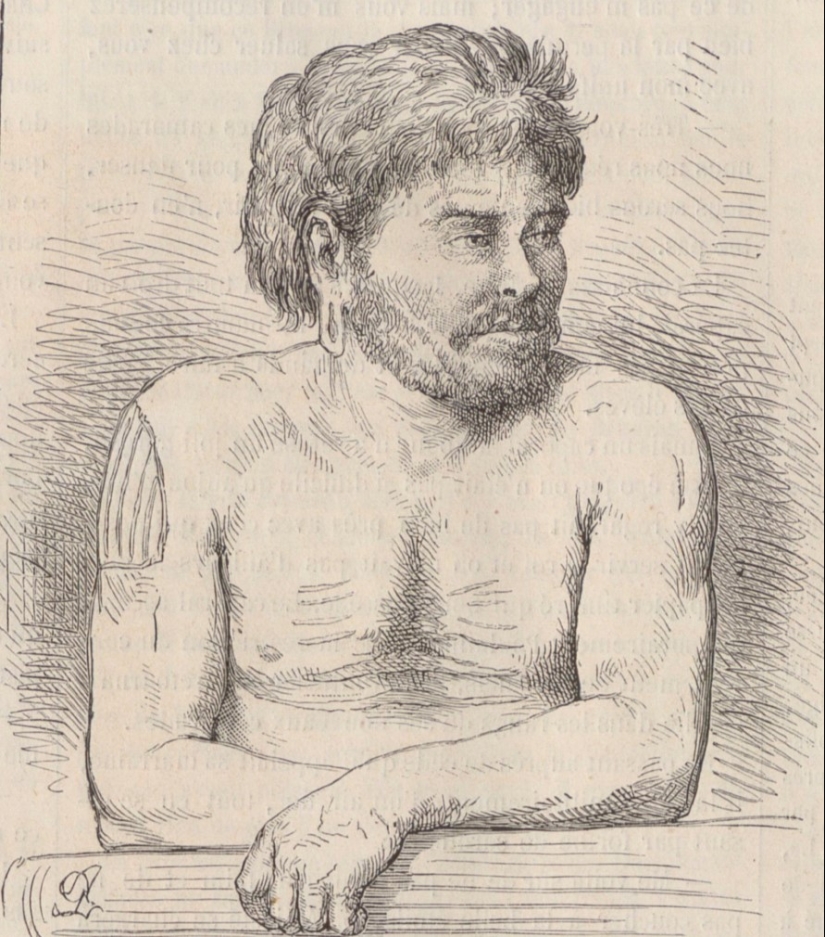
Having completed their duties ashore, the Englishmen weighed anchor and set out to sea. Fraser managed to find common ground with Pelletier, who told him his story. He told the captain that he was quite content with his life among the tribe. Pelletier even had a wife ashore, though they had not yet had children. Later, researchers discovered that Narcisse-Amglo had indeed fathered two sons, possibly after his departure.
The man disembarked in Sydney in July 1875. After a month in the unfamiliar city, Pelletier found a way to sail home to France. On December 13, 1875, he landed in the port of Toulon. And on January 2, 1876, he reunited with his family in Saint-Gilles.

News of the return of Narcisse Pelletier, who had disappeared almost 20 years earlier, quickly spread throughout the area. Journalists and curious onlookers began to flock to the old shoemaker's house daily. Narcisse was constantly followed—onlookers followed him everywhere. His fame didn't bring him much benefit. But local authorities found work for the celebrity.
Pelletier was appointed lighthouse keeper near Saint-Nazaire. The Frenchman's life was devoid of further adventure. He married 22-year-old Louise Désirée Mabiloux in 1880, but the couple had no children. Narcisse died on September 28, 1894, at the age of 50. The death certificate indicates that Pelletier worked as a harbor clerk.
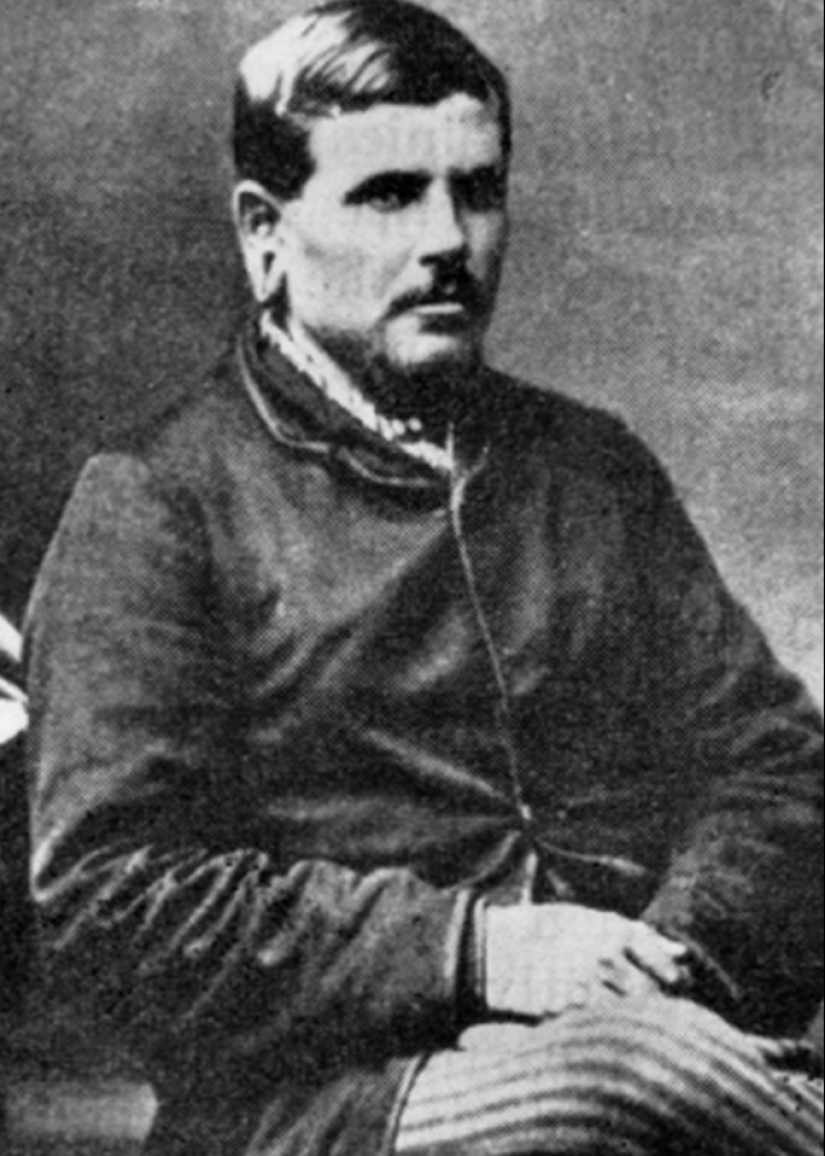
Thus ended the story of a man who lived between two worlds and was never able to fully fit into either. His fate still evokes debate: was he a victim of circumstance or did he find a true home among the natives? Where do you think the line lies between saving and interfering in someone else's life, and did the sailors have the right to take Pelletier from a place where he had already become a different person?
Recent articles

It's high time to admit that this whole hipster idea has gone too far. The concept has become so popular that even restaurants have ...

There is a perception that people only use 10% of their brain potential. But the heroes of our review, apparently, found a way to ...
New Year's is a time to surprise and delight loved ones not only with gifts but also with a unique presentation of the holiday ...