
Okapi: an animal that even in the 20th century scientists considered a myth
Categories: Africa | Animals | Science
By Pictolic https://pictolic.com/article/okapi-an-animal-that-even-in-the-20th-century-scientists-considered-a-myth.htmlThe okapi is one of the most enigmatic creatures on the planet. This mysterious forest animal with striped legs and an incredibly long, dark-blue tongue remained unknown to European science for centuries, existing only in the legends of the indigenous peoples of the Congo. European scientists dismissed stories about it as fiction until they discovered real traces of this "forest ghost" in the early 20th century. How did this large mammal, living alongside humans, manage to remain a myth for so long?

Even today, not everyone knows about the okapi. The animal does not do well in captivity and rarely breeds in zoos, making it a rarity. In the wild, okapi live exclusively in the remote tropical forests of the Democratic Republic of the Congo—they are found nowhere else on the planet.

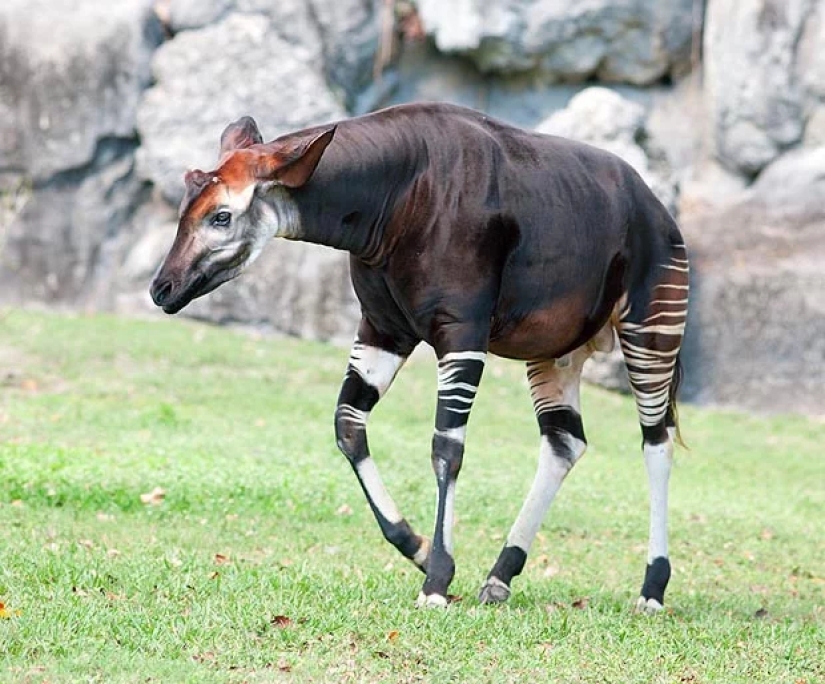
Anyone who sees an okapi in a photo for the first time suspects it's a Photoshop trick. The animal truly does look strange: its body is horse-like, its legs are striped like a zebra's, and its head and neck are clearly giraffe-like. And this is no coincidence: okapi are the only living close relatives of giraffes.

Unlike giraffes, okapi chose dense tropical jungles rather than the savannah. This is why they remained unknown to science for so long. Okapis are true masters of camouflage: the stripes on their legs and rump perfectly break up their silhouette, allowing them to blend into patches of light and shadow. Their large, sensitive ears and excellent sense of smell allow them to hear or smell danger in advance and disappear silently into the undergrowth.
One of the okapi's most striking features is its long, incredibly flexible, dark blue tongue, up to 30–35 centimeters long. With it, the animals deftly pluck leaves from bushes and even from fairly high branches. Okapis also use this tongue to clean themselves, effortlessly cleaning the inside of their eyes and even ears.

Males have small, skin-covered horns; females do not. An adult okapi is approximately 2.1 meters long, weighs approximately 250 kg, and has a tail that is 30–40 cm long. They are solitary, diurnal, and extremely shy and fast-footed.
Gestation lasts an impressive 450 days—almost 15 months. The birth takes place in the wilderness, with the cub being born completely helpless and spending the first few days simply lying in the grass, guarded by its mother, before finally standing.
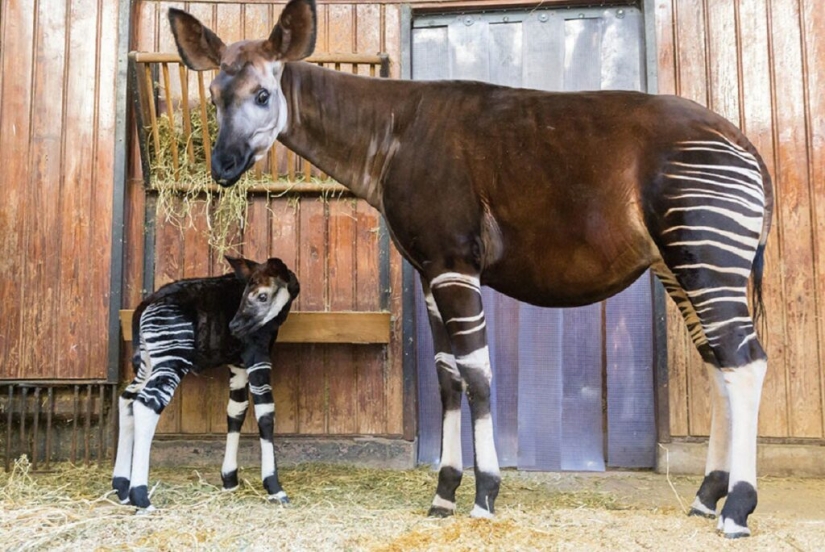
The mother never strays far and maintains constant vocal contact: adult okapis make a low cough, while the babies produce a soft moo or whistle. When threatened, the mother fiercely protects her cub—she has even been known to try to drive off a group of armed men.
Europeans discovered the okapi surprisingly late. The indigenous people of Congo were, of course, well aware of the animal and even hunted it, but it remained unknown to Europeans until the early 20th century. The first to hear of it was the British explorer Henry Morton Stanley, who learned of it in 1890 from pygmies living in the most remote regions of Central Africa.
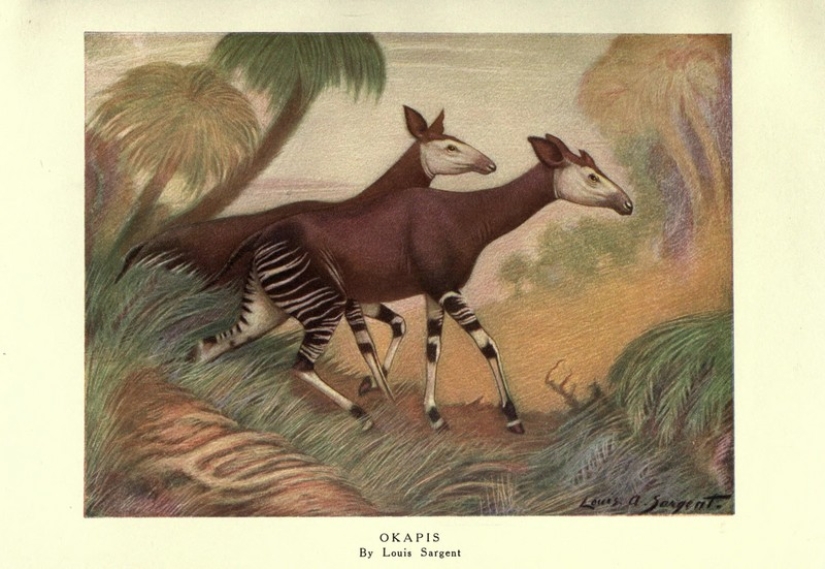
Stanley noticed that his horses made no impression on the pygmies. They claimed that very similar animals lived in the forest. In 1899, the governor of Uganda, Sir Harry Johnston, decided to investigate the myth of the "forest horses" and set out to find them.
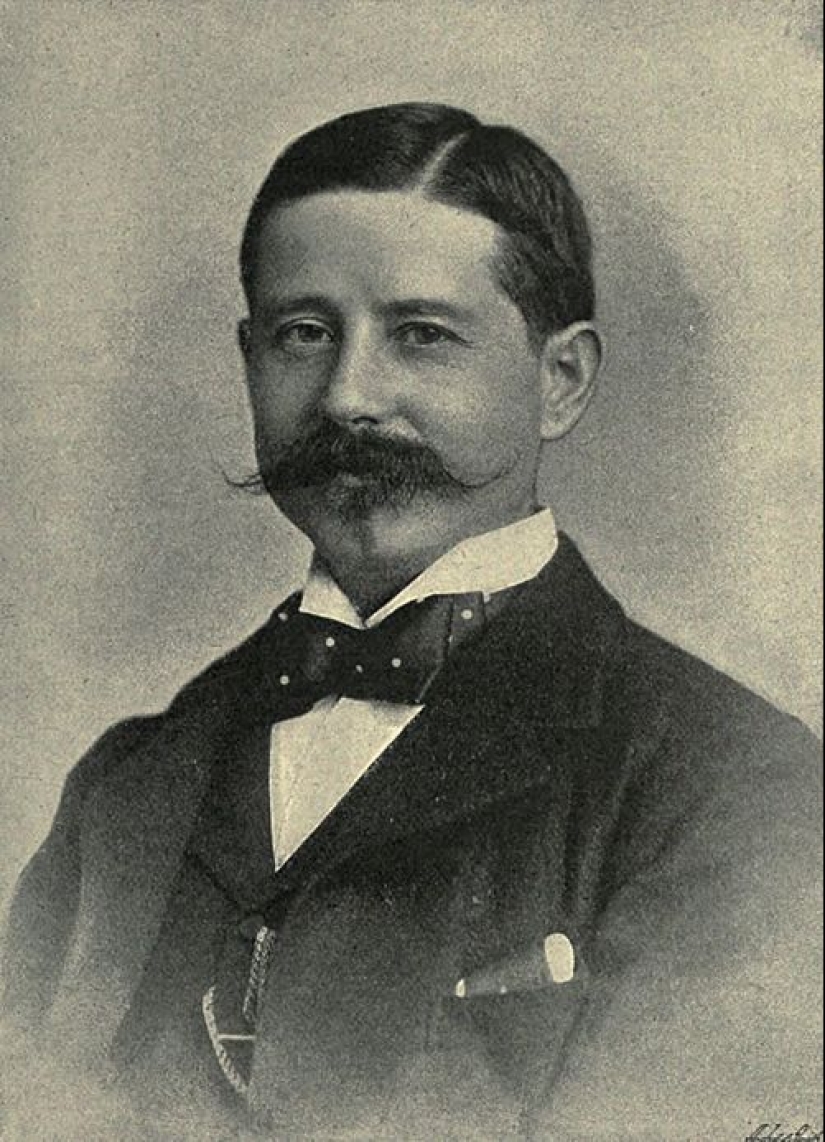
Johnston himself didn't get to see the animal, but he heard the pygmies call it "okapi" and received two pieces of its skin from Belgian hunters at Fort Beni. These fragments were sent to the Royal Zoological Society in London.
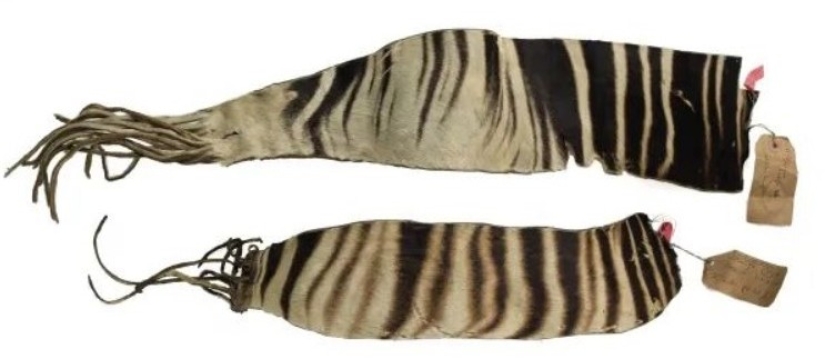
Scientists determined that the skin belonged to neither a horse nor a zebra, but to a species unknown to science. In 1900, zoologist Philip Sclater published a description of the new animal, dubbed "Johnston's horse." At that time, no European had ever seen a living okapi, or even a whole carcass—the discovery was made from scraps of skin. Naturally, Sclater had many critics who openly ridiculed his "cabinet" discovery.
Everything changed in 1901, when a complete skin and two skulls were delivered to London. After careful examination, it became clear that okapi are not related to horses, but are most closely related to the ancient ancestors of giraffes. The species was named Okapia johnstoni—in honor of Johnston and the pygmies who called the animal "okapi."
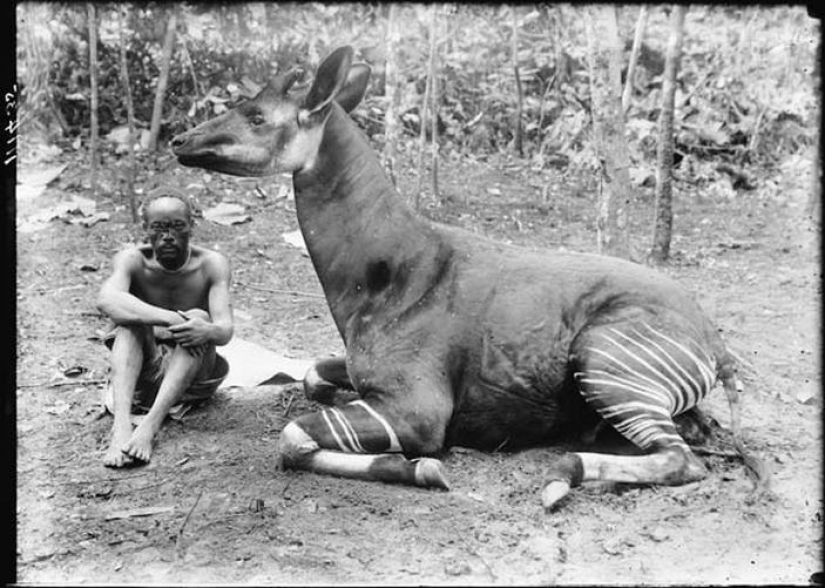
The first live okapi was brought to Europe only in 1919—to the Antwerp Zoo. It survived in captivity for only 50 days. Subsequent specimens also died quickly. It wasn't until 1928 that a female was brought to Antwerp, surviving for several years (she died of starvation during World War II in 1943).
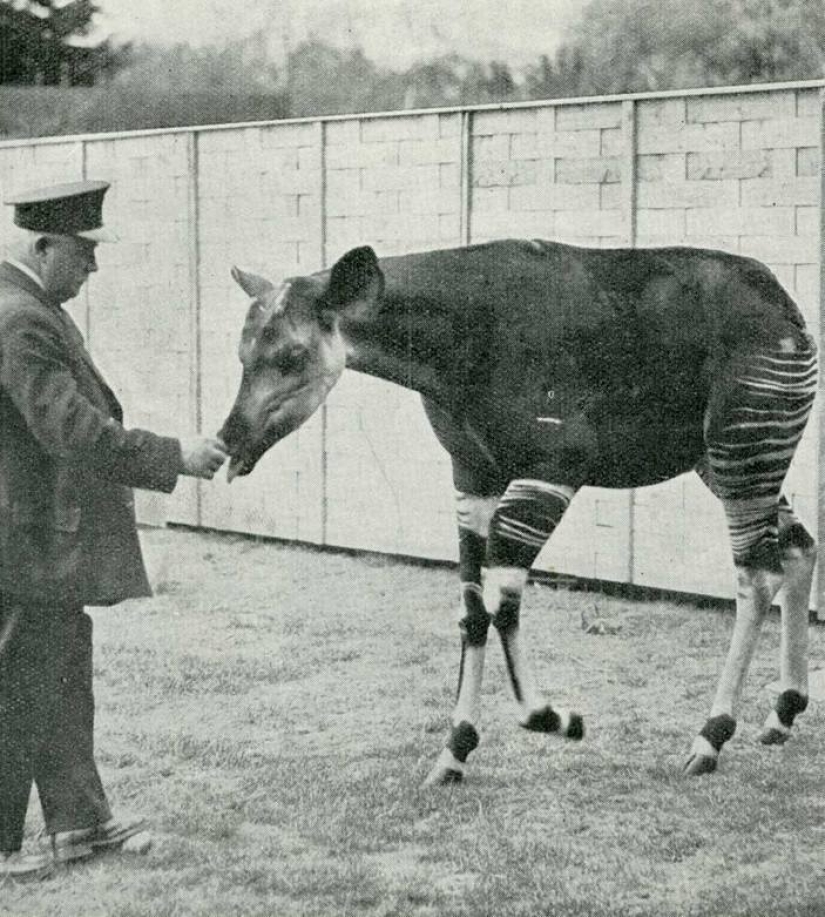
The first cub born in captivity was born in 1954 in Antwerp, but died soon after. The first surviving cub was born in 1956 at the Paris Zoo. To this day, keeping okapis remains a formidable challenge, and successful breeding is a great success. Today, they can be seen in only 143 zoos worldwide.
Today, okapi are found exclusively in the Democratic Republic of Congo. Decades of civil war and instability have greatly hampered the study of the species. Their exact population is unknown—estimates range from 35,000 to 50,000 individuals in the wild and about 160,000 in zoos.

The world's only scientific station for studying okapi is located in the Epulu River valley, but constant fighting makes work there extremely dangerous.

The okapi remains one of the most enigmatic large animals on the planet—a species that, even in the 21st century, manages to elude science as deftly as jungle predators. Its story reminds us that the world is still full of mysteries that can surprise even the most seasoned researchers. Do you think there could be undiscovered large mammals out there today?
Recent articles

It's high time to admit that this whole hipster idea has gone too far. The concept has become so popular that even restaurants have ...

There is a perception that people only use 10% of their brain potential. But the heroes of our review, apparently, found a way to ...
New Year's is a time to surprise and delight loved ones not only with gifts but also with a unique presentation of the holiday ...