
Beijing 1947, in color: at the turn of the eras
Categories: Asia
By Pictolic https://pictolic.com/article/beijing-1947-in-color-at-the-turn-of-the-eras.htmlOne of the greatest cities in the world was captured on color film the American photographer Dmitri Kessel in 1947. For a city with thousand years of history it was a brief moment between past and future — 2 years as ended the Japanese occupation and only two 2 years left before the capture of the Northern capital by the red army of Mao. All these four years between the Japanese and Maoist Beijing was officially called "Beiping" ("North peace"), because the official capital at that time was in Nanjing. When Mao in October 1949, proclaimed the people's Republic of China with its capital in Beijing, the city returned the name "Beijing" ("Northern capital"), is used prior to 1929 and the period of Japanese occupation (1937-1945).
The pictures we see are actually more feudal Beijing the Imperial age, of the signs began in 1911 Westernization — only tramways, Telegraph poles and a few European species.
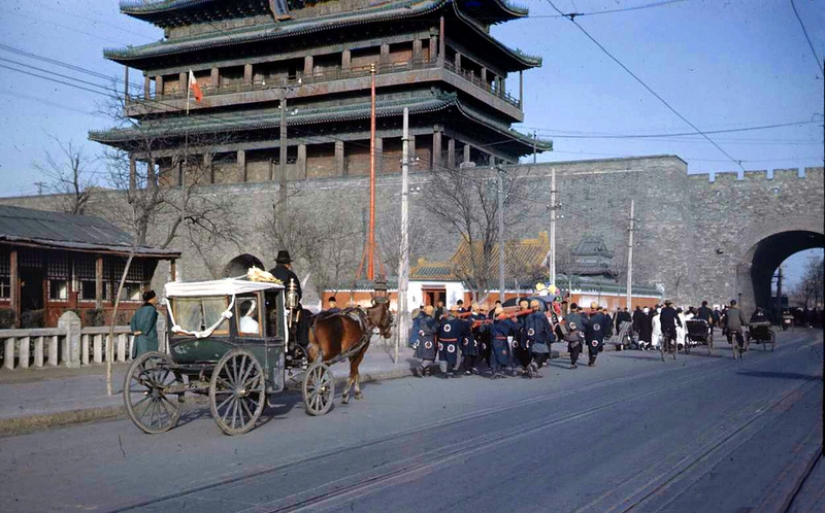
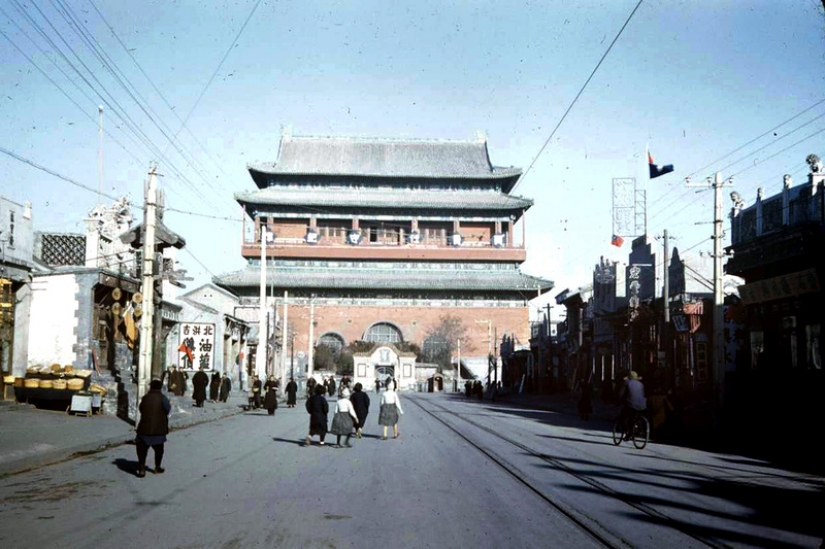
The Central streets are deserted, hardly any cars, and even cyclists - rare
Where else can you see on the colored film, this method of getting around the city?
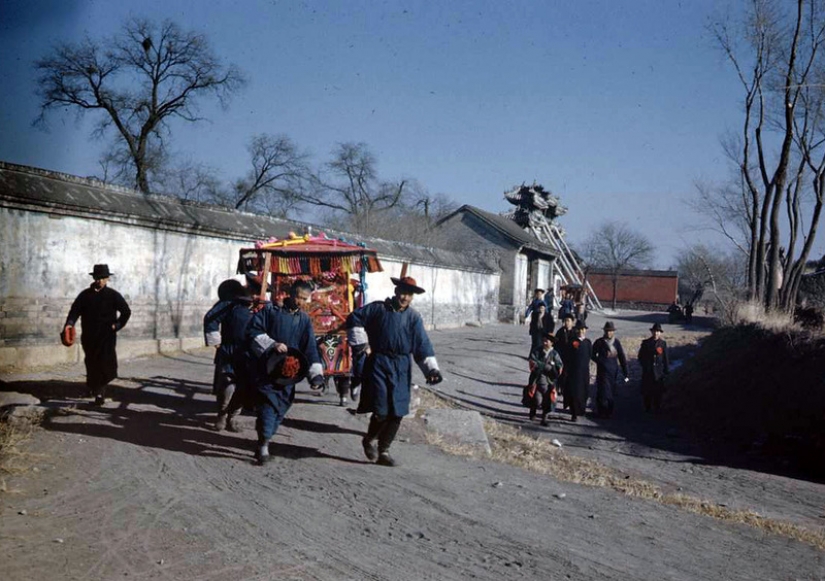
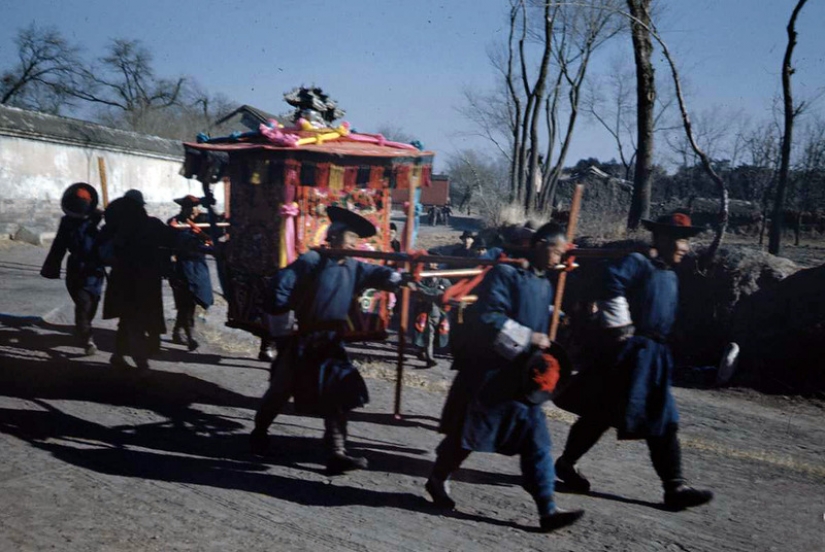
EU is difficult to remember what it's called - the palanquin
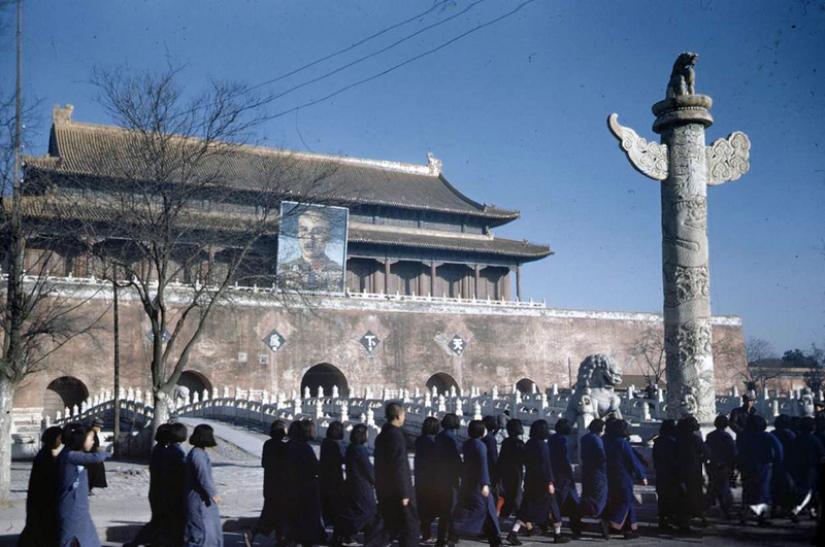
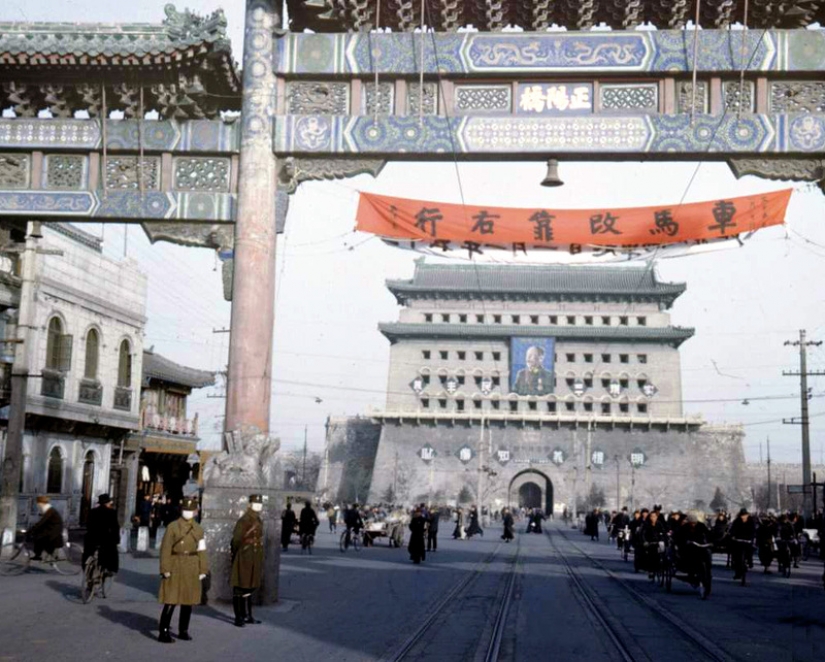
On the "Gate of Heavenly Peace", is now forever taken by the portrait of Mao, in 1947, still wearing the face of Generalissimo Chiang Kai-shek
And it was not the only portrait
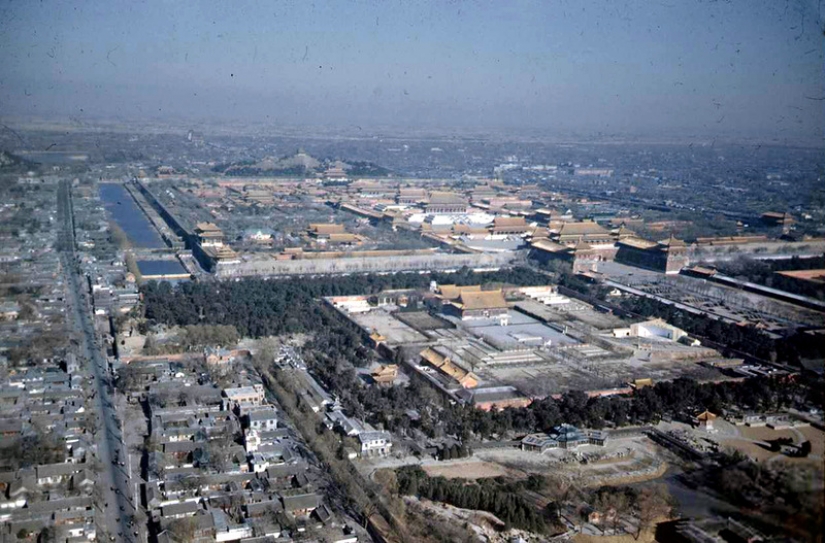
Beijing from the air. The core of the urban composition is the Forbidden city, a huge complex of Imperial Palace, almost is an analogue of the Moscow Kremlin in the past
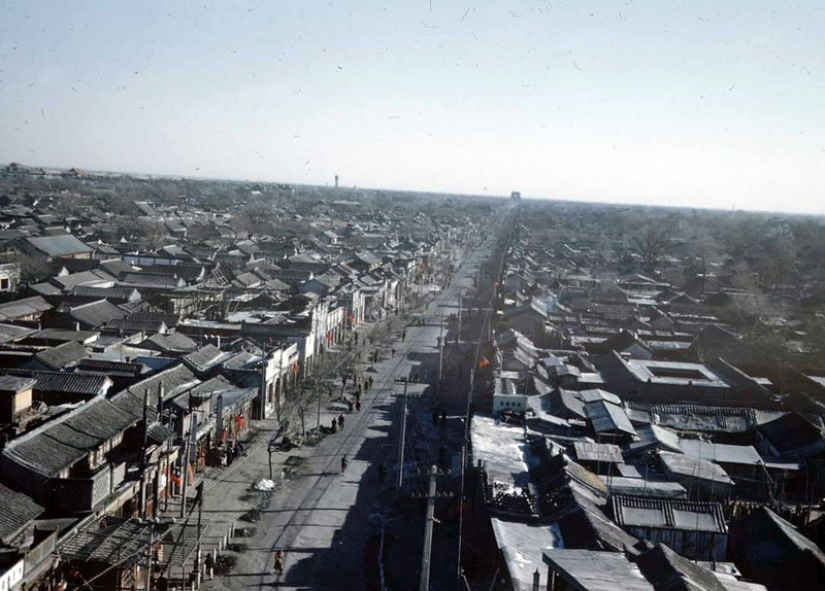
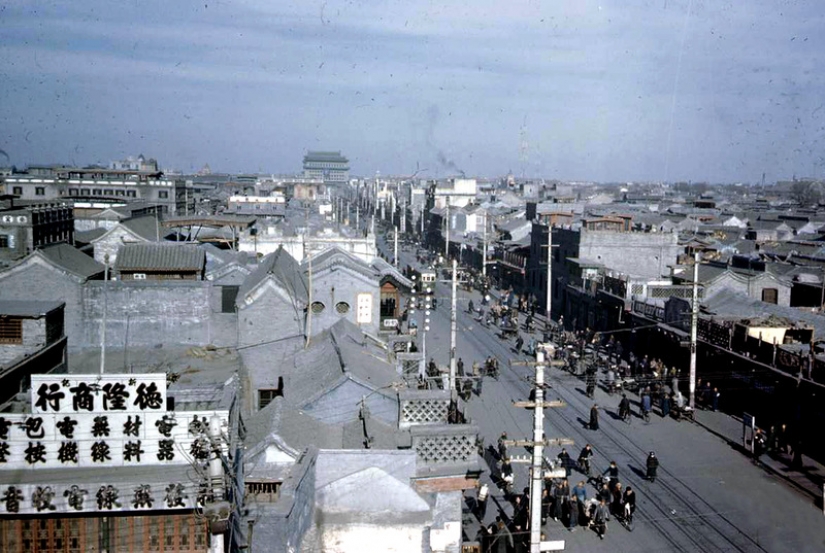
A Beijing 1947, and 1977, it is 99% one-story city, consisting of districts"Hutong"
Now some "Hutong" is saved in the centre of the city as historic monuments of urban culture. There are no streets, only a maze of narrow passages between the houses, pigs in the back yards, all belongings in the yard. A completely unfamiliar world. One of the main shopping streets
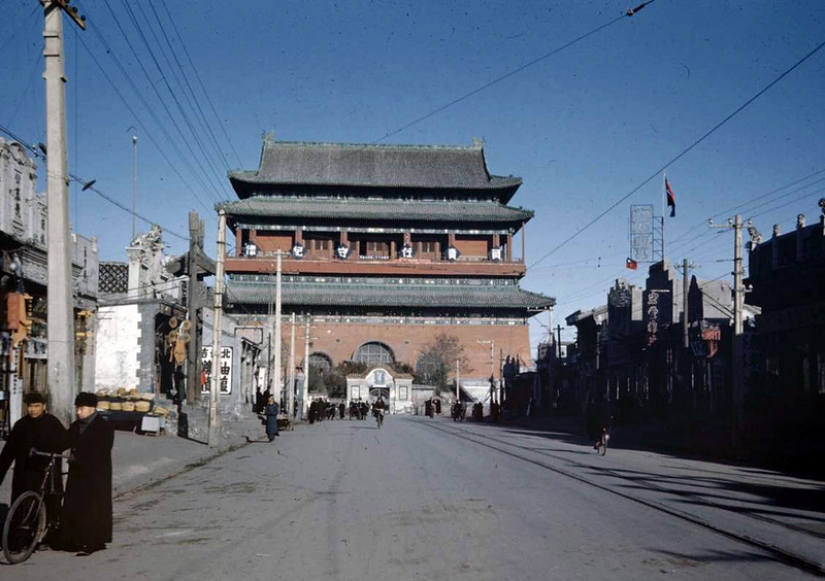
Fortunately, these ancient gate in the city centre has survived to the present day
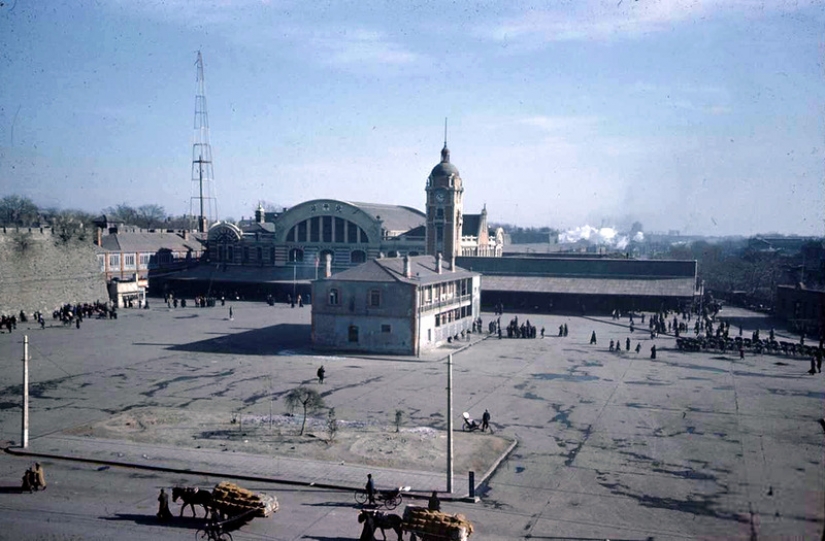
Against this background, the building of the well.d. station European style plus the Golden look unexpectedly
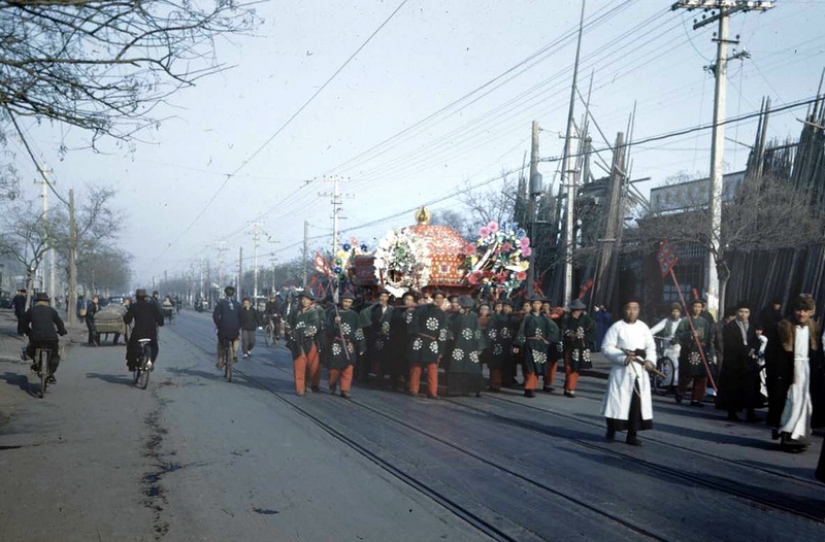
Some kind of procession on city street
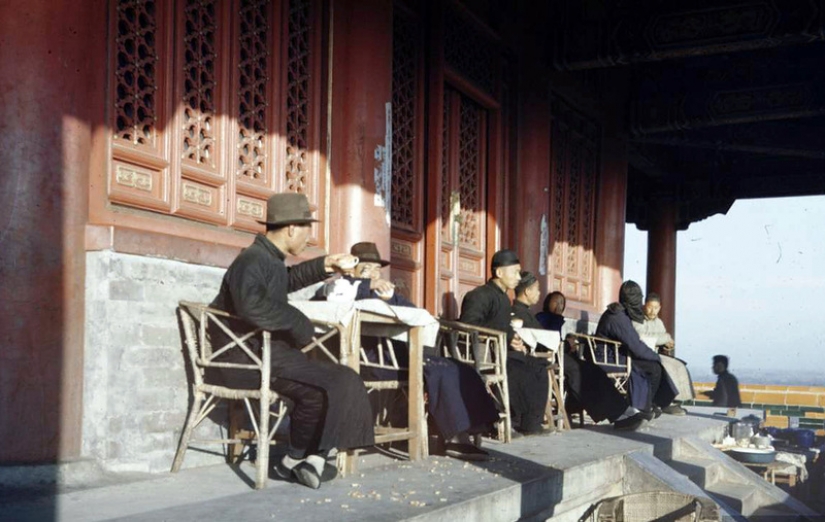
Dining at the pagoda on versine one of the hills in the city
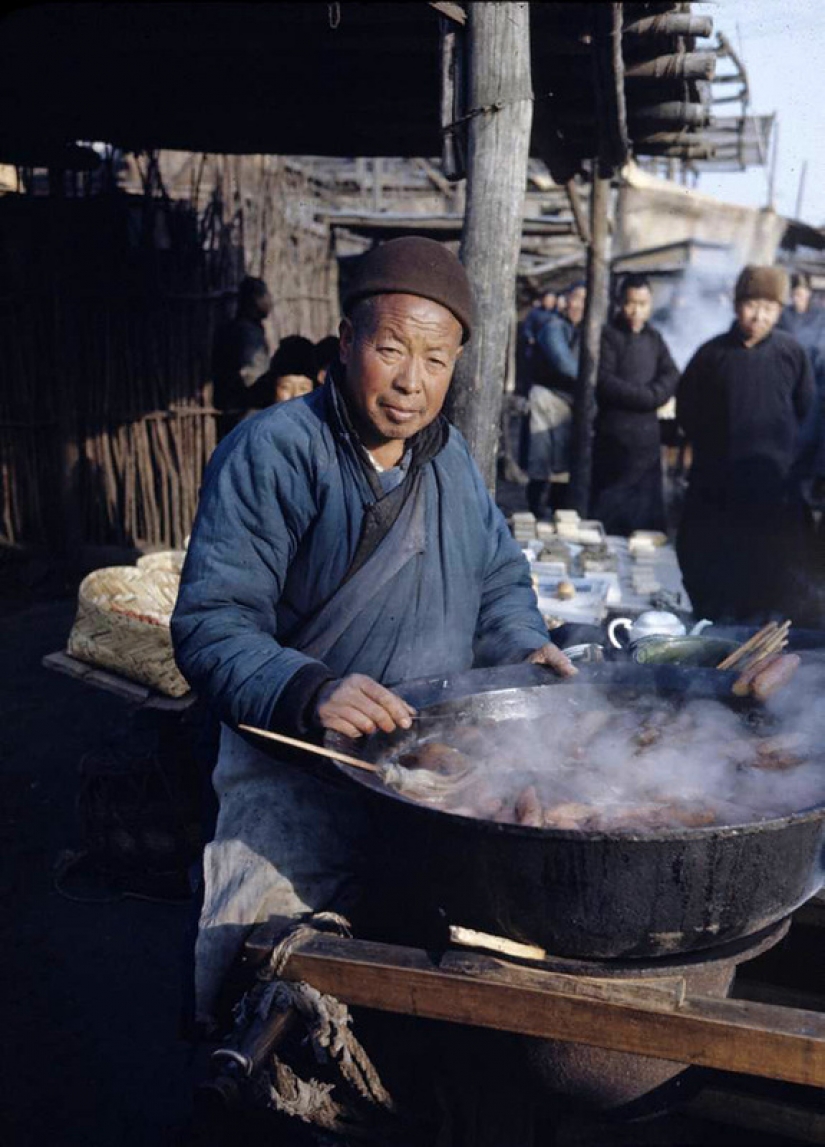
City catering. Generally, it is now China can be seen very often, and today in London these characters are on Kamenskom the market.
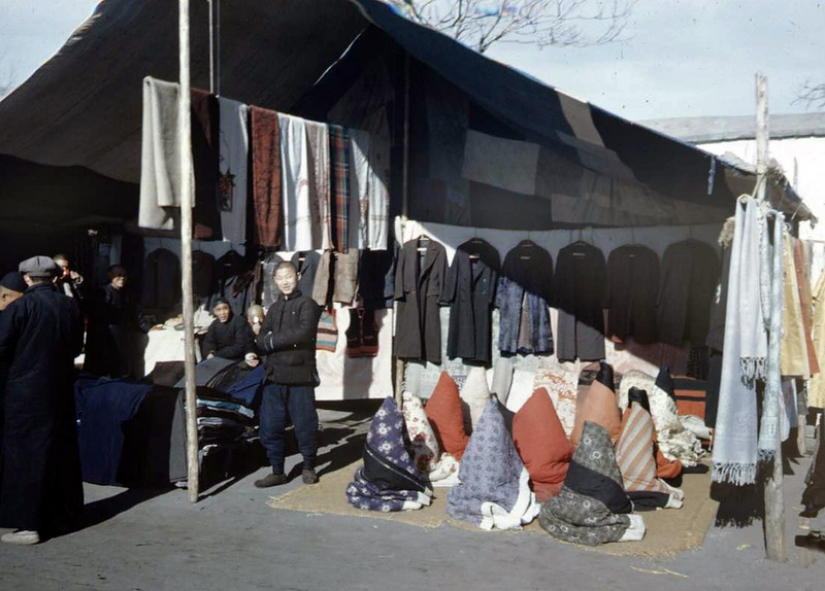
Chinese clothing market forever
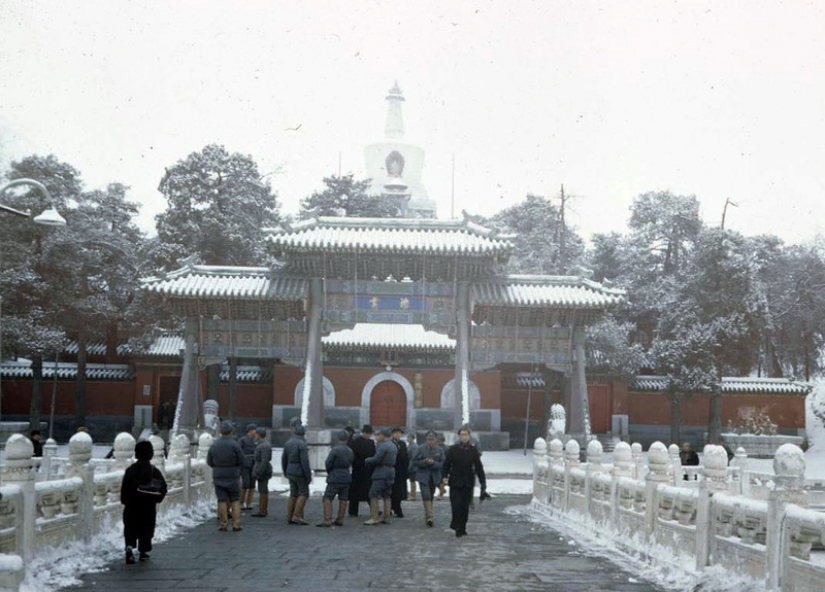
Beijing winter came
Trishaw updates the path
And the lights in the art Nouveau style!
Keywords: 20th century | 40s | China | Beijing | Colour image
Post News ArticleRecent articles

It's high time to admit that this whole hipster idea has gone too far. The concept has become so popular that even restaurants have ...

There is a perception that people only use 10% of their brain potential. But the heroes of our review, apparently, found a way to ...
Related articles

We are accustomed to the fact that on the packaging of tea, write "loose" and rarely think about what the word means. Meanwhile, ...

The Indochina Peninsula, located in southeast Asia, is a favorite place for tourists all over the world. Myanmar, Thailand, Laos, ...

Human intervention in the affairs of nature is extremely rarely successful. Especially a lot of trouble was brought to the ...
New Year's is a time to surprise and delight loved ones not only with gifts but also with a unique presentation of the holiday ...