
1922: discovery of Tutankhamun's tomb
Categories: History
By Pictolic https://pictolic.com/article/1922-discovery-of-tutankhamuns-tomb.htmlOn 4 November 1922, discovered the tomb of Tutankhamen in Egypt. The tomb is located in the valley of the Kings, and it is the unique almost not plundered tomb, has come down to scholars in its original form, and although it was opened twice ancient Egyptian burial thieves. It was discovered in 1922 by two Englishmen — Egyptologist Howard Carter and Amateur archaeologist Lord Carnarvon. The tomb survived numerous decorations, as well as the sarcophagus of pure gold with the mummified body of the Pharaoh.
In 1907, Egyptologist and archaeologist Howard Carter was hired by George Herbert, the 5th Earl of Carnarvon, to monitor excavations in the Egyptian Valley of the kings. The scientist managed to build up a good reputation, carefully describing and keeping an open.
Search in the valley, which lasted many years, gave modest results that, over time, brought upon Carter wrath of the employer. In 1922 Lord Carnarvon told him that next year will stop funding for the work.
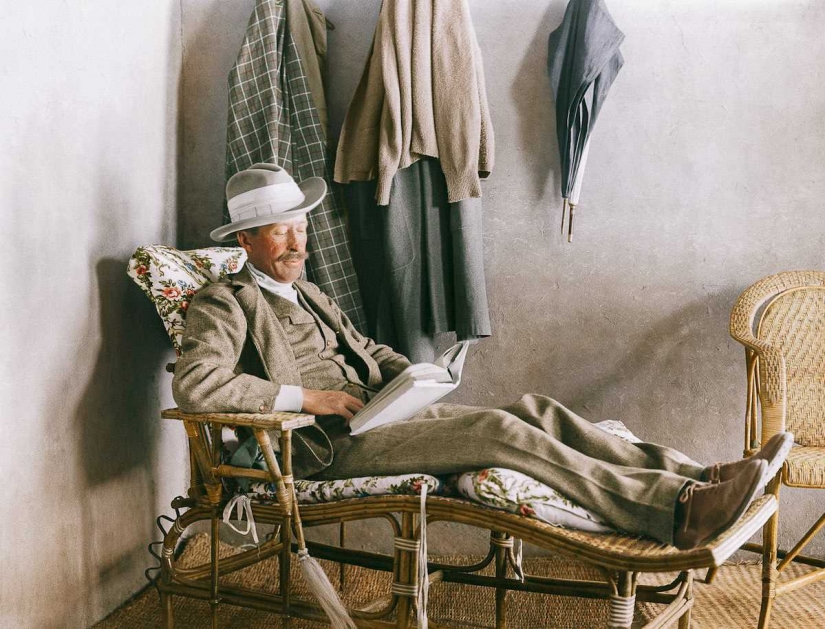
1. 1923. Lord Carnarvon, financed the excavations, reading on the porch of the crankcase near the Valley of the kings.
Nov 26, Carter, with Carnarvon opened a small hole in the corner of the door at the end of the stairs. Holding the candle, he looked inside.
"At first I could see nothing, the hot air escaped from the room, causing the candle flame flickered, but soon, once my eyes adjusted to the light, slowly out of the fog appeared the details of the room, strange animals, statues and gold — everywhere the glint of gold" (Howard Carter).
A team of archaeologists have discovered the tomb of Tutankhamun, boy-king who ruled Egypt from about 1332 to 1323 BC.
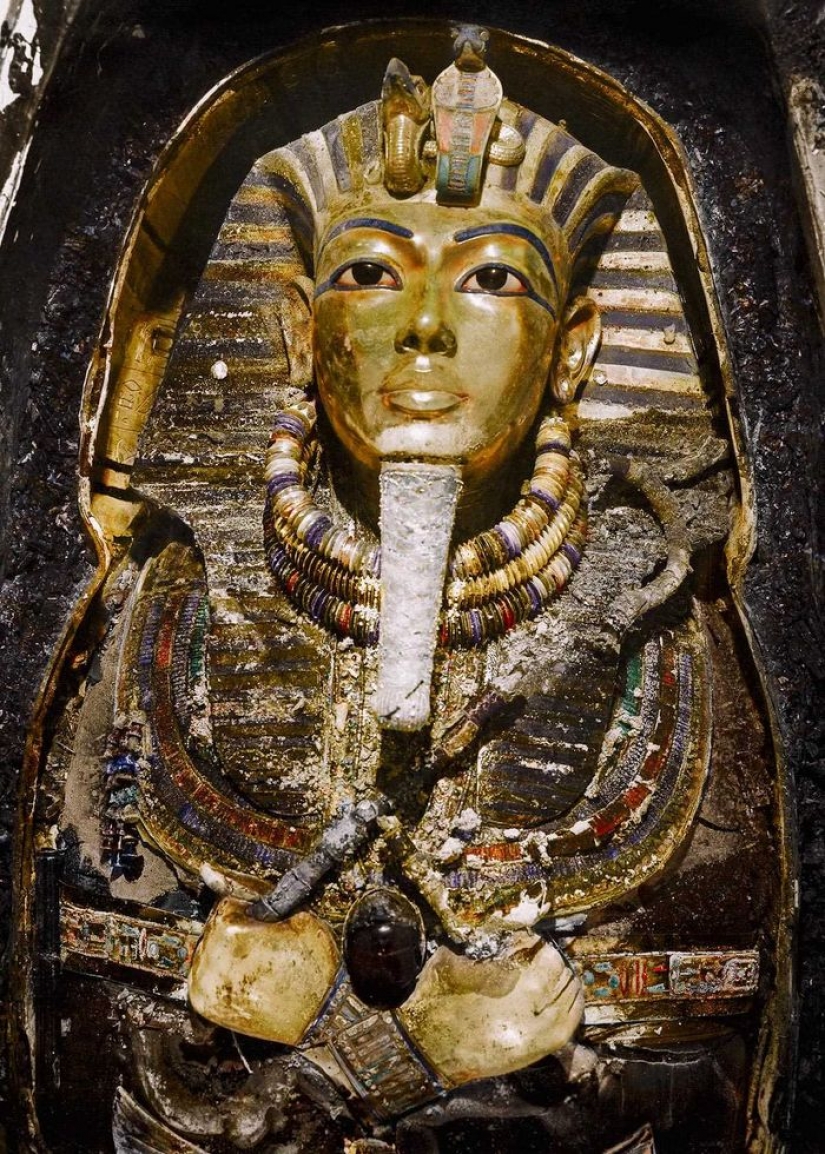
2. November 1925. Death mask of Tutankhamun.
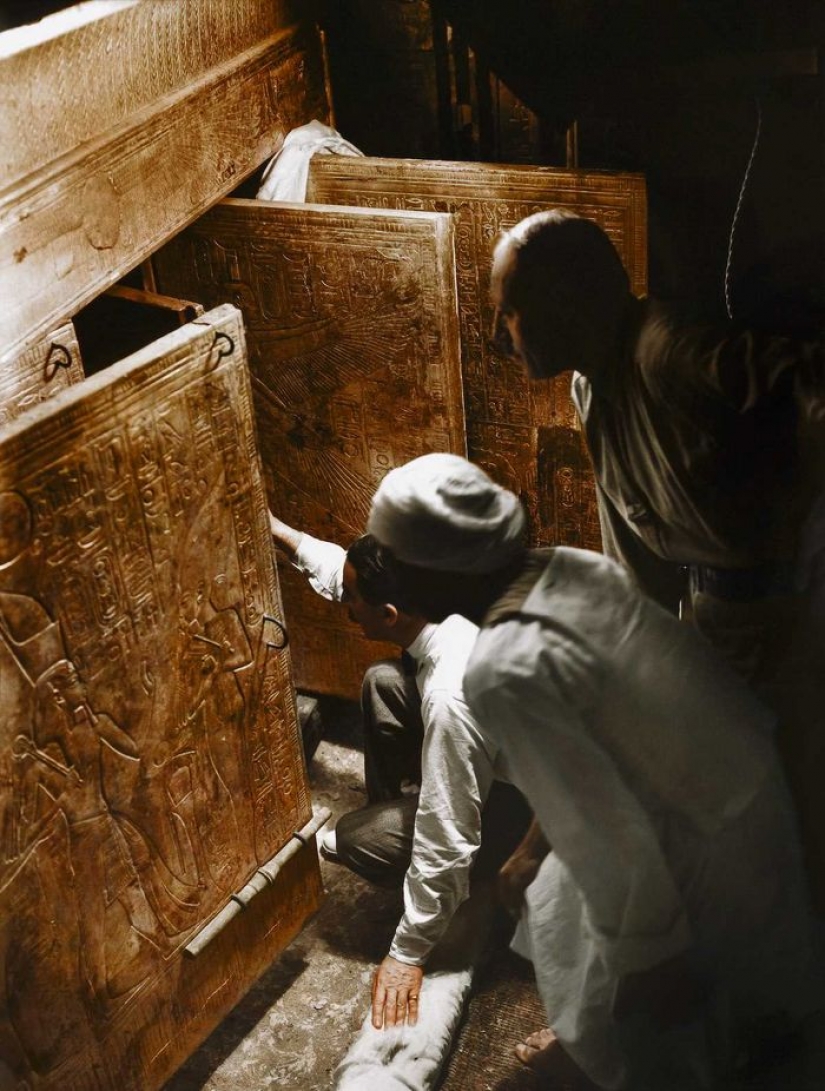
3. 4 Jan 1924. Howard Carter, Arthur Callender and an Egyptian worker open the doors to their first glimpse of the sarcophagus of Tutankhamun.
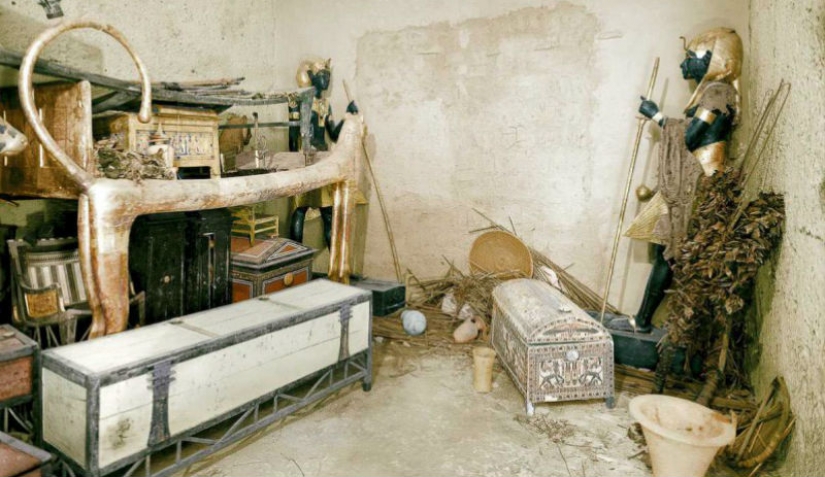
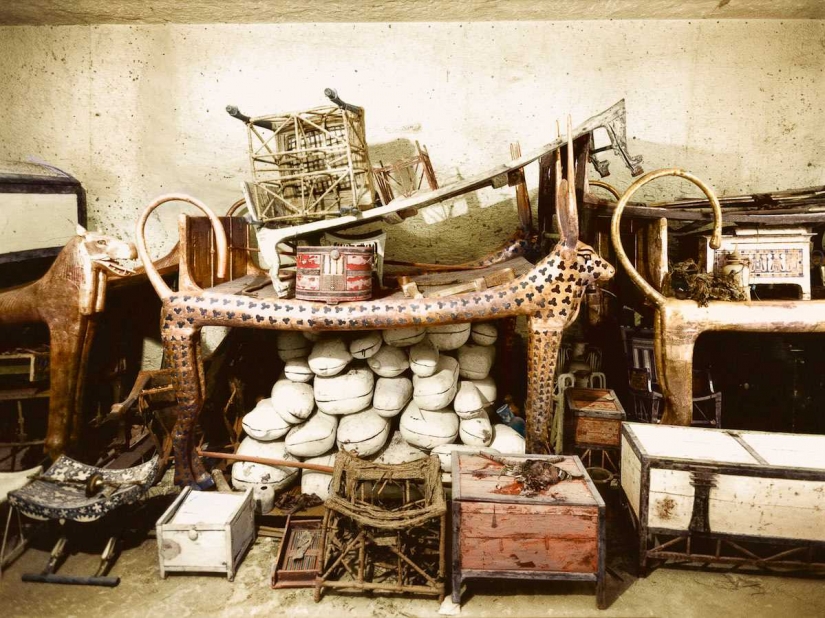
4. December 1922. Ceremonial bed in the form of a Celestial cow surrounded by supplies, and other objects in the front room of the tomb.
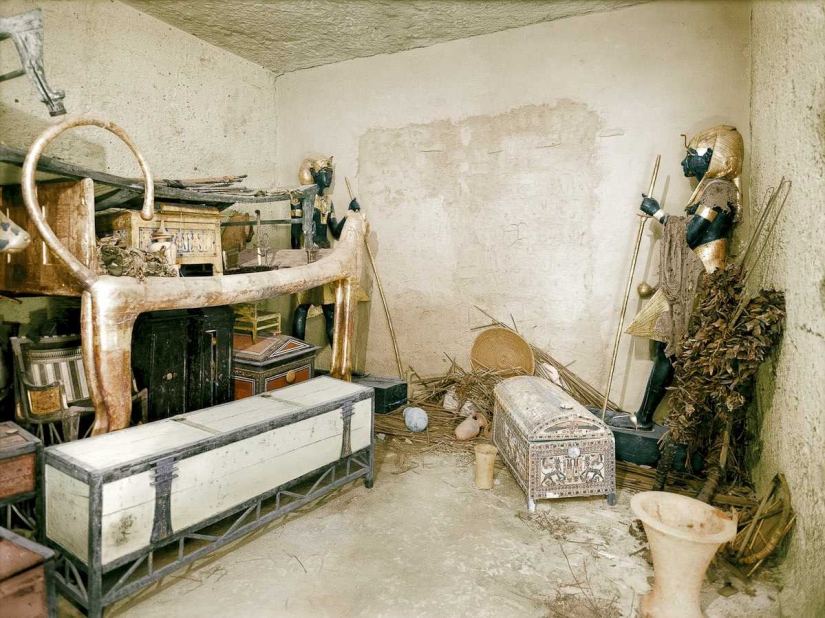
5. December 1922. Gold plated box-the lion and other objects in the hallway. Wall of the burial of the rest is guarded by the black statues of the Ka.
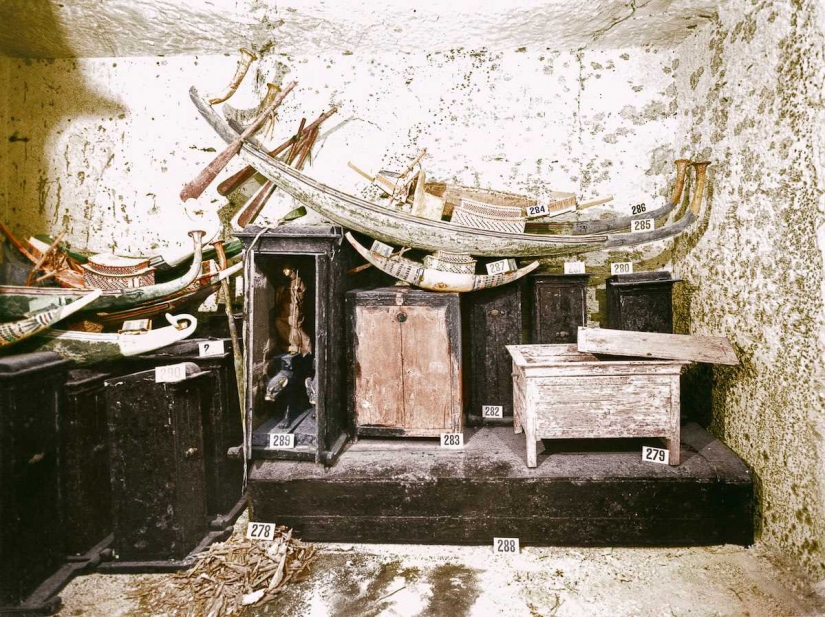
6. 1923. Set the canoes in the Treasury of the tomb.
7. December 1922. Gold plated box-the lion and inlaid chest of clothes among other objects in the front room.
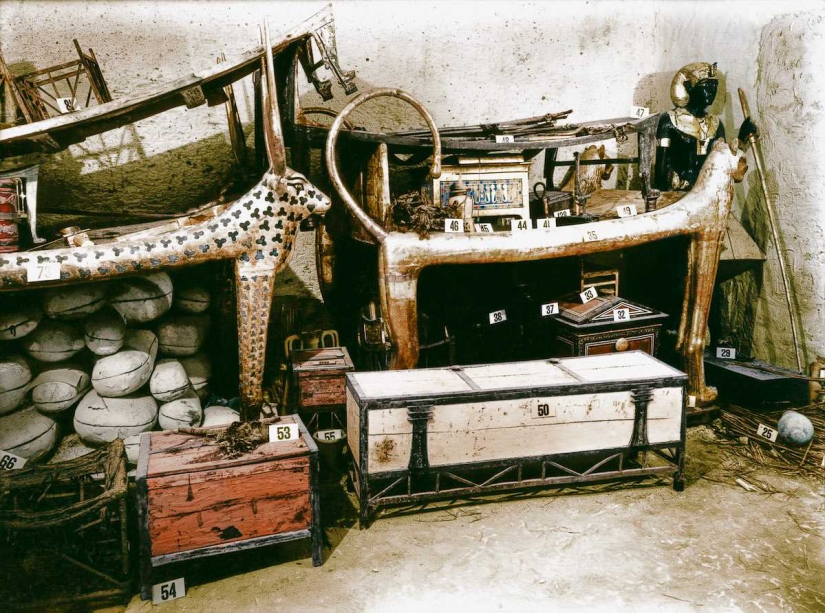
8. December 1922. Under the bed-a lion in the front room a few boxes and chests, and a chair of ebony and ivory that Tutankhamun used in childhood.
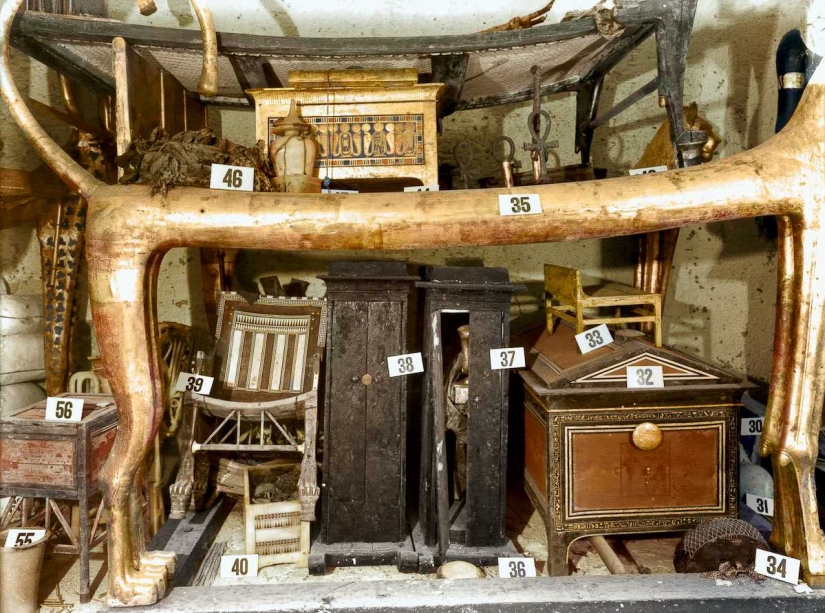
9. 1923. Gold-plated bust of the Heavenly cow Mehurt and chests were in the treasure room of the tomb.
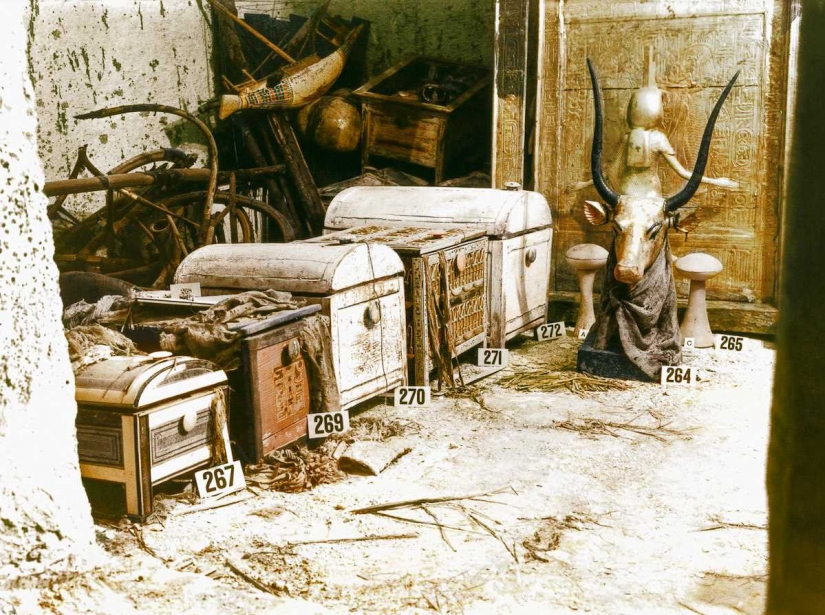
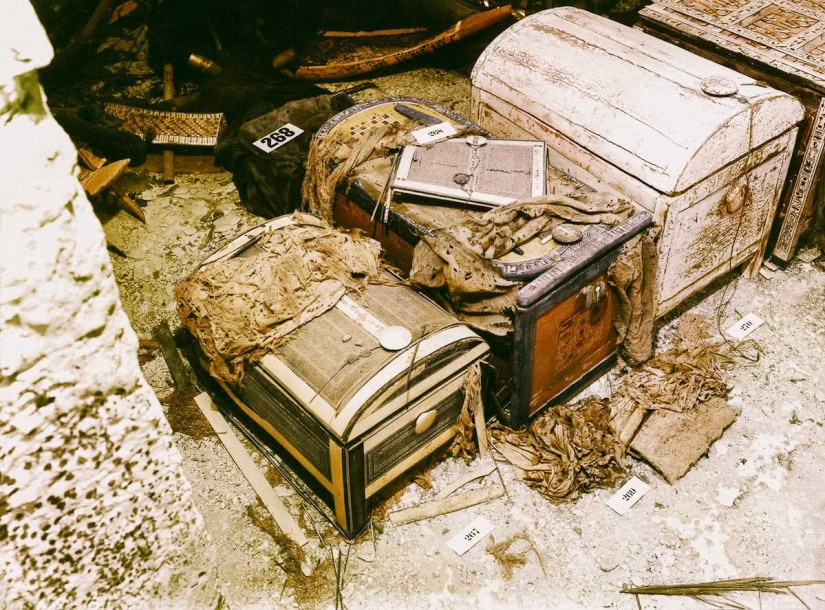
10. 1923. The chests inside the Treasury.
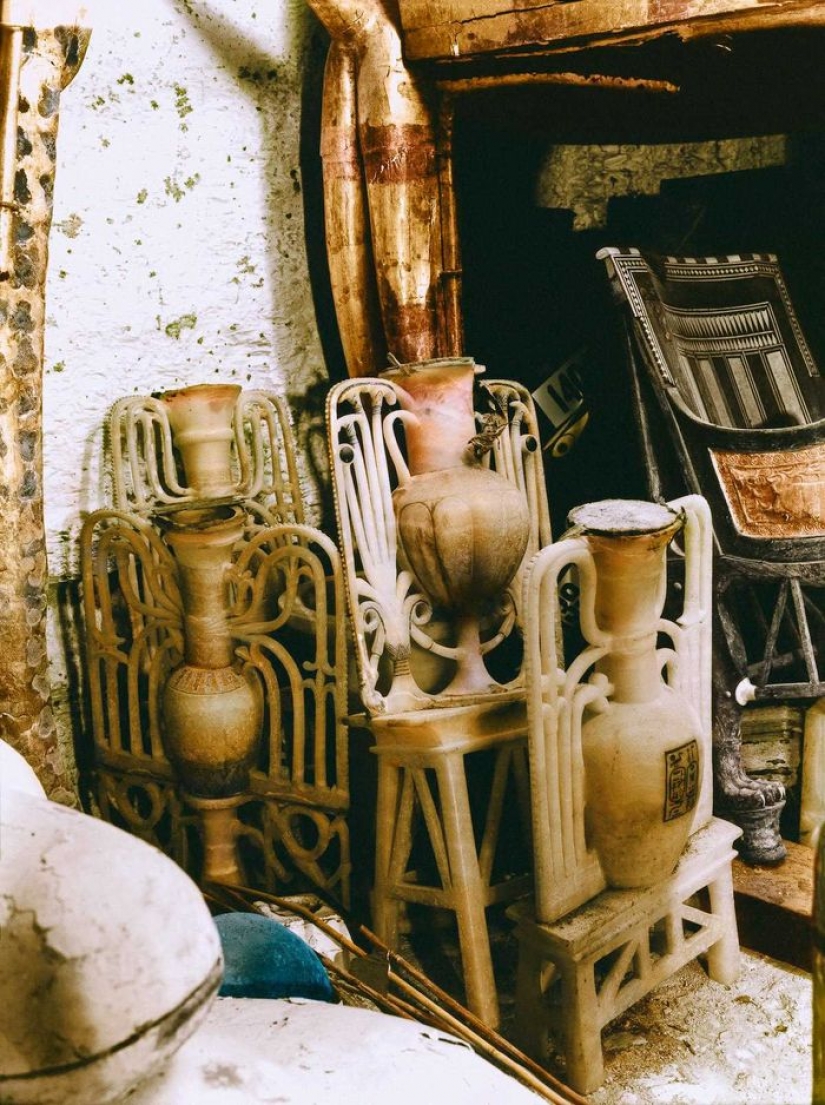
11. December 1922. Decorative alabaster vase in the front room.
12. January 1924. In the "laboratory", created in the tomb of SETI II, restorers Arthur Mace and Alfred Lucas clean one of the statues out from the front of the room.
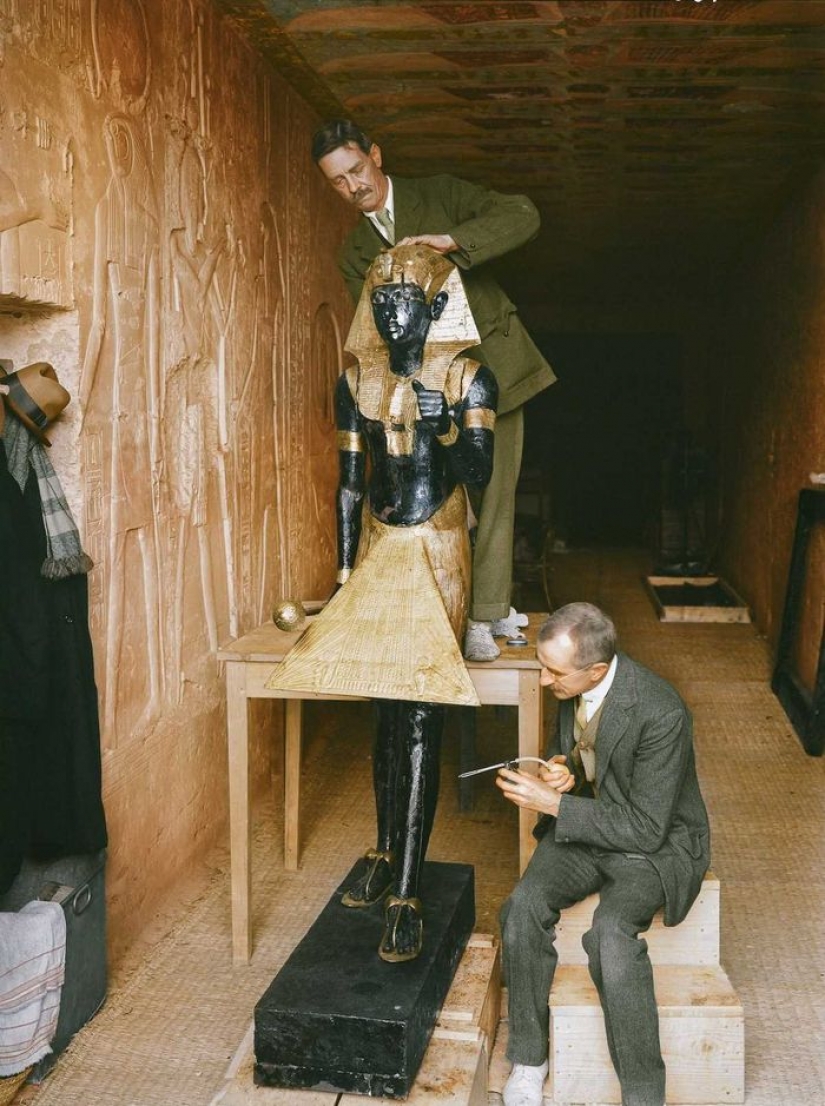
13. 29 Nov 1923. Howard Carter, Arthur Callender and an Egyptian worker wrapped one of the statues of Ka for transportation.
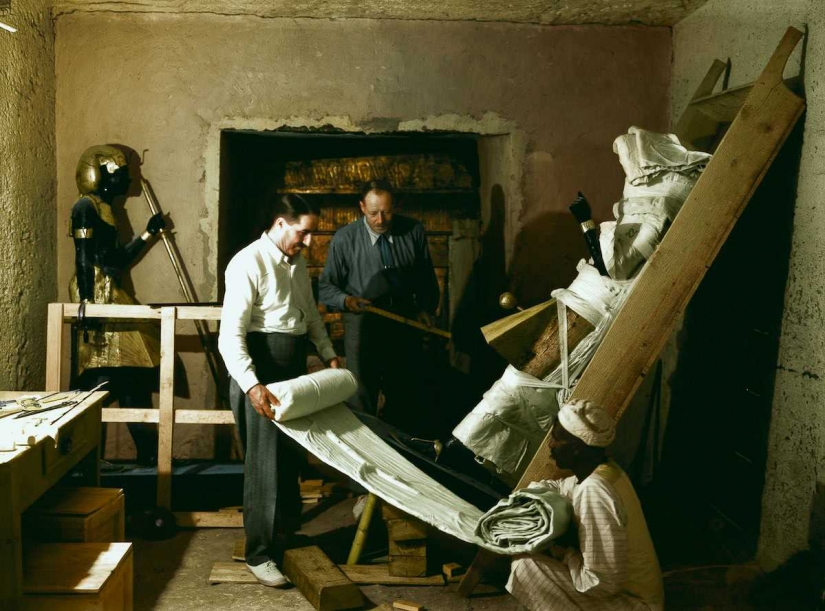
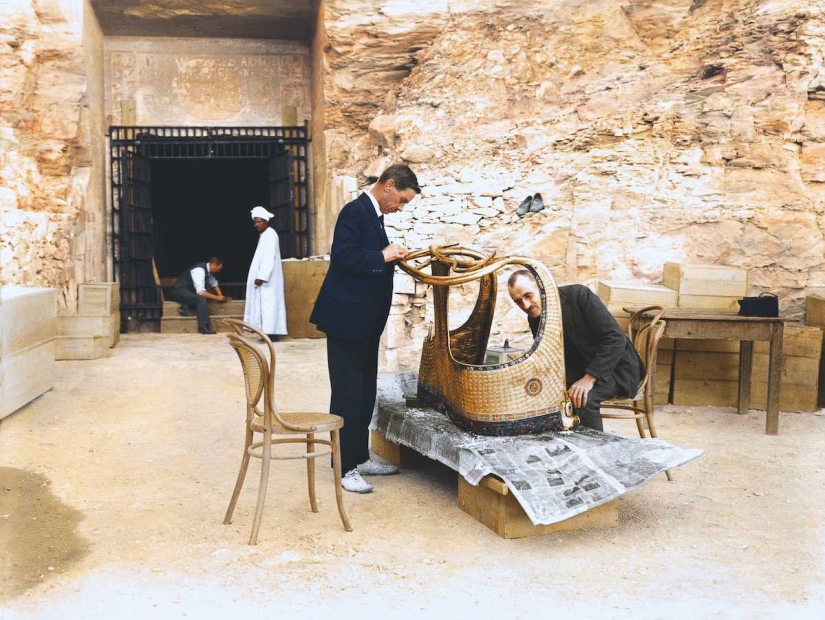
14. December 1923. Arthur Mace and Alfred Lucas are working with the Golden chariot from Tutankhamun's tomb outside the "laboratory" in the tomb of SETI II.
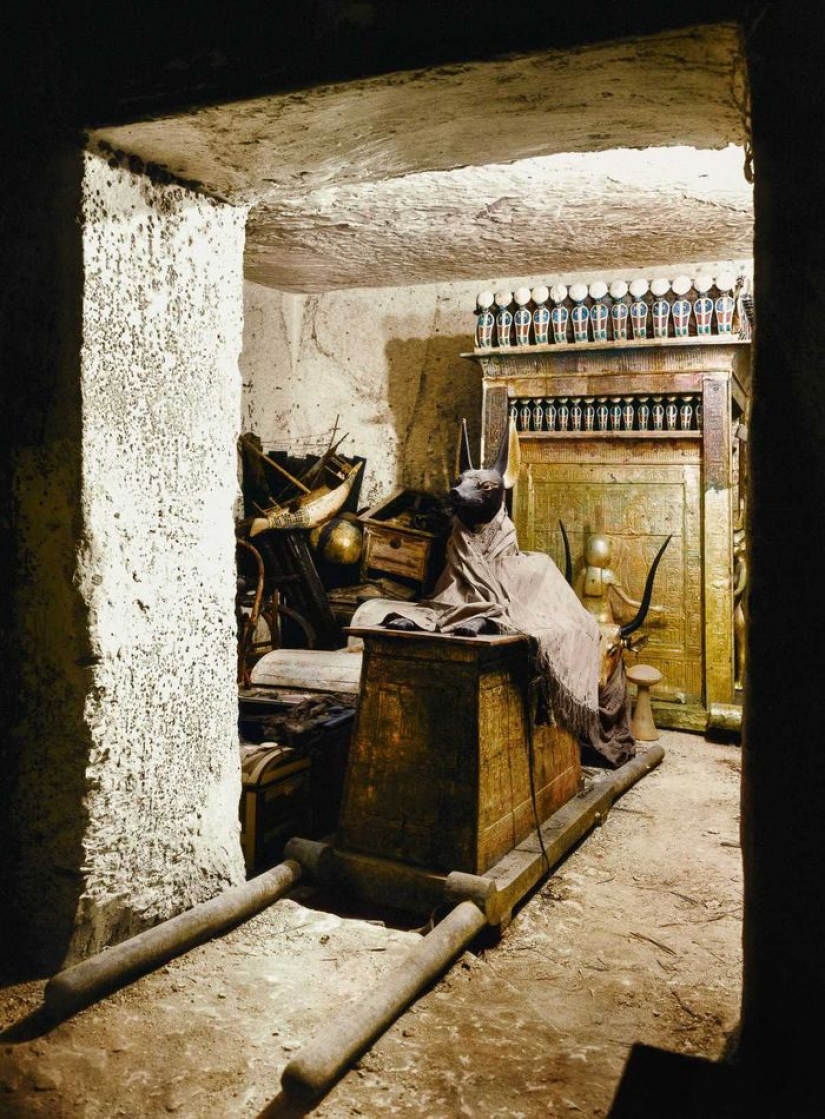
15. 1923. A statue of Anubis in the burial stretcher.
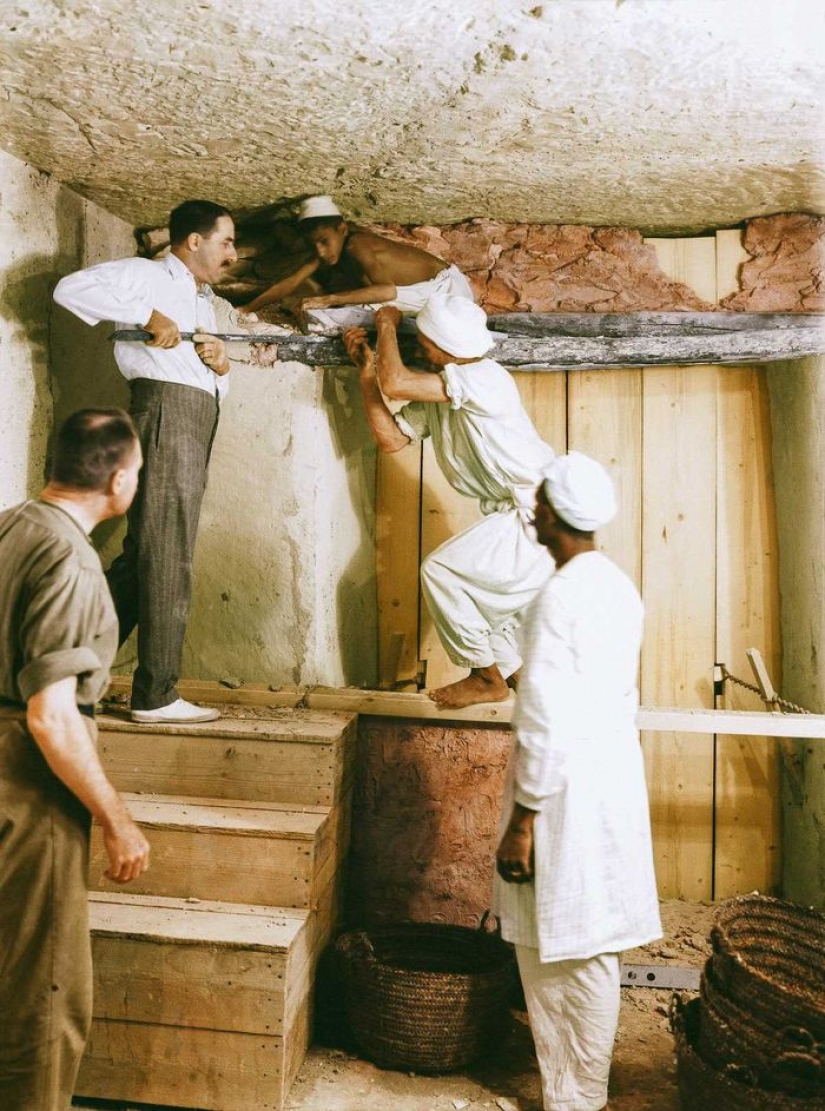
16. 2 Dec 1923. Carter, Callender and two workers removed the wall between the front room and the burial alone.
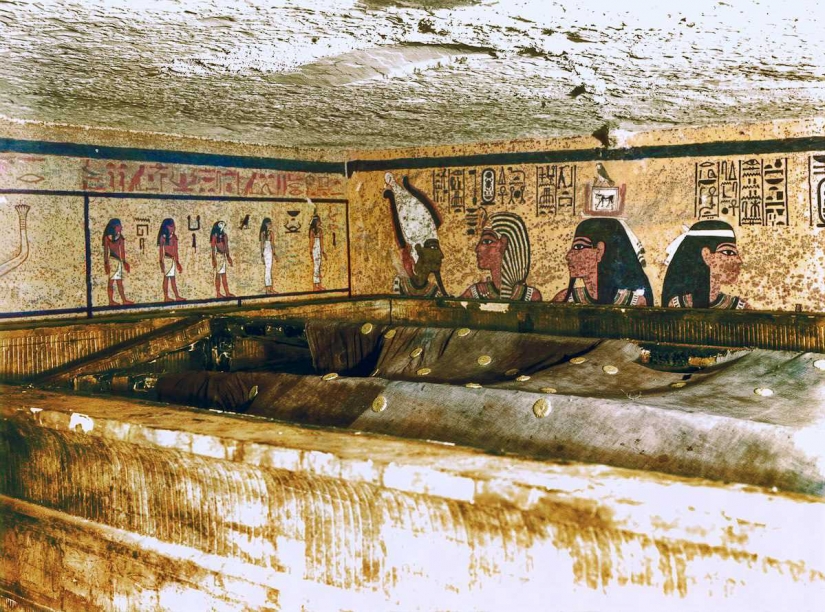
17. December 1923. Inside the outer coffin in a funeral alone is another ark, wrapped in a huge linen cover with gold rosettes, reminiscent of the night sky.
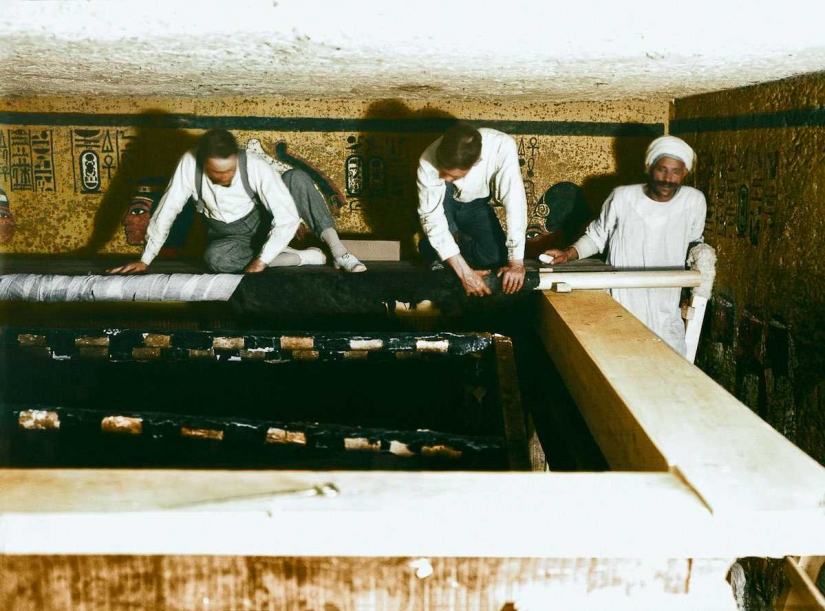
18. 30 Dec 1923. Carter, Mays and the Egyptian working carefully fold the linen cover.
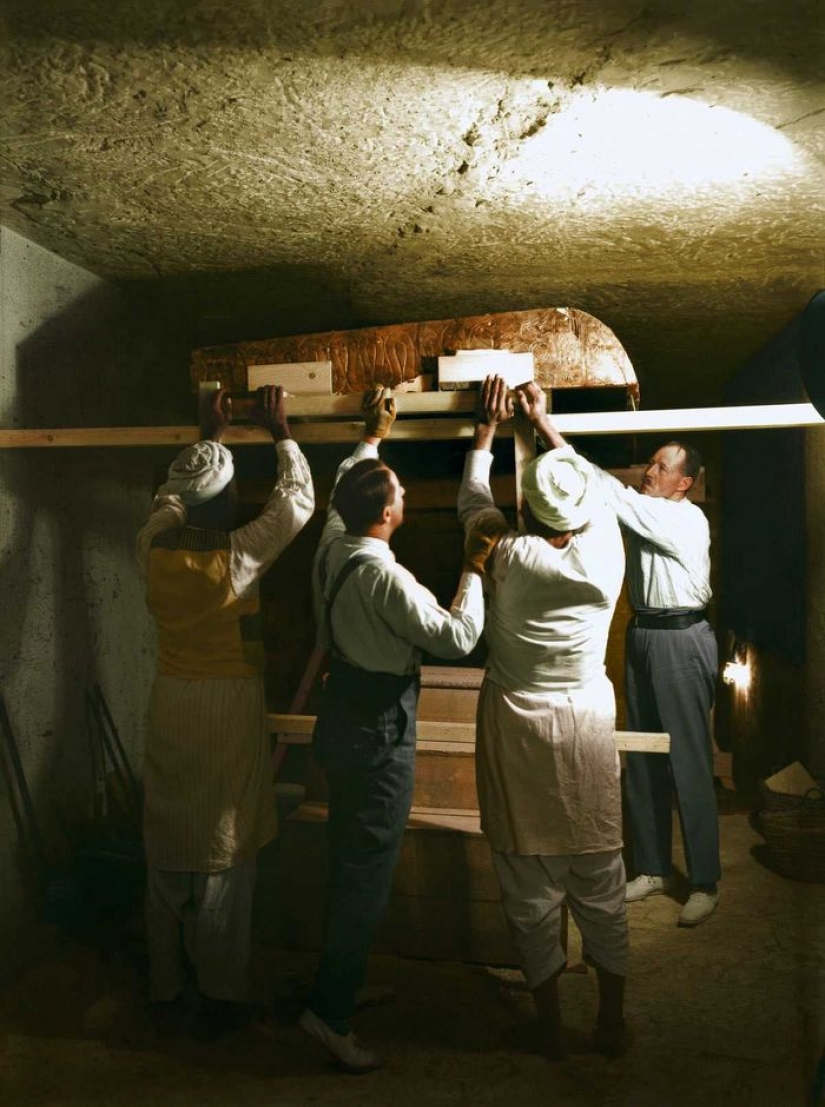
19. December 1923. Carter, Callender and two Egyptian workmen dismantled one of the Golden ark in burial repose.
20. October, 1925. Carter examines the sarcophagus of Tutankhamun.
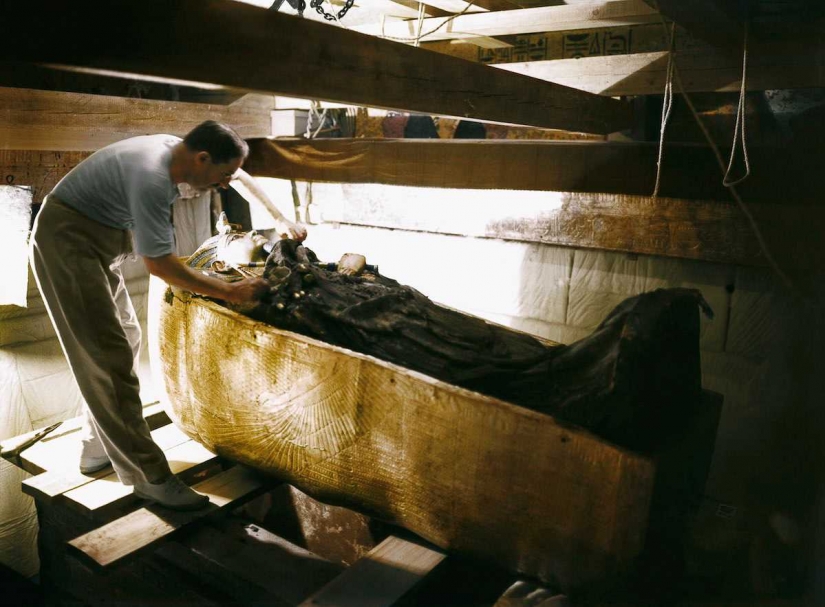
21. October, 1925. Carter working and studying the sarcophagus of pure gold.
Keywords: Tomb | Egypt | Excavations | Pharaoh
Post News ArticleRecent articles

It's high time to admit that this whole hipster idea has gone too far. The concept has become so popular that even restaurants have ...

There is a perception that people only use 10% of their brain potential. But the heroes of our review, apparently, found a way to ...
Related articles

In November 69 BC, she was born Cleopatra, the last Queen of Egypt from the Macedonian dynasty of the Ptolemies. Cleopatra, perhaps ...

The inhabitants of ancient Egypt treated many animals with great respect, but cats have always been especially important to them. ...

In different countries, kissing is treated differently. Somewhere no one will pay attention to the kissing couple, and somewhere ...
New Year's is a time to surprise and delight loved ones not only with gifts but also with a unique presentation of the holiday ...