
Scientific Beauty: Galileo's Thermometer
Categories: Design and Architecture | Science
By Pictolic https://pictolic.com/article/scientific-beauty-galileo39s-thermometer.htmlThe Galileo Thermometer is not only a device for measuring temperature, but also an amazing combination of science and art. Its elegant design and vibrant colors make it a great addition to any interior. Learn more about this aesthetic device and appreciate its beauty.
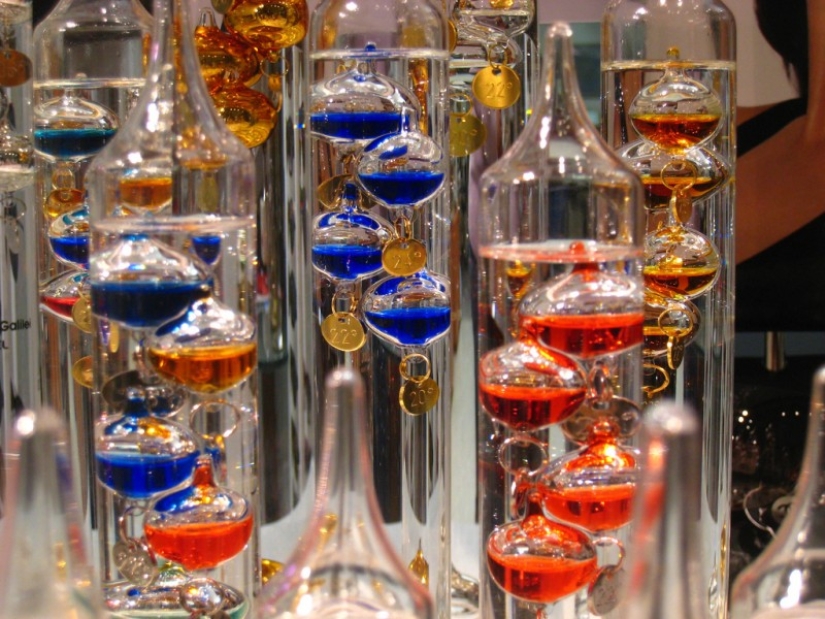
Galileo Galilei was an Italian physicist, mathematician, astronomer, and philosopher who played a major role in the scientific revolution of the 16th century. He was the first to discover that the density of a liquid changes as a result of increasing or decreasing temperature. The thermometer named after him is made of a sealed glass cylinder. Inside is a clear liquid and several bubbles, each with a weight.
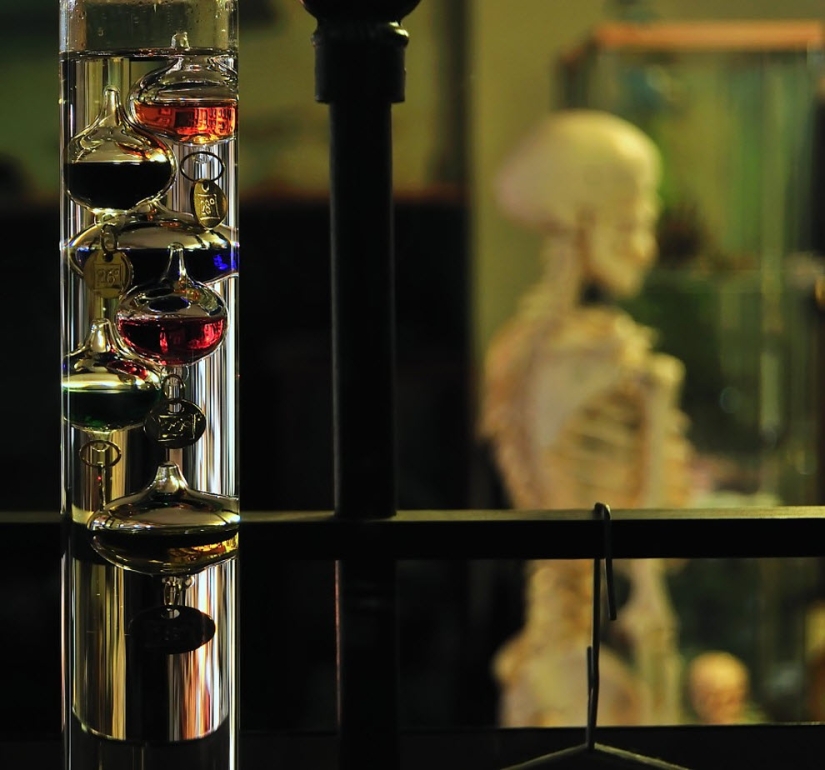
As the temperature changes, they rise and fall according to mathematical principles. And yet, in addition to its practical value, Galileo's thermometer also has an aesthetic value - it is a beautiful object in itself.
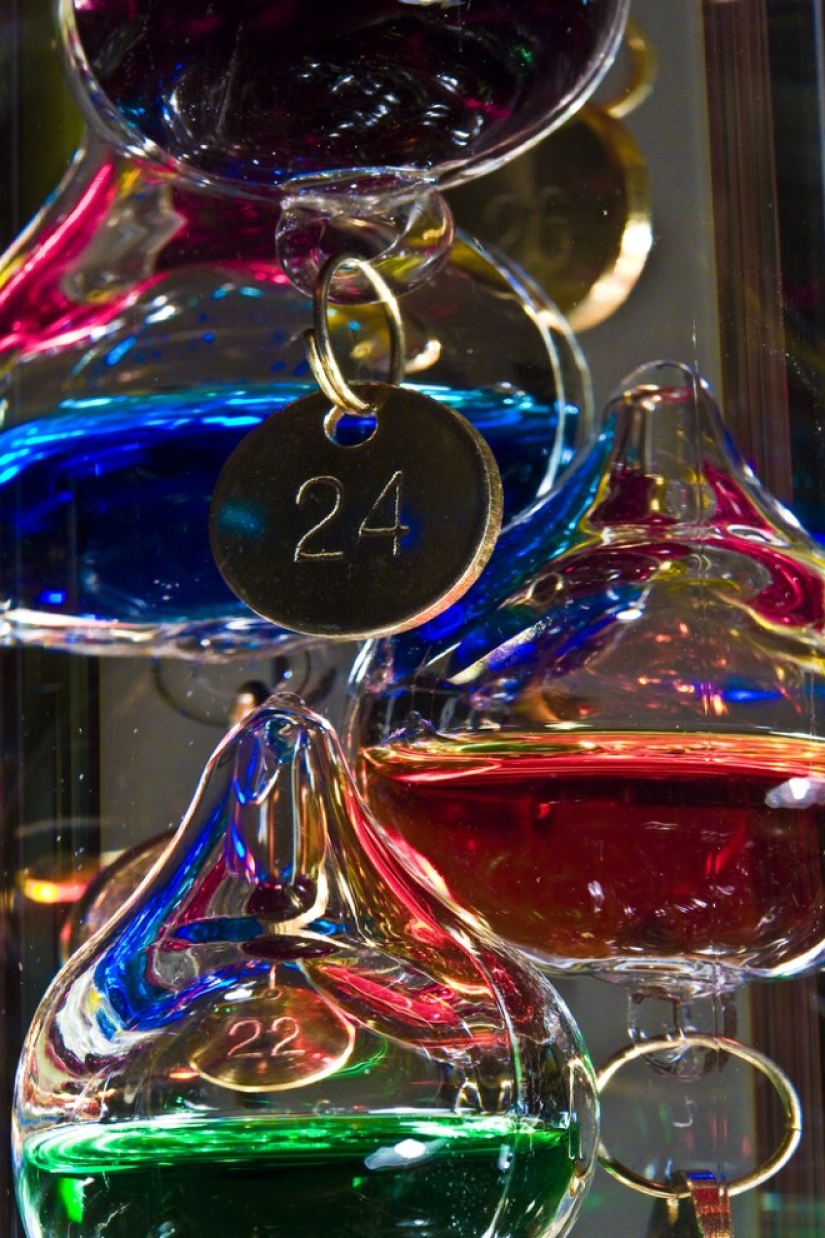
In terms of design, the thermometer is elegant and beautifully shaped. It is a true example of scientific beauty, or beautiful science.
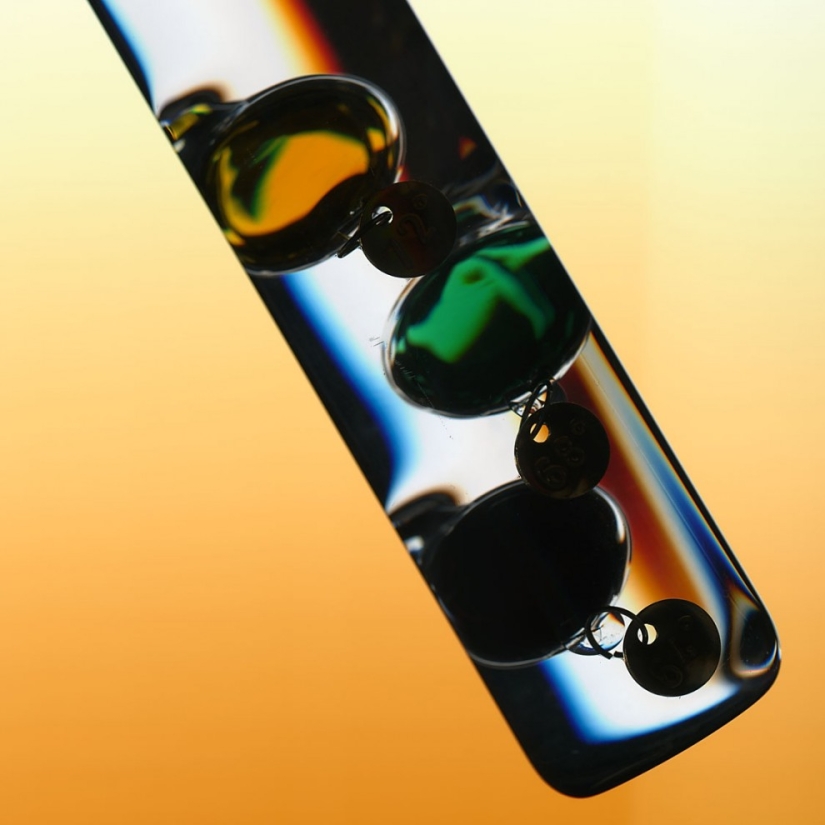
Although Galileo did not create this thermometer, it was named after him because without his discoveries, the thermometer would not have existed. These devices have been produced since the end of the 17th century.

Each bubble has a weight attached to it. Each one has a symbol and a number engraved on it. These are counterweights. Each one is different from the others.
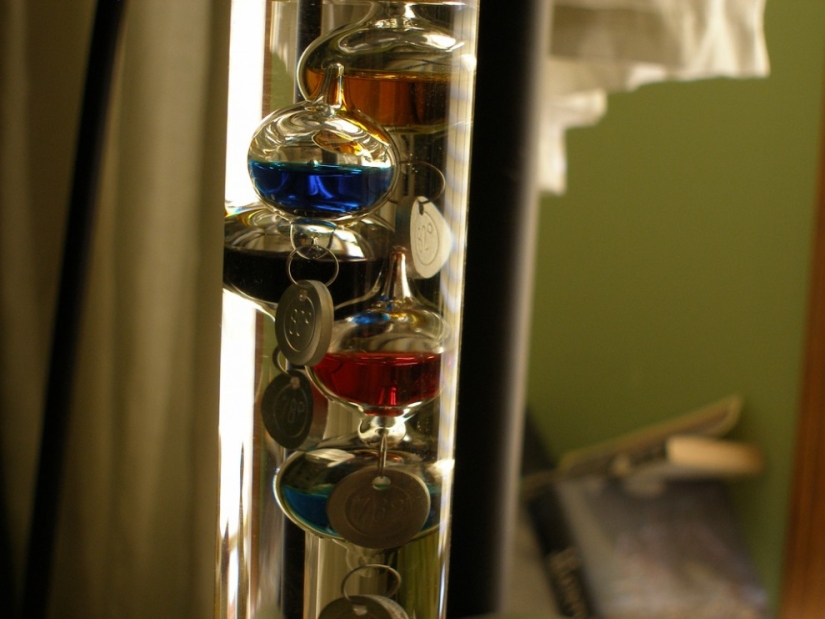
Coloured water was added to the bubbles so that each bubble had the same density. But this gave the thermometer its beauty.

The mathematical principles of a thermometer are very simple. Each bubble in a thermometer has the same volume, and therefore the same density.
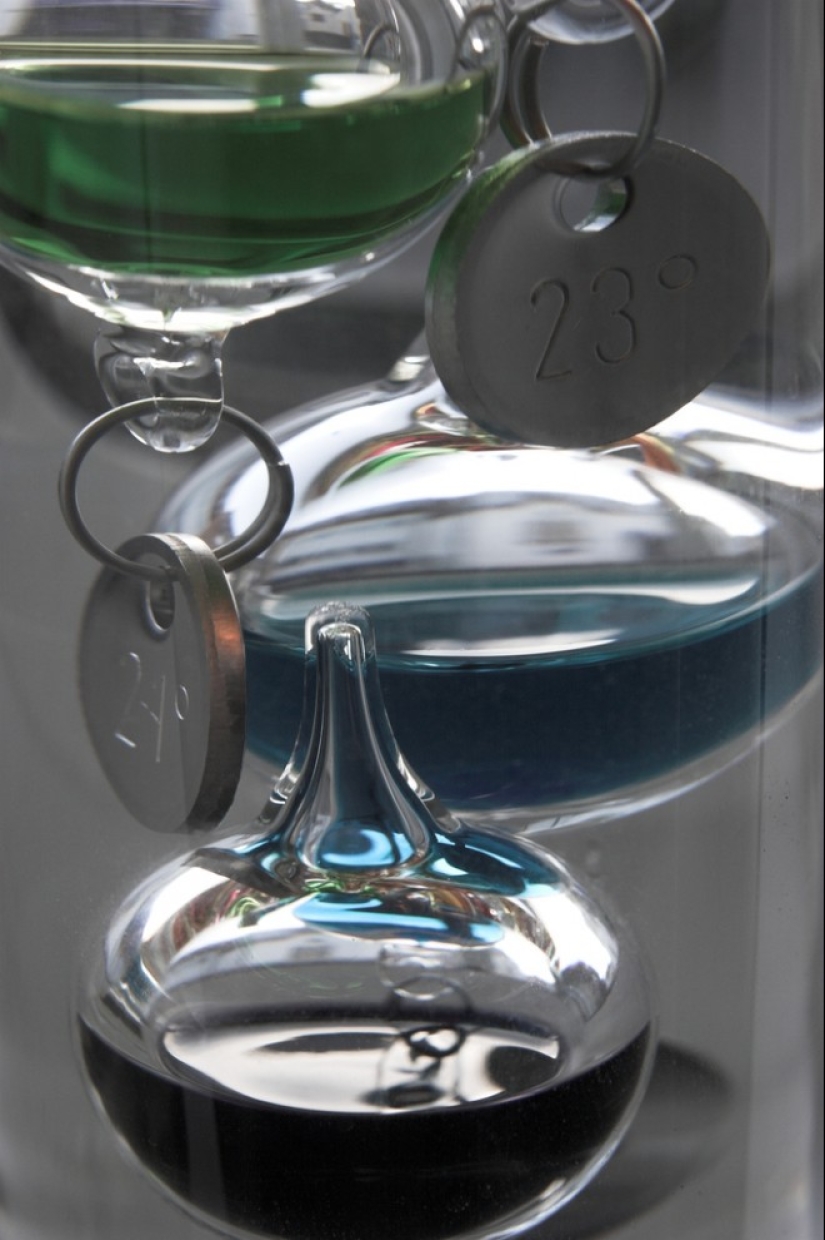
This means that each bubble has the same gravitational magnitude and buoyancy force. Gravity (the force of attraction) pushes down, buoyancy force pushes up.

Each bubble is marked with a weight attached to its base. This weight increases the relative weight of the bubble as well as the effect of its gravity. The weight means that the density of each bubble is slightly different from the others.
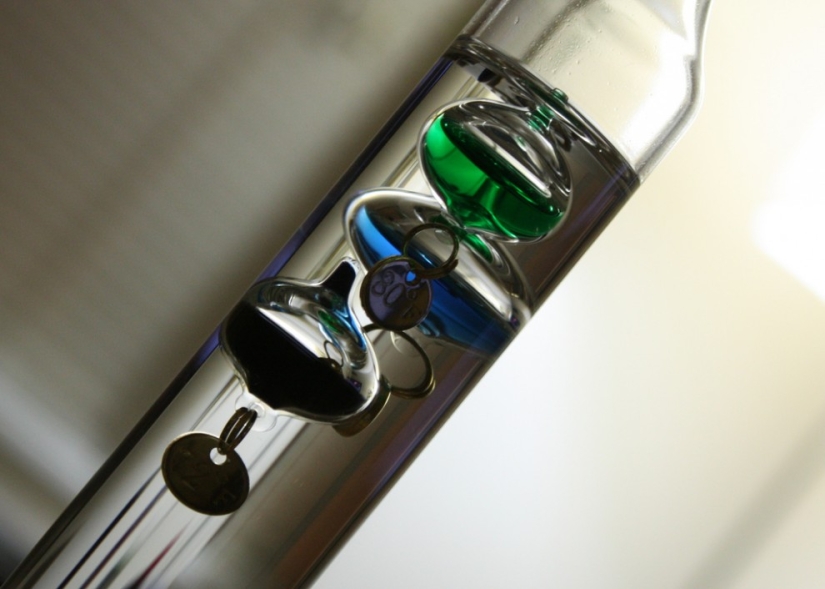
The ball that is at the very bottom shows the current temperature.

As the density of the liquid around the bubble changes, the force of attraction overcomes the buoyancy force, causing the bubble to sink to the bottom. As the temperature increases, the density of the liquid also increases.

When the density decreases, the buoyancy force also decreases. All bubbles are constant, so when the temperature and liquid increase, the buoyancy force decreases due to the proportionality with the liquid density, and the bubble sinks.
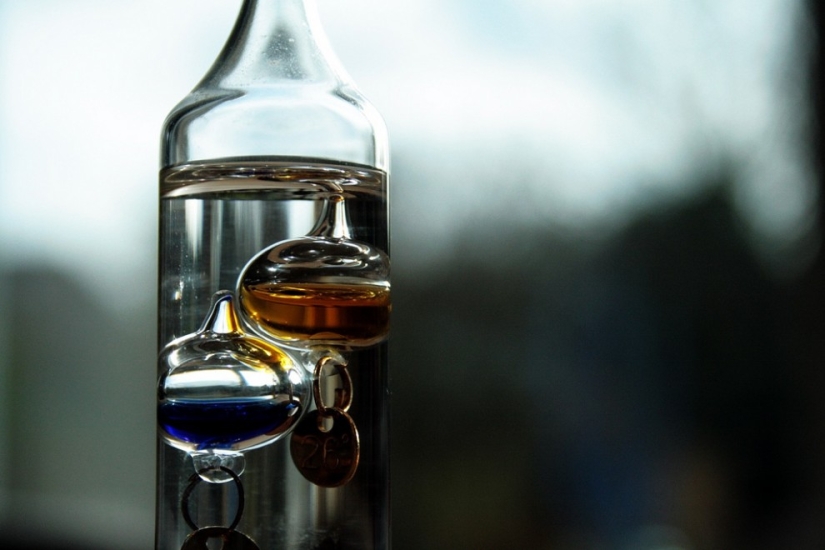
The same is true when the density of water increases. Each bubble has weight, so it will rise and fall in a liquid of a certain density at a certain temperature.
Recent articles

It's high time to admit that this whole hipster idea has gone too far. The concept has become so popular that even restaurants have ...

There is a perception that people only use 10% of their brain potential. But the heroes of our review, apparently, found a way to ...
New Year's is a time to surprise and delight loved ones not only with gifts but also with a unique presentation of the holiday ...