
Today is International Bat Night, which means it's time to admire an incredible and rare spectacle: the migration of millions of bats in Africa.
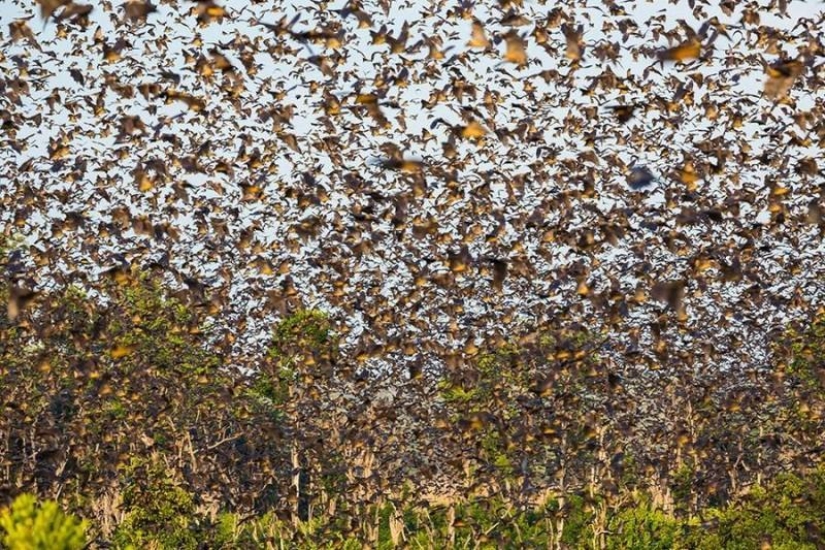
On the last full weekend of August, the world celebrates one of the most unusual conservation holidays: International Bat Night. Its main goal is to draw public attention to the problems of bats and their conservation, and to debunk myths surrounding these animals, which many people unjustifiably fear, believing them to be vampires.

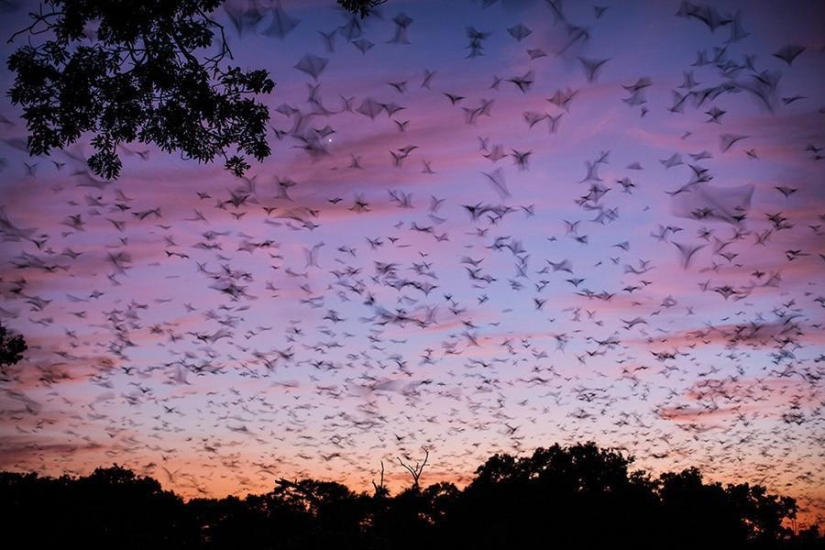
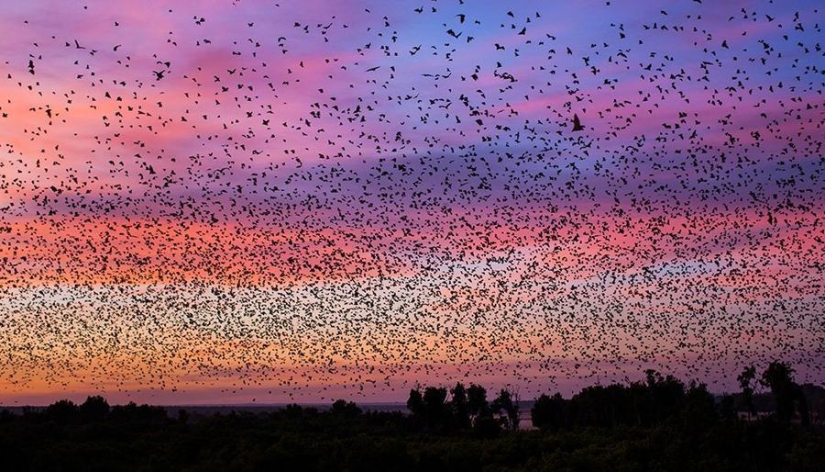
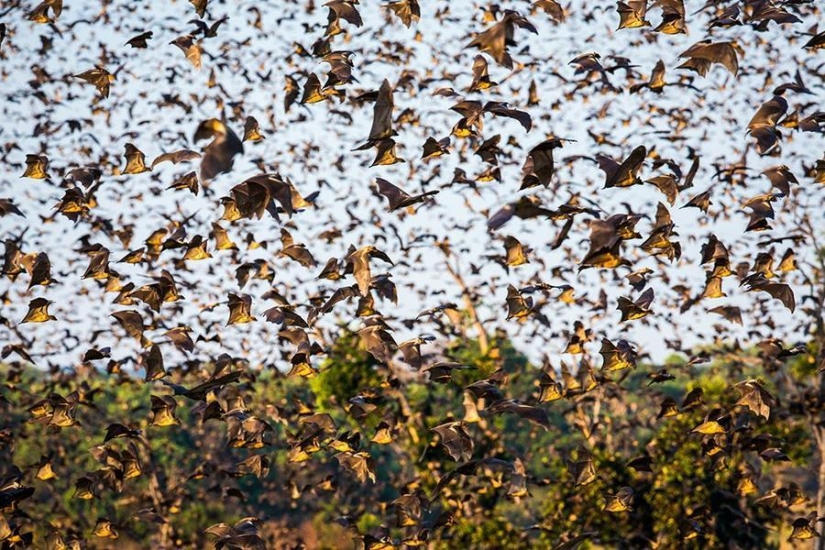
British photographer Will Burrard-Lucas has been passionate about photographing animals for many years. While traveling in Zambia, he captured a rare natural phenomenon—a bat migration. Around eight million bats were soaring through the skies.
Few people know that bats can migrate like birds. That's why people are often alarmed when they see such a sight in the sky.

Bats are mammals. During the warm season, bats feed on insects.

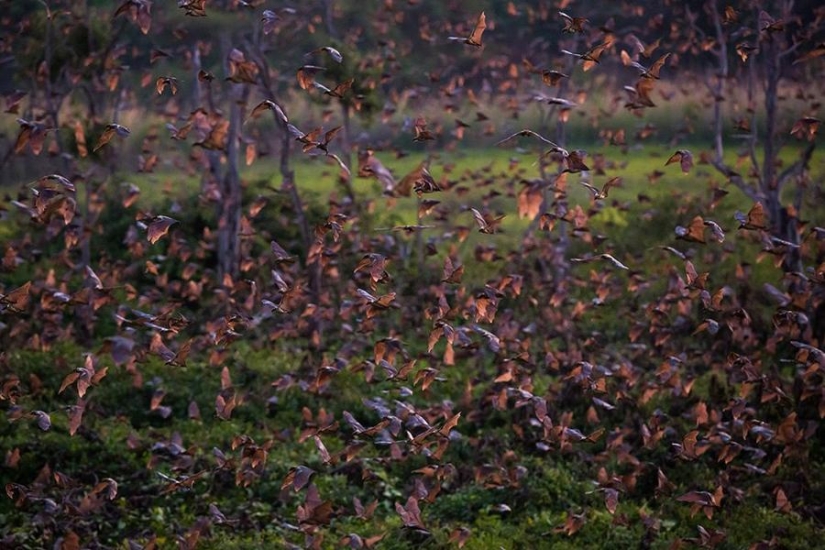 With the onset of cold weather, some bats hibernate. They choose cool but warm places to spend the winter, such as caves. The rest head south, where they can still feast on insects in winter.
 The hypothesis that bats are capable of migrating south was suggested after it was discovered that some bat species native to America and Europe were absent from their wintering grounds in caves, despite being abundant in the same area during the summer.
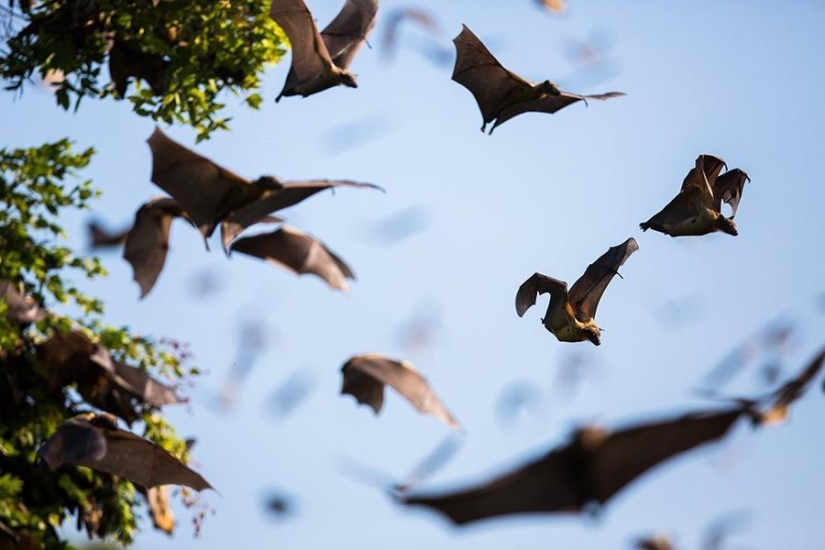 Bats migrate several times during their lives.
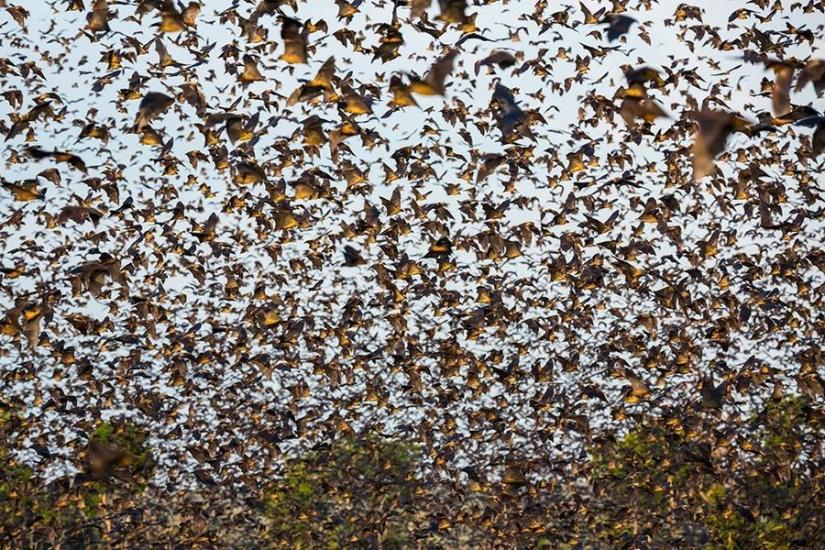 Will Burrard Lucas captured millions of bats circling over a Zambian national park.
 There are about seven hundred known species of bats in the world.
 In addition to insects, the diet of large bats includes lizards, frogs and small birds.
 In an hour of hunting, a bat can catch about two hundred insects.
 Bats navigate by emitting ultrasonic signals and detecting their echoes reflected from objects. This phenomenon is called echolocation. Before its discovery, bats were believed to possess extrasensory abilities.
 Bats can detect wire mesh from seventeen meters away.
 The sounds made by bats cannot be detected by the human ear.
 While in flight, mice produce a rather complex sequence of sounds that other animals are simply not capable of.
 Fish-eating mice are unable to detect prey underwater. However, they will immediately detect it as soon as even a small part of the fish's body appears above the water's surface.
 A picturesque and unforgettable spectacle is the migration of bats.
Recent articles

It's high time to admit that this whole hipster idea has gone too far. The concept has become so popular that even restaurants have ...

There is a perception that people only use 10% of their brain potential. But the heroes of our review, apparently, found a way to ...
New Year's is a time to surprise and delight loved ones not only with gifts but also with a unique presentation of the holiday ...